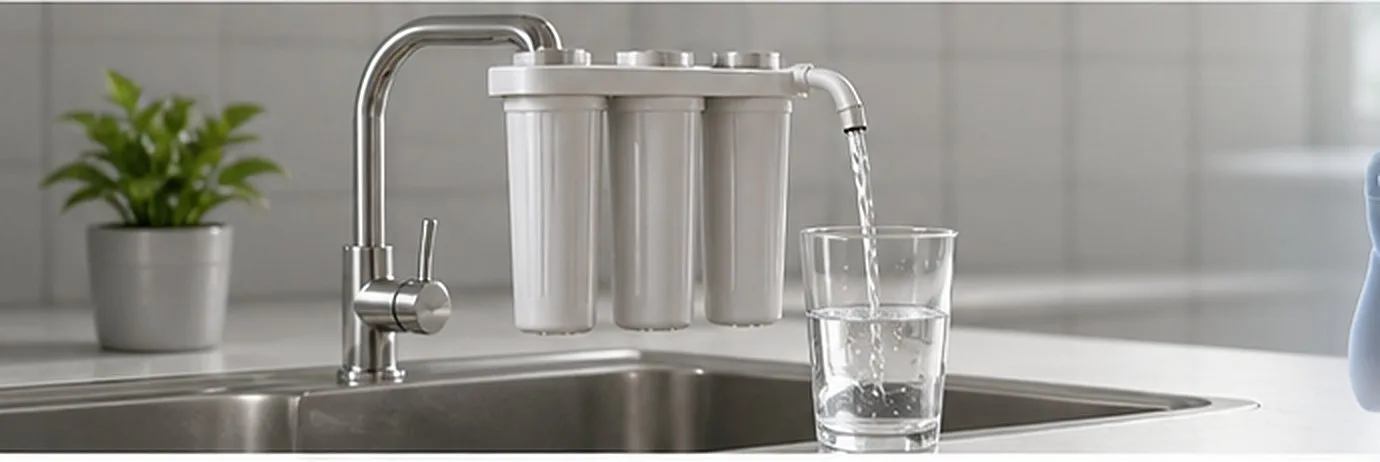
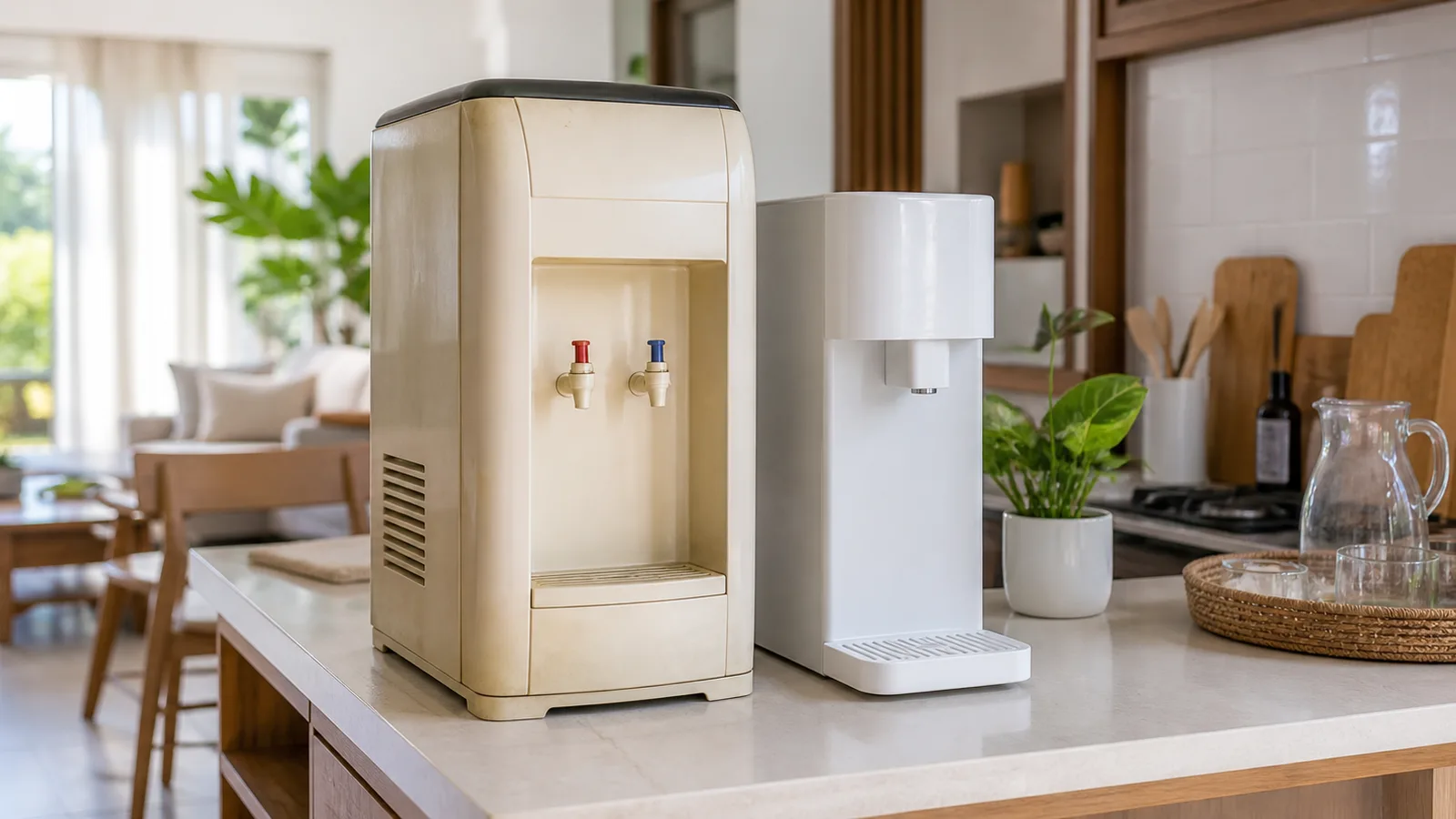
"Newer is better" is the least examined assumption in appliance buying. In this category it is partly true, and it is worth being specific about which parts — because the answer changes whether an older model is a bargain or a mistake.
General information about the technology. Specifications and model availability change; confirm current details with official Enagic materials and an authorized representative. Nothing here is a health claim.
Start with what has not changed
The core process. Water is filtered, then passed across electrodes where electrolysis separates it into streams — one alkaline and hydrogen-rich, one acidic. That chemistry is well over a century old and has not moved, which is set out in electrolysis, explained.
Nor has the fundamental constraint: dissolved hydrogen leaves water steadily whatever machine produced it, so a glass is a glass and no generation of hardware has changed that — dissolved hydrogen fades.
What has genuinely improved
Notice what those five have in common: every one is about living with the machine. None is about the water.
Electrodes and plate counts
Plate area and configuration have changed across generations, and manufacturers quote higher figures for newer models. Those figures are real measurements taken under manufacturer conditions.
What a plate count does and does not tell you is a longer argument, and the short version is that it is a design parameter rather than a quality score — what electrode plate count actually tells you and ORP and pH: what the numbers on the panel mean.
What changed outside the machines
Two things, and both affect buyers more than the hardware does.
The research literature grew. Molecular hydrogen went from a niche interest to an active field with meta-analyses in it — still preliminary, still hedged, but no longer absent. Where that stands is in what hydrogen water research has and has not shown and who studies hydrogen water, and where.
And the marketing got more confident than the research did, which is the gap this publication keeps returning to — common claims about hydrogen water, checked.
So is an older unit worth buying?
Sometimes, and the question is not about the water. It is: does it count filter litres, are cartridges still available for it, is it still serviced, and does a warranty apply?
A second-hand unit typically fails the last of those outright — coverage usually does not transfer to grey-market or private sales, which is discussed in warranty and service: settle it before you buy. If cartridges for a model are becoming hard to obtain, that alone settles it, whatever the price.
The honest summary: buy the current generation for the servicing and the filter counter, not because the water is different. And check your own kitchen before either — what to check before buying a home water system.
Sources
Filed under
- Water Technology
- technology
- history
- development
- interface
- comparison