Every household with a filter has, at some point, wondered how long it has been in there. Almost none of them have an answer, and that is the entire subject of this article.
It matters more than it sounds, because a filter does not fail visibly. It looks the same on the day it stops working as it did on the day it was fitted.
Follow the manufacturer's stated interval for your specific unit. This article is about the principle and the system, not a substitute for your manual.
What actually happens to a spent cartridge
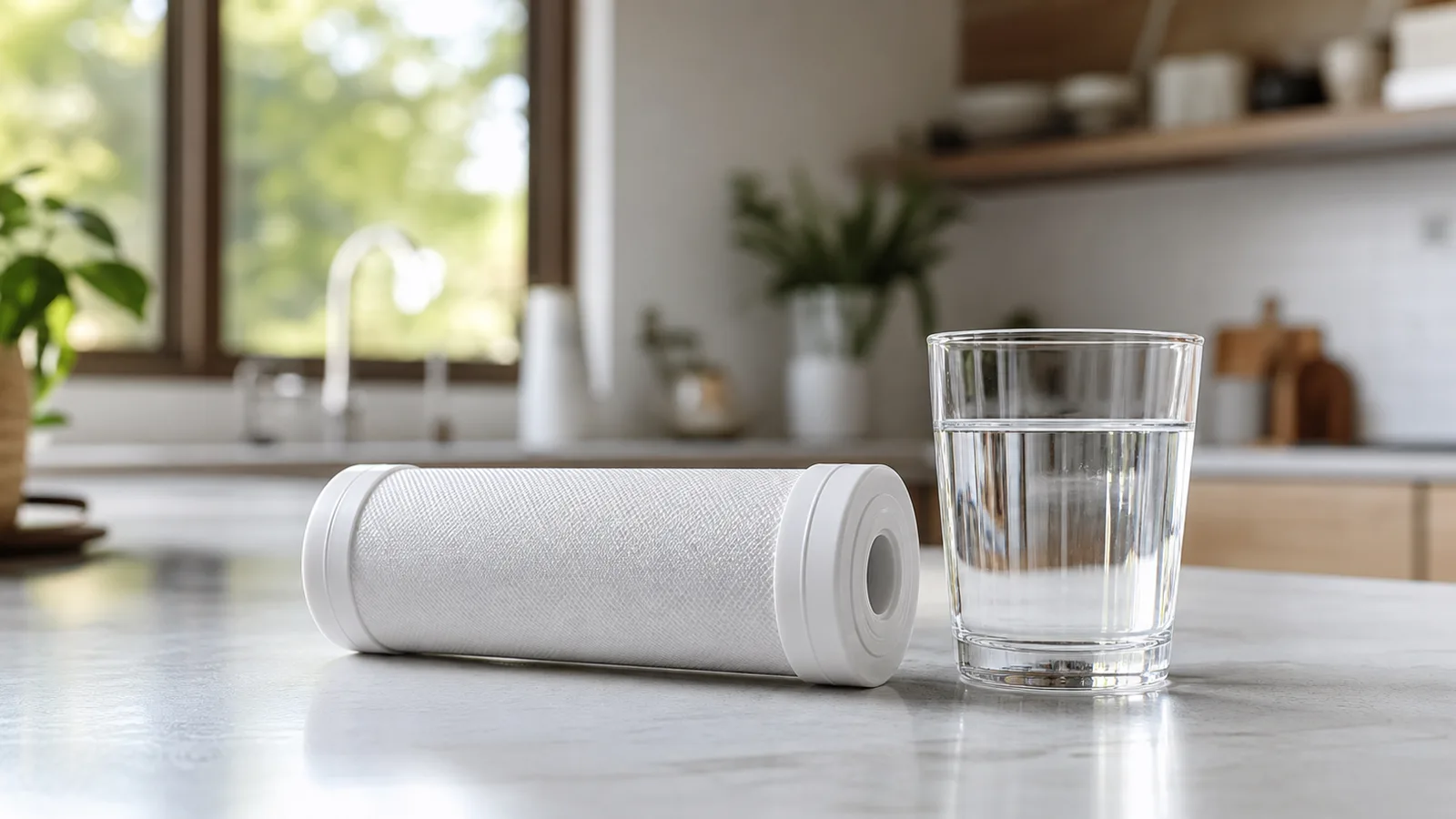
Activated carbon works by adsorption — contaminants attach to a very large internal surface area. That area is finite. When it is full, the carbon stops removing anything and water passes through unchanged.
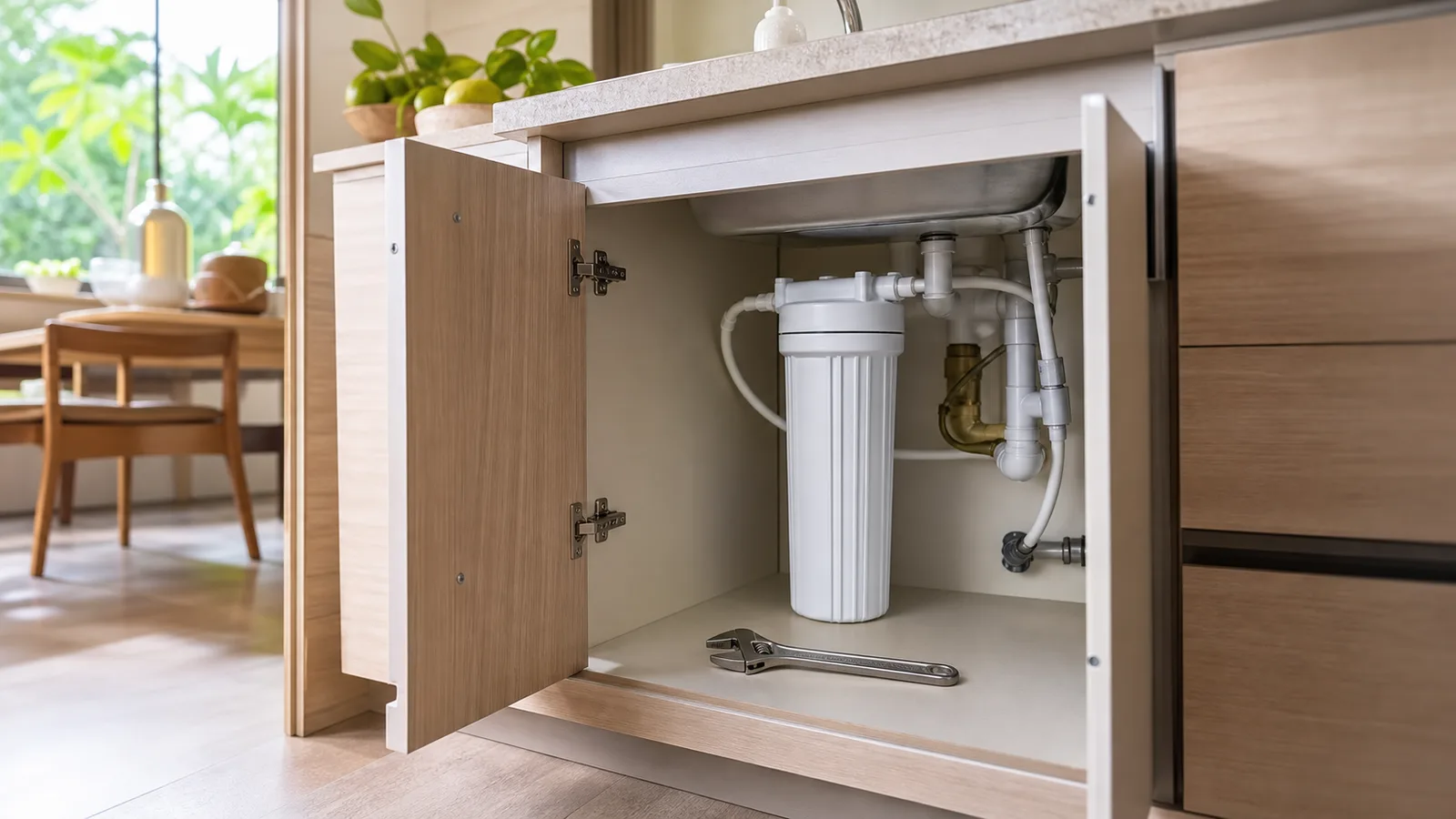
Two consequences follow. The first is that you get untreated water while believing you are getting treated water, which is the worse of the two. The second is that a wet, warm, organically loaded cartridge left in place for a long time is a poor thing to run drinking water through.
Sediment filters behave differently and more honestly: as they load up, flow drops, and you notice. Carbon gives you no such warning. What each type does is set out in what filters remove and what they do not.
Litres, not months
Manufacturers state filter life in litres because litres are what exhausts a cartridge. Months are a convenience conversion built on an assumed household.
So a household of six exhausts a cartridge in a fraction of the time a single person does, and both are following the same "six months" printed on the box. If you take one thing from this page, take that: convert the manufacturer's litre rating into your household's actual usage.
Why a litre counter is worth paying for
A machine that counts litres and tells you when the cartridge is finished removes the entire problem. It is, genuinely, the most useful thing on any control panel, and it is the reason to weigh a display feature at all — panels, presets and voice guidance.
Without one you are keeping the schedule yourself, and "keeping the schedule yourself" reliably means forgetting.
A system that works without a counter
- Write the date on the cartridge with a marker when you fit it. Ten seconds, and it answers the question permanently.
- Put the next change date in your phone calendar at the moment you fit it, not later.
- Buy the replacement in advance, so the change is not blocked by a purchase.
- Attach the check to something else — the same day you do the monthly ten-minute walk through the house, per a healthy-home checklist.
- Change it late rather than never. An overdue change made today beats an ideal schedule you abandoned.
The other maintenance in the same category
Cleaning cycles on an ionizer are separate from filter changes and are not optional — they interrupt use briefly and they are what keeps the plates in condition — cleaning cycles and ionizer maintenance.
Aircon filters, kettle descaling and the exhaust fan in the bathroom all live in the same neglected category. None of them announce themselves either, and all of them are ten-minute jobs that cost real money when left.
And the cost side, plainly
Cartridges are the main ongoing expense of owning any home water system, and they are excluded from every warranty. That is not a complaint — it is a line item that belongs in the purchase decision rather than being discovered in month seven.
The arithmetic is in what it costs to run a hydrogen water system, and the questions to ask before buying are in warranty and service.
Sources
Filed under
- Healthy Home
- filters
- maintenance
- schedule
- household
- cartridges