"Filtered water" is one of the least informative phrases in this industry. It describes a category of process, not a result, and two products both honestly described as filters can address almost entirely different things.
The question that produces a useful answer is narrower: filters what, out of what, to what standard.
General information about water treatment technology. This is not a safety assessment of your supply — if you have reason to doubt your water, contact your provider or have it tested by an accredited laboratory.
Sediment filters
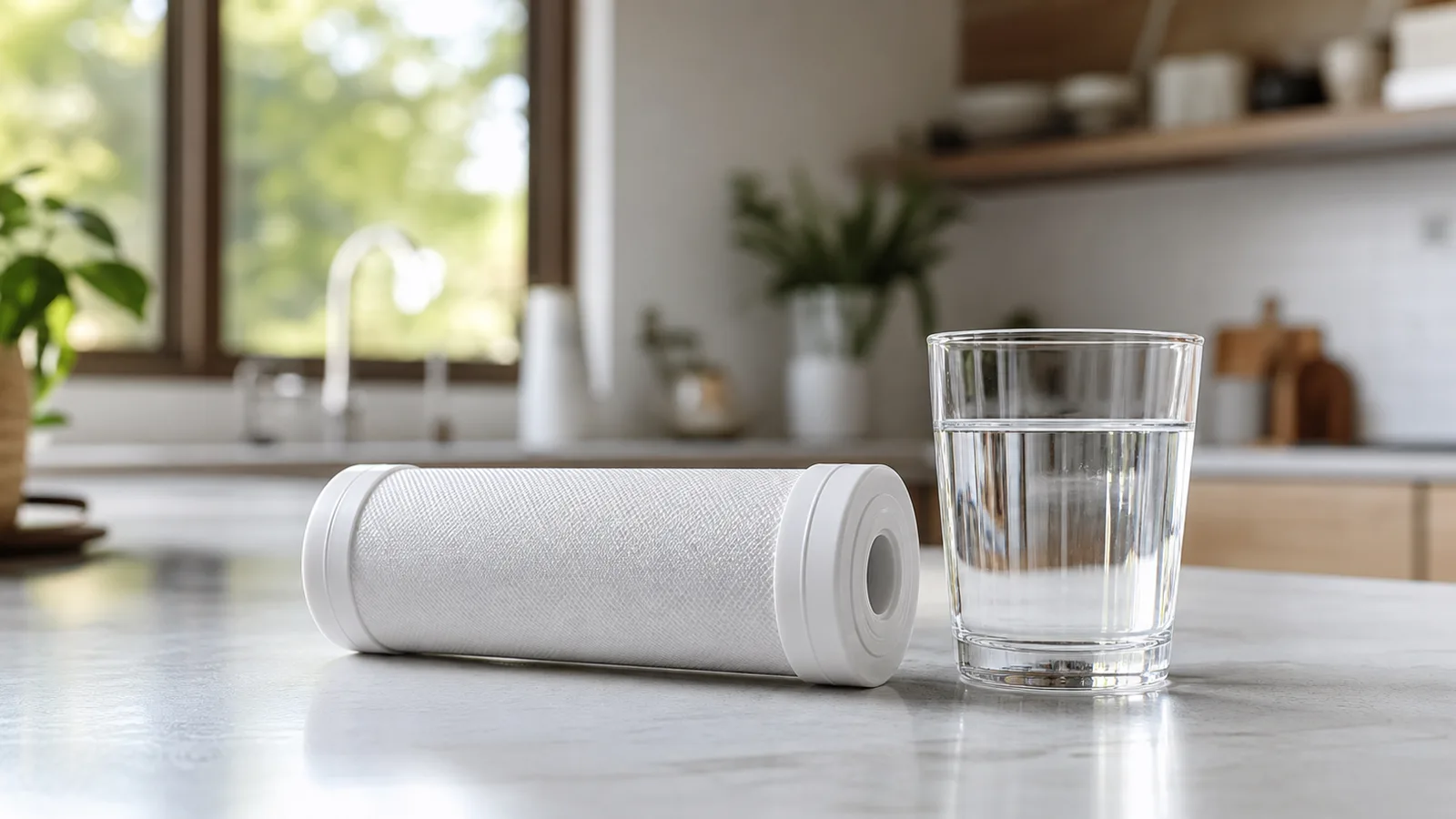
A physical sieve, rated in microns. It catches rust, silt, sand and particles — the visible things — and it exists mainly to protect whatever comes after it.
It does nothing about taste, dissolved chemicals or microorganisms. In a Philippine household with intermittent supply or older pipes it is genuinely useful, and it is the cheapest stage to replace.
Activated carbon, which is what most home filters are
This is the workhorse and the reason filtered water tastes better. Carbon adsorbs chlorine and many organic compounds, which addresses the single most commonly noticed problem with tap water.
That last point deserves emphasis. There is no visual cue for an exhausted carbon filter, and a neglected one is worse than none — which is why a litre counter is the most useful thing on a machine's panel, as argued in panels, presets and voice guidance.
Reverse osmosis and UV
Reverse osmosis pushes water through a membrane fine enough to exclude dissolved salts and most contaminants. It is the most thorough of the common household options and carries three costs: it wastes water, it is slow, and it strips the minerals that give water its taste — which is why RO water strikes many people as flat, per why water tastes different.
UV is not a filter at all. It inactivates microorganisms and removes nothing — no taste change, no chemical change, no particles. It is a disinfection step, and it requires clear water and working power to do its job.
Where an ionizer sits
A water ionizer filters first and then does something else. The filtration stage is ordinary carbon-based filtration doing ordinary carbon-based work; the electrolysis that follows is a separate process that does not remove anything.
Conflating the two is the most common misunderstanding in this category, and it is unpicked at length in filtration and ionization are not the same step.
Working out what you need
- Name the problem. Taste? Particles? A specific contaminant? Peace of mind? Each has a different answer and the last one has no technical answer at all.
- Ask what the supply is like where you live — intermittent, old pipes, seasonal discolouration.
- Read the certification, not the marketing. A filter tested against a recognised standard states what it reduces and by how much; one that says "removes impurities" states nothing.
- Price the cartridges over five years, which routinely exceeds the price of the unit.
- Check who replaces them and how easily they are obtained locally.
For anyone renting, the same questions apply with an added constraint about what can be installed and taken with you — water filters for renters.
Sources
Filed under
- Water Technology
- filters
- carbon
- reverse osmosis
- uv
- buying guide