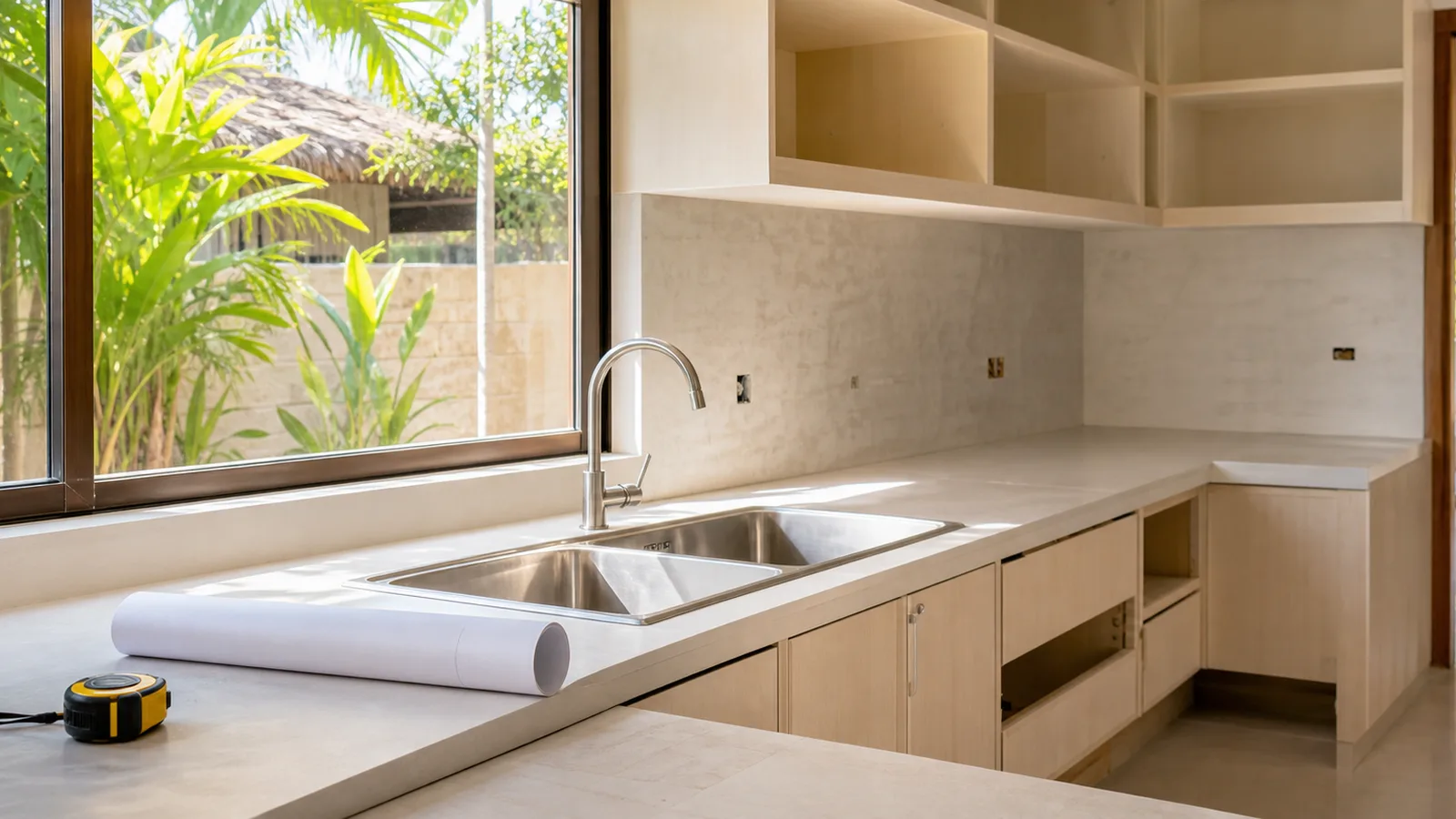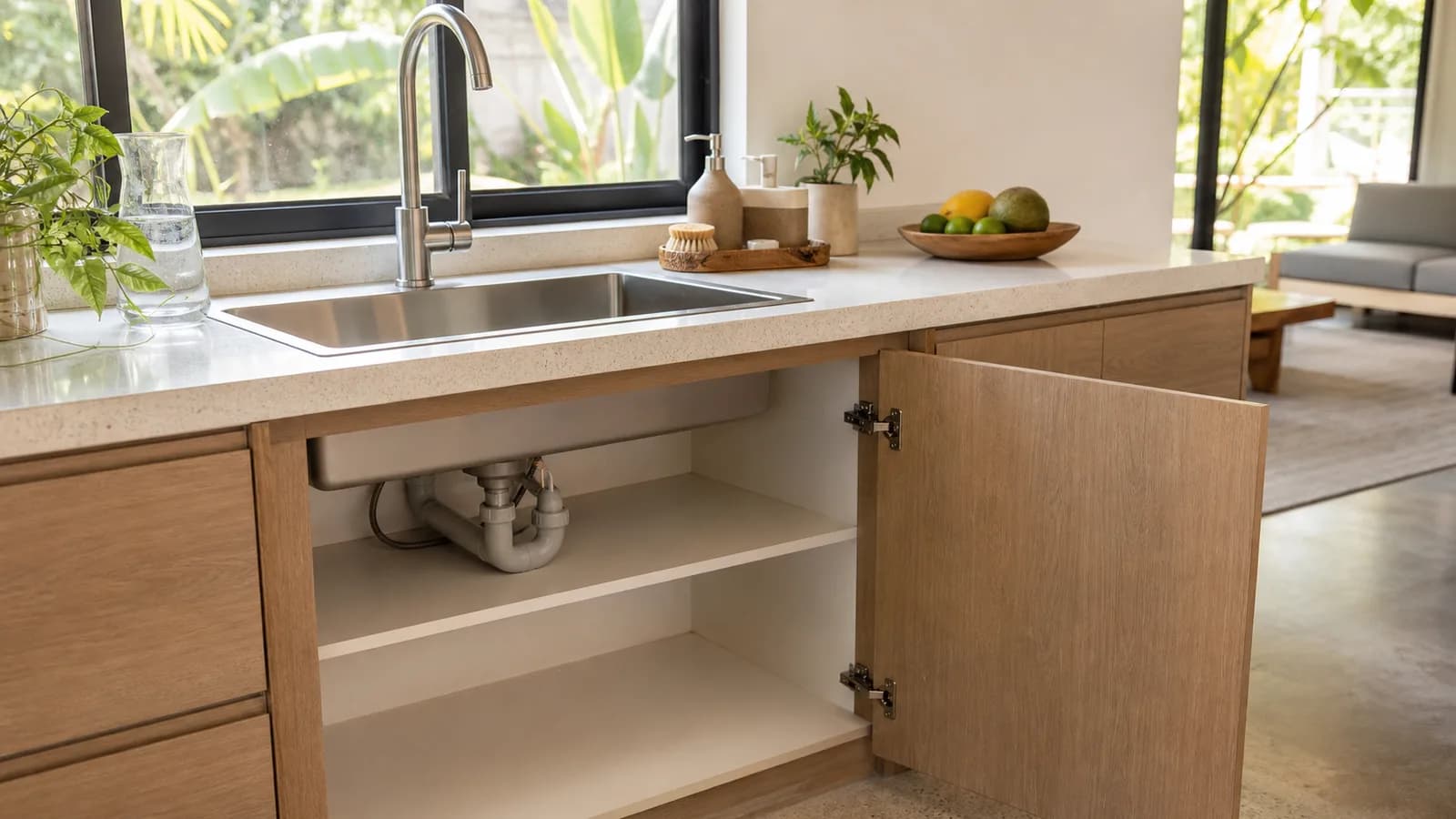
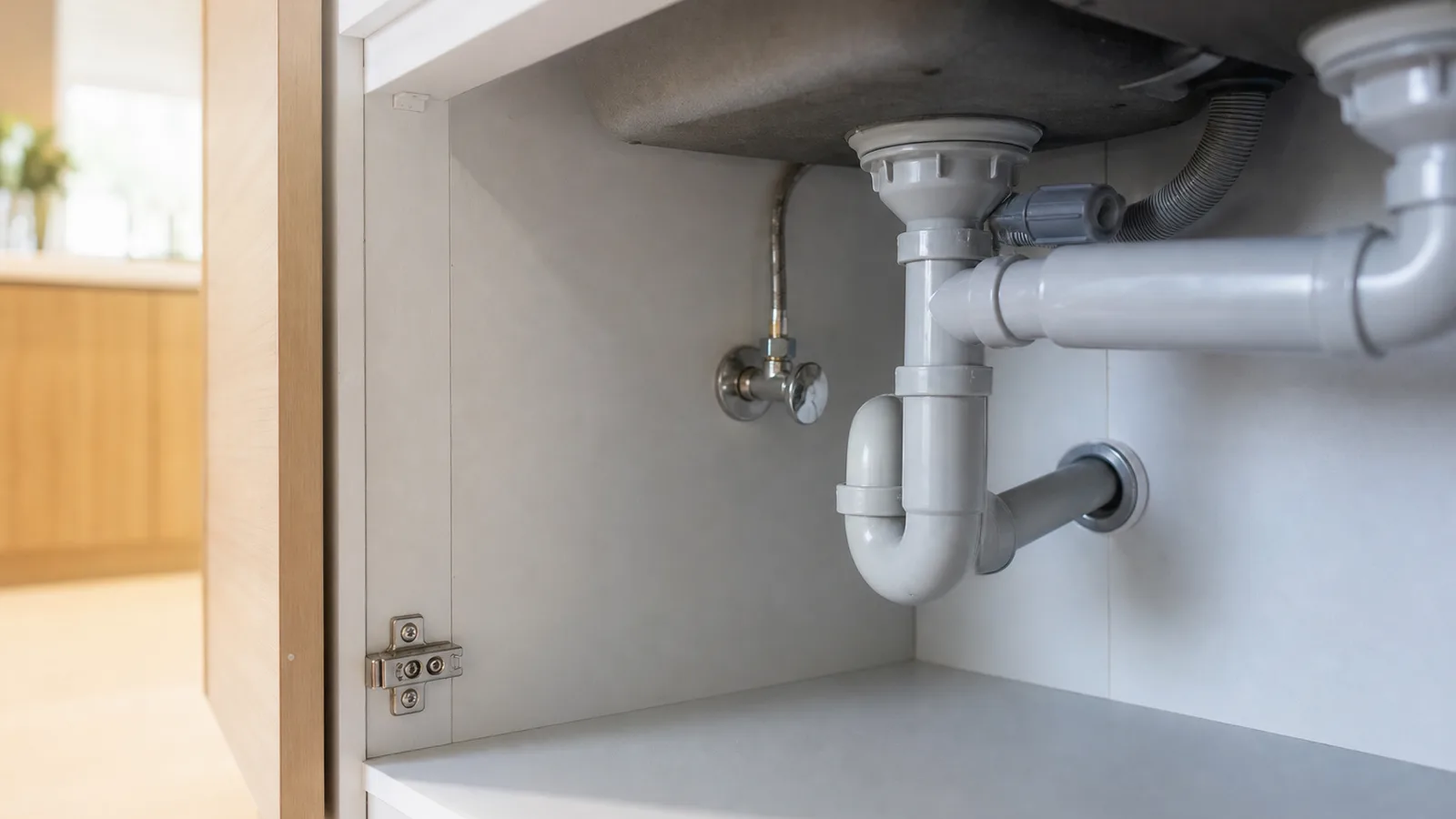
Nearly every unhappy story about a home water system starts on installation day. The machine was chosen on plates and flow rate; nobody looked under the sink.
All of it is checkable in twenty minutes with a torch, and all of it is better checked before purchase than after delivery.
General information. Plumbing and electrical work should be done by a qualified installer, and in a condo usually requires building approval and an accredited contractor. Follow the machine's own manual on installation requirements.
The tap, which stops more installations than anything else
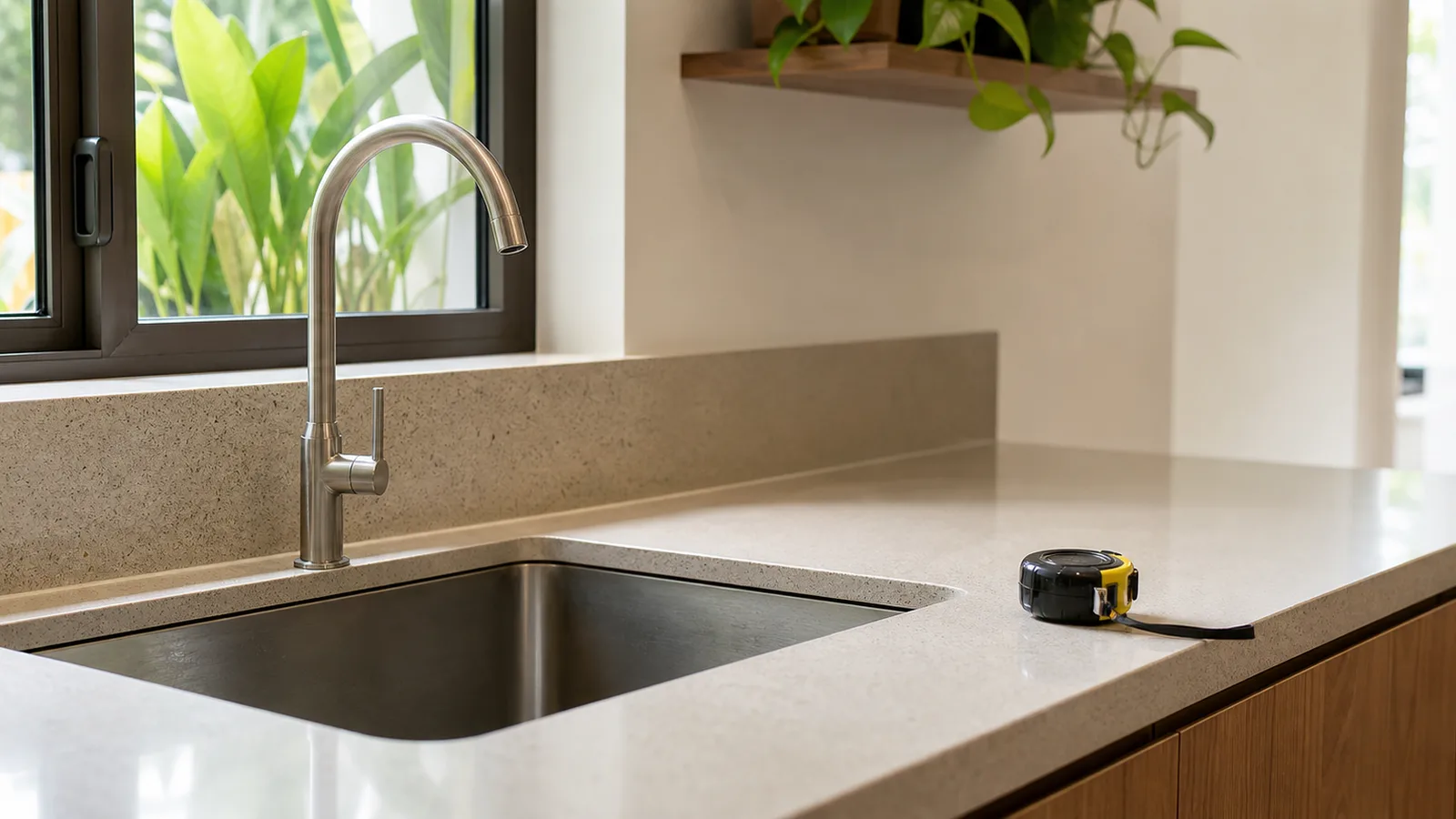
A countertop unit takes its water from the kitchen faucet through a diverter. That diverter has to fit your faucet, and a great many modern kitchen taps are not designed to accept one — pull-out sprayer heads, one-piece mixers and some designer fittings among them.
Photograph your tap, including the underside of the spout, and show it to the installer before buying. This is the single most useful thing on this page.
Under the sink
The second stream needs somewhere to go
This is the requirement people are most often unaware of. An ionizer produces acidic water at the same time as drinking water, and that stream has to be drained.
In a house it goes down the sink and nobody thinks about it. In a condo the connection has to be made properly and typically approved — the constraint set out in condo living: the constraints nobody mentions. It is also worth deciding in advance whether you will use that stream rather than pour it away, since households that plan for it do — the second stream: acidic water and its household uses.
Power and position
A socket within reach of where the machine will stand, not across the kitchen and not behind the machine where the cable will be crushed. Kitchens are frequently short of outlets, and an extension lead across a wet counter is not an acceptable answer.
The units in this catalogue are multi-voltage, which removes one common worry in Philippine homes — the reasoning is in multi-voltage and power in Philippine homes. Their draw is modest and only while water flows, per the energy your appliances actually use.
Position also decides whether you will like living with it: counter space consumed, whether the panel is readable at that height, and whether the hose is in the way of the sink. That is the trade discussed in under-counter or countertop and designing a kitchen around a water system.
Who is allowed to do the work
- Ask whether installation is included, and by whom — the seller, a subcontractor, or you.
- Confirm that self-installation does not void the warranty, before installation day rather than after — warranty and service.
- In a condo, get the work permit sorted first. Buildings usually require an accredited contractor and specific working hours.
- If you rent, settle it with the owner in writing — what may be altered, and what has to be restored when you leave. This shapes every option in water filters for renters.
- Keep the installation record, which is the first thing a warranty claim will ask for.
One last check before any of it
Time how long a one-litre container takes to fill from the kitchen tap, at 6am and again at 2pm. That tells you your supply's real flow and how much it swings — and a quoted flow rate means nothing if your pressure is well below what it assumes.
The full version of that test, and what to do if the answer is disappointing, is in water pressure and what it means for appliances.
Sources
Filed under
- Water Technology
- installation
- plumbing
- drainage
- electrical
- buying guide