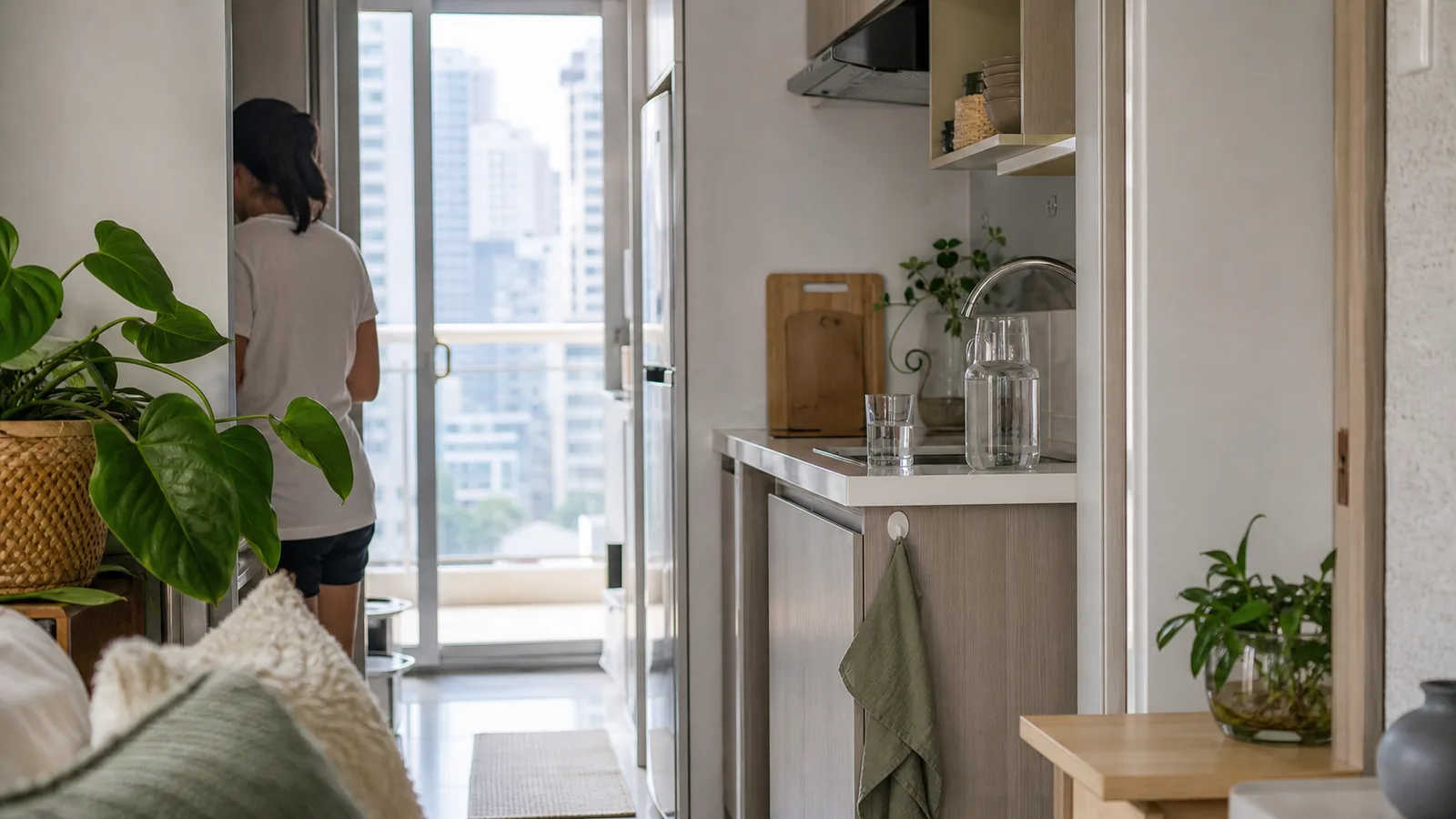
Condo marketing sells the view and the amenities. What it does not mention is that the unit comes with a set of constraints written by somebody else — the developer, the building administration and, if you rent, the owner.
Most of those constraints stay invisible until the day you try to install something, at which point they become the whole story. Here they are in advance.
General information. Building rules, house rules and lease terms vary — check yours in writing before committing to any installation. Plumbing and electrical work in a condo typically requires building approval and an accredited contractor.
Plumbing: the tap, the space, the drain
The second stream is the one people forget. A water ionizer produces acidic water at the same time as drinking water, and in a house that goes down the sink without comment. In a condo it still goes down the sink — but the connection has to be made properly, and that is the part that needs approval.
Pressure, and which floor you are on
Condo supply is typically pumped to a roof tank and gravity-fed down, which means an upper-floor unit has less pressure than a lower one and the top floor least of all. Morning peaks drop it further, exactly when you were filling bottles.
This matters because appliances quote performance under normal supply. The one-litre timing test and the rest of the reasoning is in water pressure and what it means for appliances — do it before you buy, not after.
Sockets, load and air
Condo kitchens are often short of outlets and the circuit is shared with everything else in a small unit. Worth counting sockets before adding a permanent appliance, and worth knowing what it draws — the arithmetic is in the energy your appliances actually use.
Air is the constraint that gets least attention and affects daily life most. A sealed unit with fixed windows, an aircon running most of the day, and cooking three metres from the bed is a genuinely different problem from a house with cross-ventilation — and there is no second room to retreat to. The practical version is in living well in a small space and indoor air in an air-conditioned home.
The bathroom deserves a separate look, because a condo bathroom frequently has no window at all and depends entirely on an exhaust fan that may or may not be working — damp, mould and the bathroom that never dries.
The rules you did not write
- Work permits. Most buildings require one for anything involving plumbing or electrical, plus an accredited contractor.
- Working hours and delivery routes. Service lift bookings and time windows are real and will shape your installation day.
- Restrictions on drilling and fixtures, particularly on walls that are structural or shared.
- What the lease allows, if you rent — this is usually the binding constraint, and it is the whole basis of water filters for renters.
- Whether it has to come out when you leave, and what state the kitchen has to be returned in.
The order to do this in
Ask the building first, then measure, then shop. Reversing that order is how people end up with a machine that cannot be installed in the unit it was bought for.
And when you do shop, the questions that matter are footprint, tap compatibility, drainage and who installs it — the same list as how to read a water system spec sheet, weighted differently. A countertop unit that can be unplugged and taken with you is a genuinely different proposition in a condo than in a house, which is the trade in under-counter or countertop.
Sources
Filed under
- Healthy Home
- condo
- installation
- building rules
- plumbing
- philippines