
Most of what is said about water systems cannot be checked. The specification sheet is the exception: every line on it is a claim about a measurable property of a machine, and a seller who gets one wrong can be shown to be wrong.
That makes it the most useful page in any brochure, and it is worth being able to read it without help.
The four lines you will actually feel
Start here, because these are the ones that decide whether you are happy with the machine in year two.
The chemistry lines, and what they honestly tell you
pH range
The span of acidity to alkalinity the machine can produce across its settings — commonly quoted as 2.5 to 11.5 in this lineup. It describes range, not what you will drink: the drinking settings sit in a narrow band well inside those extremes, and the ends of the range belong to the cleaning and rinsing streams.
Negative ORP (mV)
Oxidation-reduction potential, measured in millivolts. A more negative figure indicates a more strongly reducing solution, which in practice tracks with how much dissolved hydrogen the machine is putting into the water. Published figures across the lineup run from −450 mV to −800 mV.
Two honest caveats. ORP is measured under test conditions on particular source water, so your result at home will differ. And a stronger ORP figure is a statement about the water, not about an outcome in a person — the research position is set out in why hydrogen-rich water matters.
Electrode plates and plate size
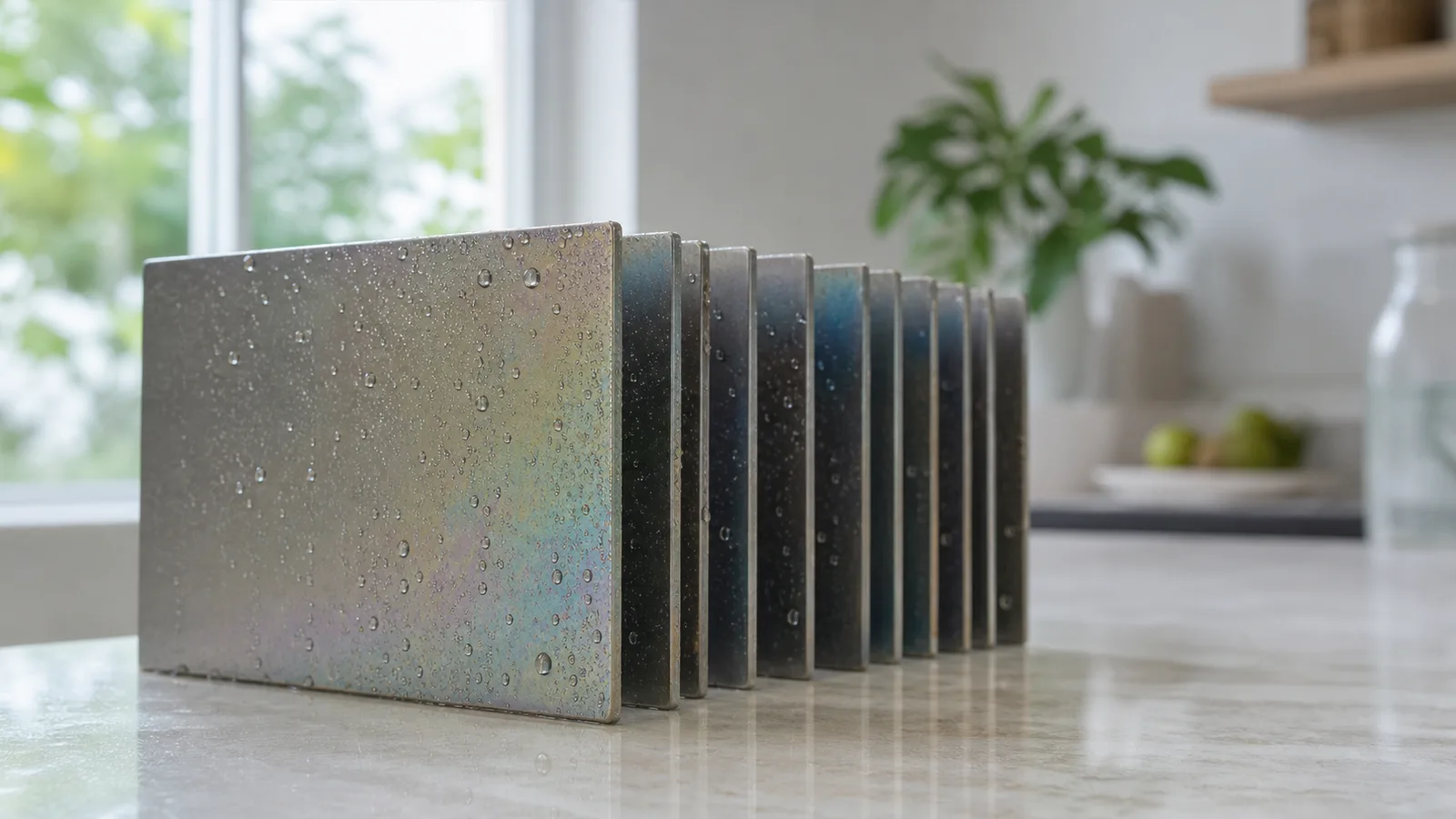
Count and dimensions of the electrodes. Together they give surface area, which is what actually influences the reaction; count alone is not comparable across brands. Worked through in what plate count actually changes.
Water types
How many distinct outputs the machine is set up to produce. It is a feature count rather than a quality measure — five settings on a machine you use two of is five settings.
The line most people skip
Filtration deserves its own reading, because it is the part of the machine that addresses what is actually in your water, and because it is where specification sheets are thinnest. "Built-in filter" is not a specification. What it reduces, by how much, and over how many litres — that is a specification.
The US EPA publishes the list of contaminants regulated in drinking water, and a filtration claim is worth reading against a list like it: this substance, this reduction, this capacity. The distinction between filtering and ionizing is set out in filtration and ionization are two different jobs.
What is not on the sheet at all
No specification sheet in this category tells you what the water does inside a person, because that is not a property of the machine and not something a manufacturer can measure on a bench. When that claim appears, it has come from marketing, not from engineering — and this publication's position on it is in our editorial standards.
Figures quoted here come from the showroom's catalogue and can change; confirm against official Enagic materials. This is appliance information, not medical advice.
A short checklist to take with you
- Production rate for the setting you will actually use daily.
- Filter: what it reduces, over how many litres, at what replacement cost.
- Dimensions against the counter, and power against the socket.
- Warranty length, what it covers, and where servicing happens.
- Plate count with plate size, read as surface area rather than as a score.
- pH and ORP as measured properties of water — not as promises.
Six lines. Everything else on the page is context. The side-by-side comparison puts the lineup's figures in one table if you would rather not collect them yourself.
Sources
Filed under
- Water Technology
- specifications
- buying guide
- water ionizer
- pH
- ORP