There is a design tension at the centre of every air-conditioned home in this country, and almost nobody states it: the thing that makes the room comfortable is the same thing that stops its air from being replaced.
That is not an argument against air conditioning, which in this climate is closer to infrastructure than luxury. It is an argument for doing deliberately what an open window used to do by accident.
What an air conditioner actually does to air
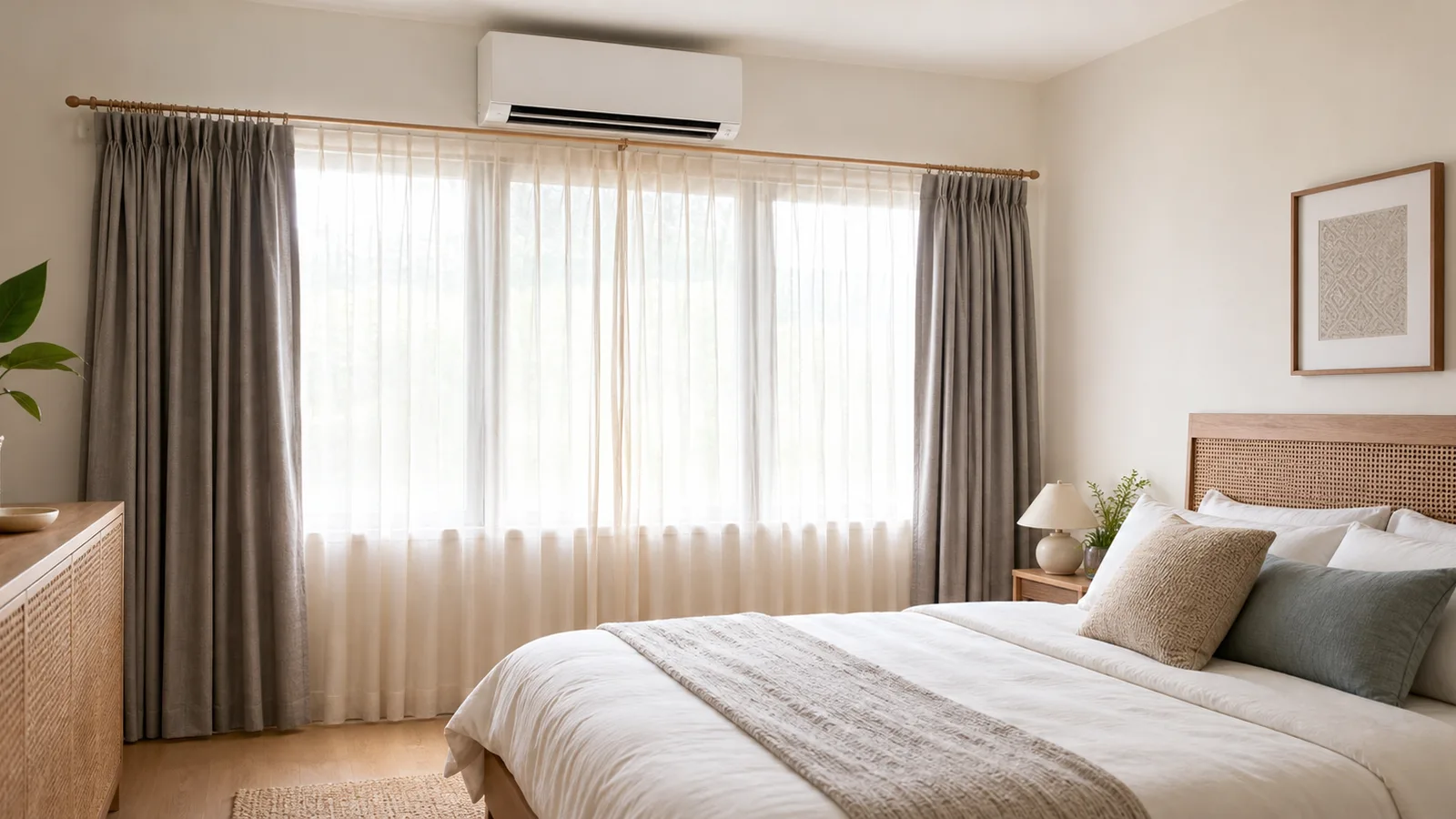
A typical split-type unit recirculates. It draws room air across a cold coil, removes heat and a great deal of moisture, and returns the same air to the room. Its filter catches larger dust — that is a maintenance feature protecting the coil more than an air-quality feature protecting you.
What it does not do is bring in outside air. The room's air is the same air, colder and drier, going round again. Anything generated inside — cooking, cleaning products, new furnishings, damp — accumulates rather than dilutes.
What accumulates in an ordinary home
Nothing exotic. The list is dull, which is why it is easy to overlook.
- Cooking — especially frying, and especially without working extraction.
- Cleaning products — several at once, in a closed room, is the common pattern.
- New furnishings and finishes — mattresses, boards, paint and adhesives release compounds most heavily when new.
- Damp — a bathroom that never dries, condensation behind furniture on an outside wall, a leak nobody has traced.
- Candles, incense and mosquito coils — combustion indoors, in a room with no air exchange.
The pattern is that each is intermittent and small, and the room is continuous and closed. That is what turns unremarkable sources into a stale room.
A ventilation routine that fits this climate
The instruction "open your windows" is unhelpful when the outdoor air is 34°C and humid. The workable version is short, timed and deliberate.
The humidity trade
Air conditioning does one genuinely useful thing for indoor air beyond cooling: it removes moisture, and lower humidity discourages mould and dust mites. That is a real benefit and worth naming.
The catch is that it is doing this only where it runs. Rooms with no unit, and the spaces behind and under furniture in rooms that have one, can stay damp — which is where damp and mould take hold first while the household is congratulating itself on a dry living room.
Where a purifier fits, honestly
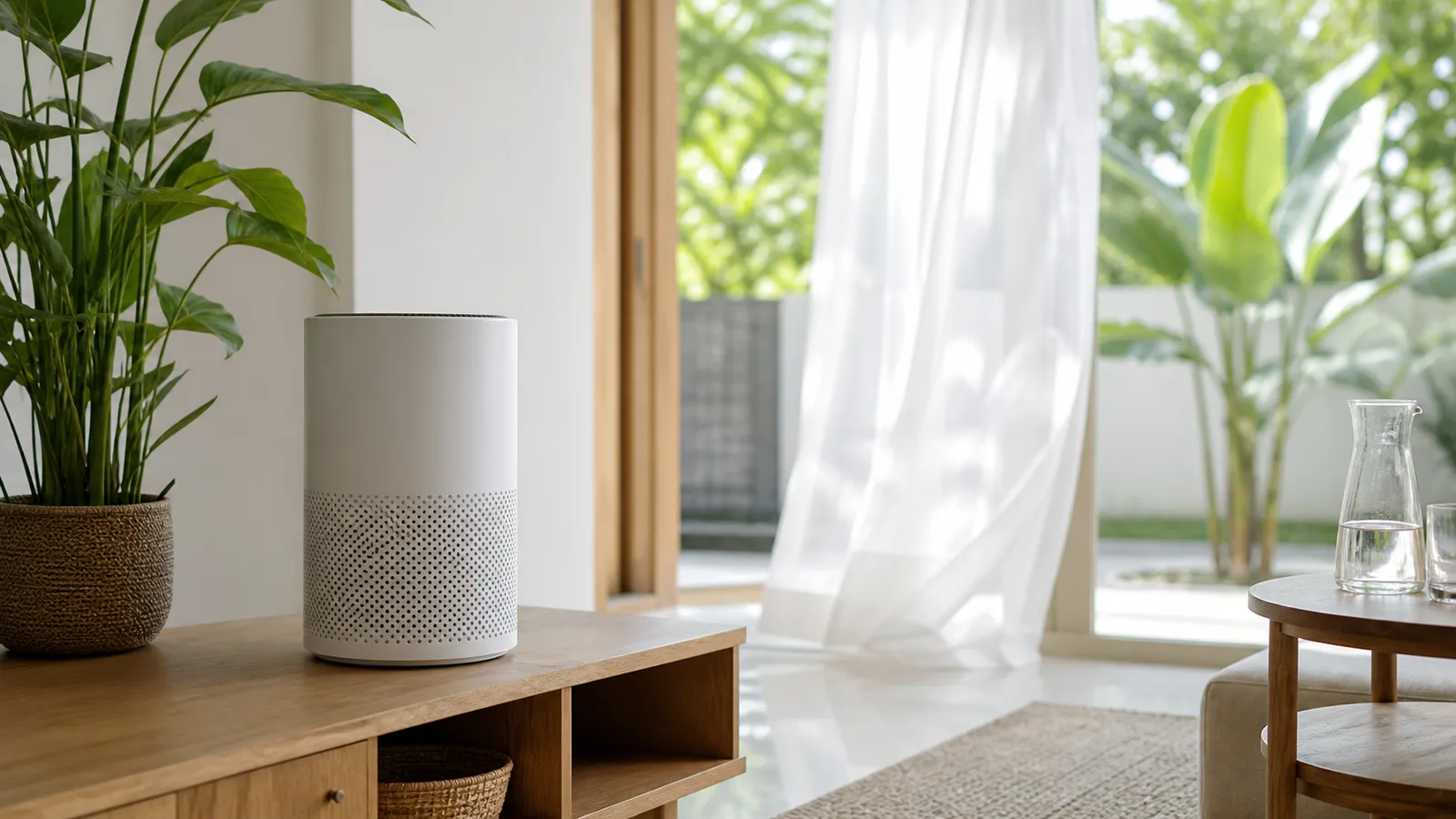
Third, after source control and ventilation. A device treats the air already in the room; it does not exchange it, and it cannot outpace a source that keeps producing. Which technology addresses which problem — particles, gases, odours — is set out in what a home air purifier can and cannot do, including where a compact photocatalytic unit like Kangen Air sits in that picture.
General household information, not medical advice. Anyone in the home with asthma, allergies or a respiratory condition should follow their doctor's guidance; no appliance mentioned treats or prevents any condition.
The short version
A sealed room is comfortable and does not renew its own air. Ten deliberate minutes in the cool of the morning, extraction used at the source, and a bathroom allowed to dry will do more for the air in a Philippine home than any appliance — and all three are free.
The rest of the household variables worth the same kind of attention are in the hidden factors that may affect wellness at home.
Sources
Filed under
- Healthy Home
- indoor air
- air conditioning
- ventilation
- humidity
- home environment