The honest hierarchy for indoor air has three steps, and air purifiers are the third one. The US Environmental Protection Agency puts them in that order for a reason: control the source, ventilate, then filter what is left.
That ordering is not a criticism of purifiers. It is the difference between a device that helps and a device asked to do a job it structurally cannot.
Why source and ventilation come first
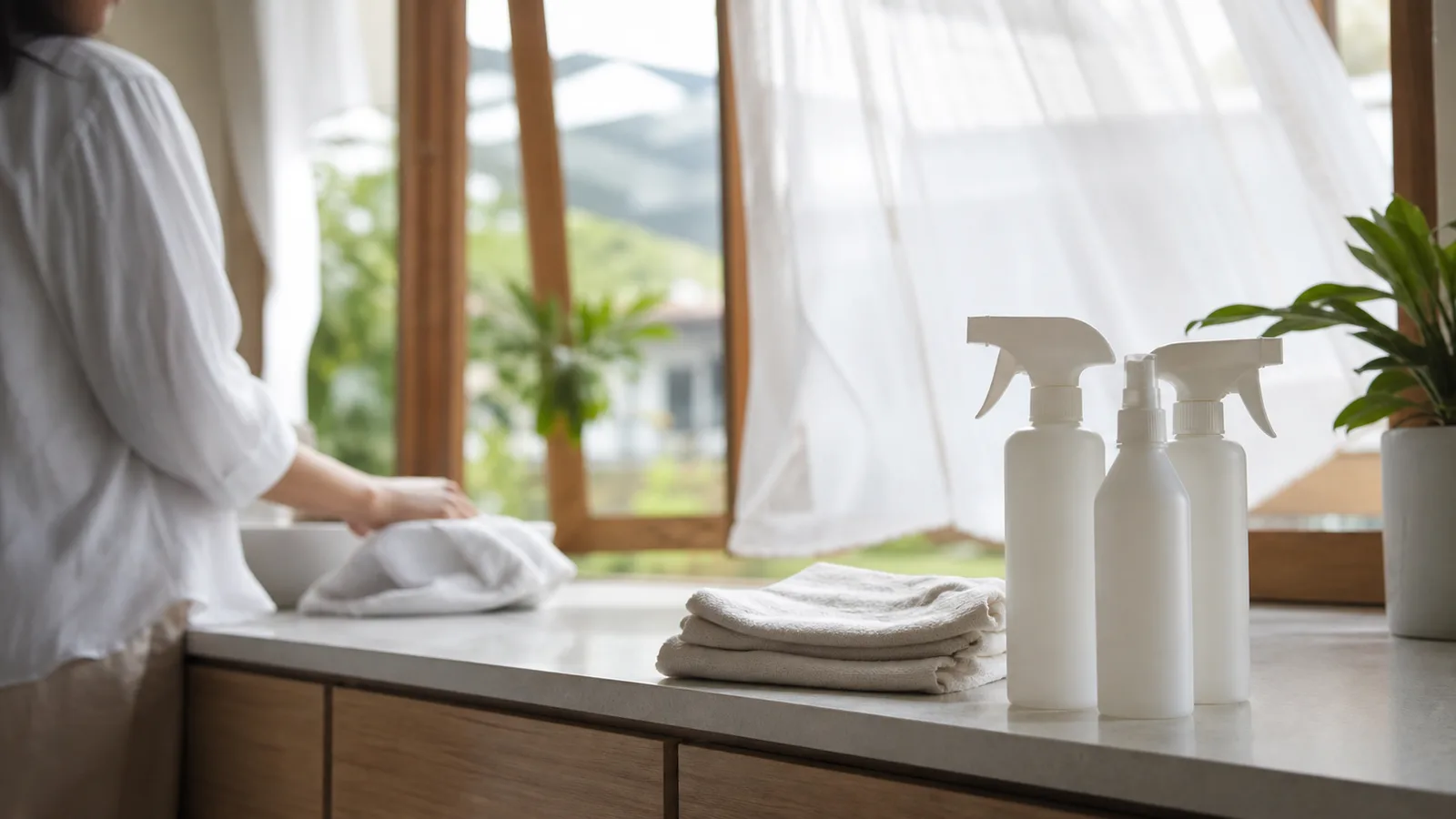
A purifier treats air that is already in the room. If something in the room keeps producing what you are trying to remove — a damp corner, a strong cleaning product, cooking without extraction — the device is bailing a boat that still has a hole in it. No purifier dries out a damp wall.
Ventilation is second because it addresses the whole room at once, including the gases a filter cannot capture. In an air-conditioned tropical home, where windows stay shut for comfort, this is the step most often skipped — which we cover in more depth in the hidden factors that may affect wellness at home.
The technologies, and what each actually addresses
| Technology | Acts on | Honest limitation |
|---|---|---|
| HEPA / mechanical filtration | Particles — dust, pollen, smoke particulate, pet dander | Does essentially nothing to gases and odour molecules; filters need replacing |
| Activated carbon | Gases and odours, by adsorption | Saturates and must be replaced; capacity is finite and often overstated |
| Photocatalytic oxidation (PCO / TiO₂ + UV) | Breaks down certain gaseous compounds and odours at a catalyst surface | Evidence in real rooms is more limited than in laboratory conditions; performance depends heavily on contact time and design |
| Ozone generators | Marketed for odours | The EPA advises against them for occupied spaces — ozone is itself a lung irritant. Not the same thing as the technologies above |
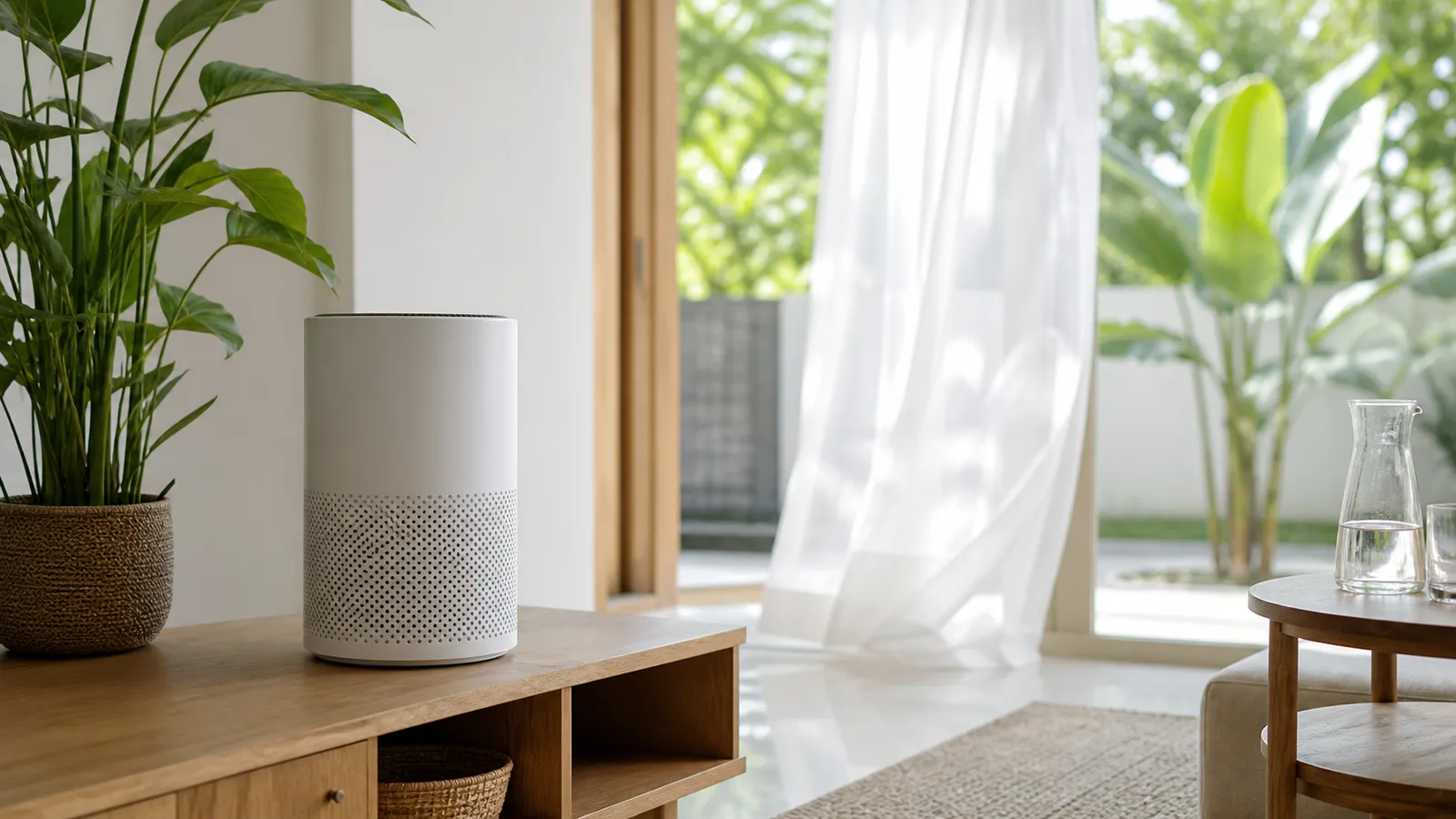
The showroom's device in this category, Kangen Air, is a photocatalyst unit: titanium dioxide with a UV LED, USB-C powered, rated at 0.53 m³/min airflow over roughly a four-metre radius. That is the third row of the table — an odour-and-gas approach rather than a particle filter, and a compact one rather than a whole-house machine.
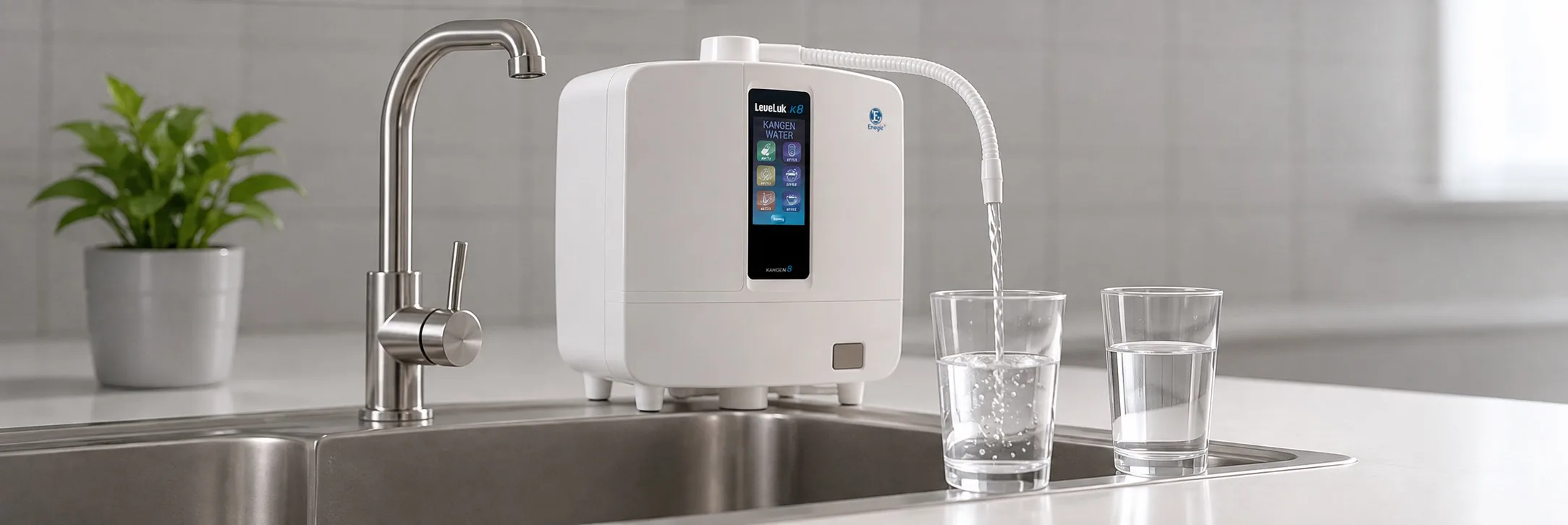
Which is worth stating plainly: a small photocatalytic unit is not a substitute for a HEPA filter if your concern is dust or smoke particulate, and it is not a substitute for opening a window. It is designed for odours in a small space. Nor does it have anything in common with what a water filter does, despite the two being sold together as household purification — they are unrelated problems in one marketing category.
Sizing and placement, where most units are wasted
What to reasonably expect
A well-matched device in a closed room, maintained properly, can measurably reduce what it is designed to act on. That is a real benefit and it is enough of one — cooking smells that clear faster, a room that feels less stale.
What no purifier does is make a room healthy on its own, and any product sold on that promise has left the ground the evidence supports. This publication's rule about the difference between an engineering claim and a health claim applies here exactly as it does to electromagnetic devices: what a device measurably does, and how you will feel, are two different statements.
General household information, not medical advice. If someone in the home has asthma, allergies or a respiratory condition, their doctor's guidance comes first — no appliance described here treats or prevents any condition.
The order, one more time
- Remove the source — fix damp, ventilate cooking, use less product in closed rooms.
- Ventilate — deliberately, since the climate means it will not happen by accident. Most of what a Filipino house was designed to do with its own openings still works, and it is free.
- Then filter or treat what remains, with a device matched to the room and the actual problem.
Households that follow that order tend to be satisfied with their purifier. Households that buy one first tend to conclude that purifiers do not work — when what they proved is that step three cannot do the job of steps one and two.
Sources
Filed under
- Healthy Home
- air purifier
- indoor air
- ventilation
- home environment
- buying guide