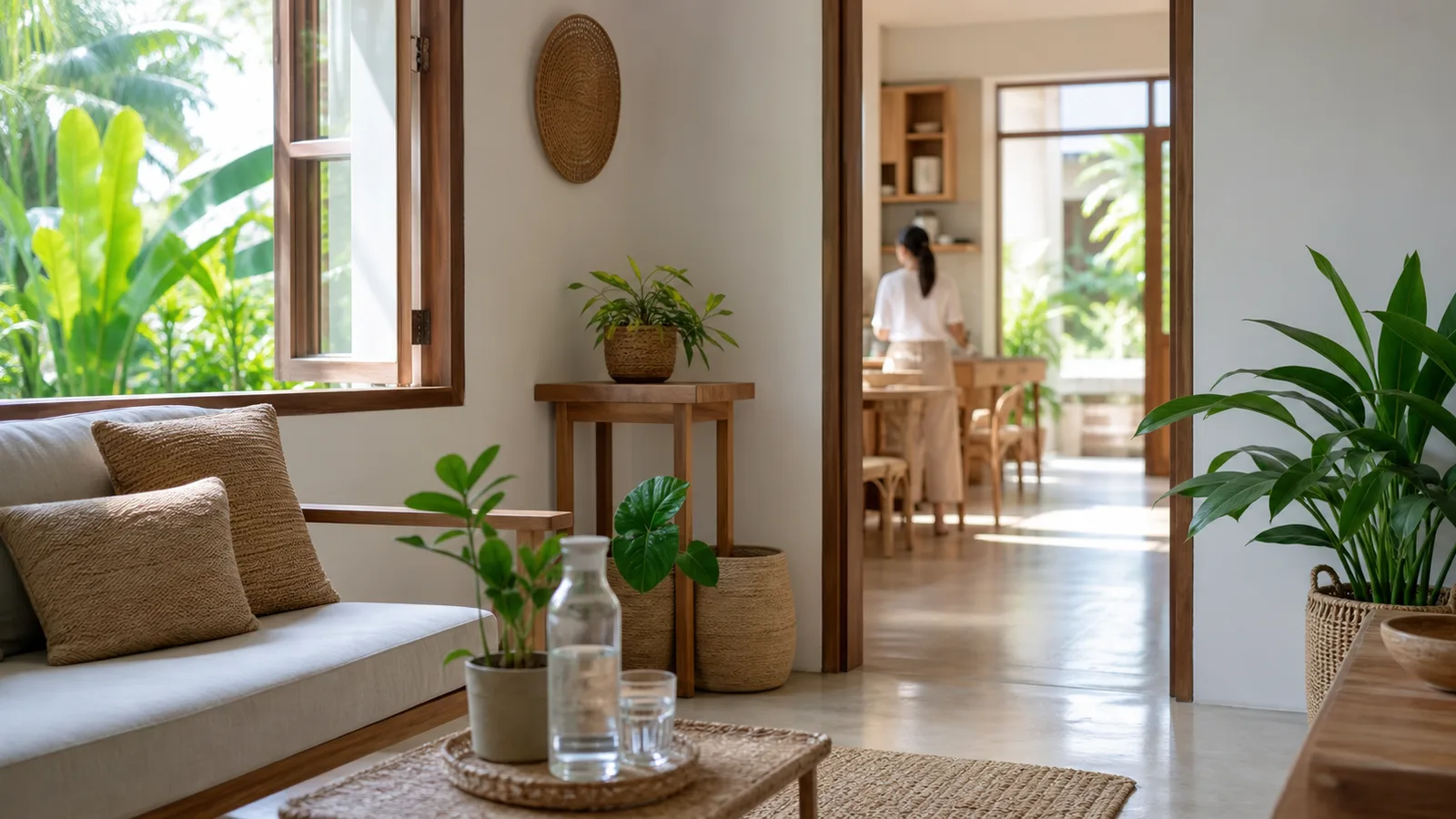
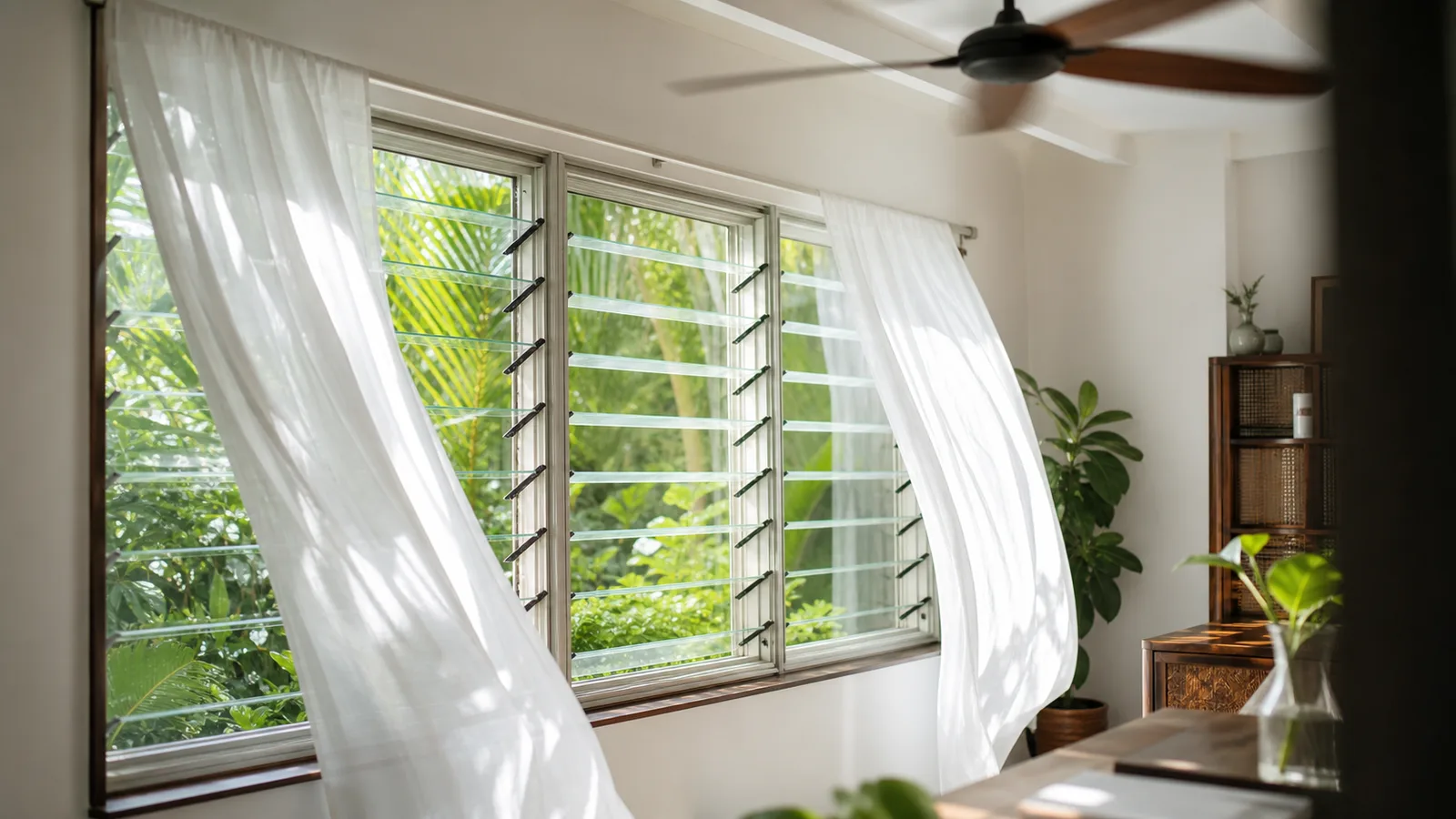
Before air conditioning, houses here were built to move air: high ceilings, jalousie windows, openings on opposite walls, capiz shutters, spaces under the roof. None of that was decorative. It was the cooling system, and most of it still functions.
What has changed is how households use it. Windows stay shut for aircon, for security, for dust, or simply out of habit — and a house designed to breathe stops breathing.
How air actually moves through a house
Two mechanisms do nearly all the work, and knowing them changes which window you open.
This is why old houses put small openings above doors — those transoms let air move between rooms even with the door closed, which is exactly what a modern sealed bedroom lacks. A unit with windows on one wall only cannot arrange a path at all, which is one of the limits a condo imposes that stay invisible until you test them.
When to open, in this climate
The instruction to "air out the house" is unhelpful at 2pm in April. Timing is the whole skill.
- Early morning — coolest air, lowest outdoor dust in most residential areas, and the best window of the day for a full air change.
- Late evening — after the heat has dropped, particularly useful in bedrooms before the room is closed for the night.
- Immediately after cooking or cleaning — regardless of the hour, because the source is right there and the alternative is letting it settle, which is most of what goes wrong with cleaning products in a closed room.
- Not during the worst traffic hours if you are on a busy road, where outdoor air is at its poorest.
The rainy season problem
Months of closed windows and high humidity is the combination that produces mould, and it is the hardest ventilation period of the year precisely because opening up seems counterproductive. It is worth handling in May, before the wet months arrive.
Two things help. Short bursts between showers — even fifteen minutes of cross-flow moves a surprising volume of air. And fans: moving air indoors does not exchange it, but it prevents the still pockets behind furniture and in corners where damp establishes first.
Keep furniture a few centimetres off outside walls, and check behind it during the wet months rather than after. Mould is a moisture problem rather than a cleaning problem, and much easier to prevent than to remove.
Houses that are half conditioned
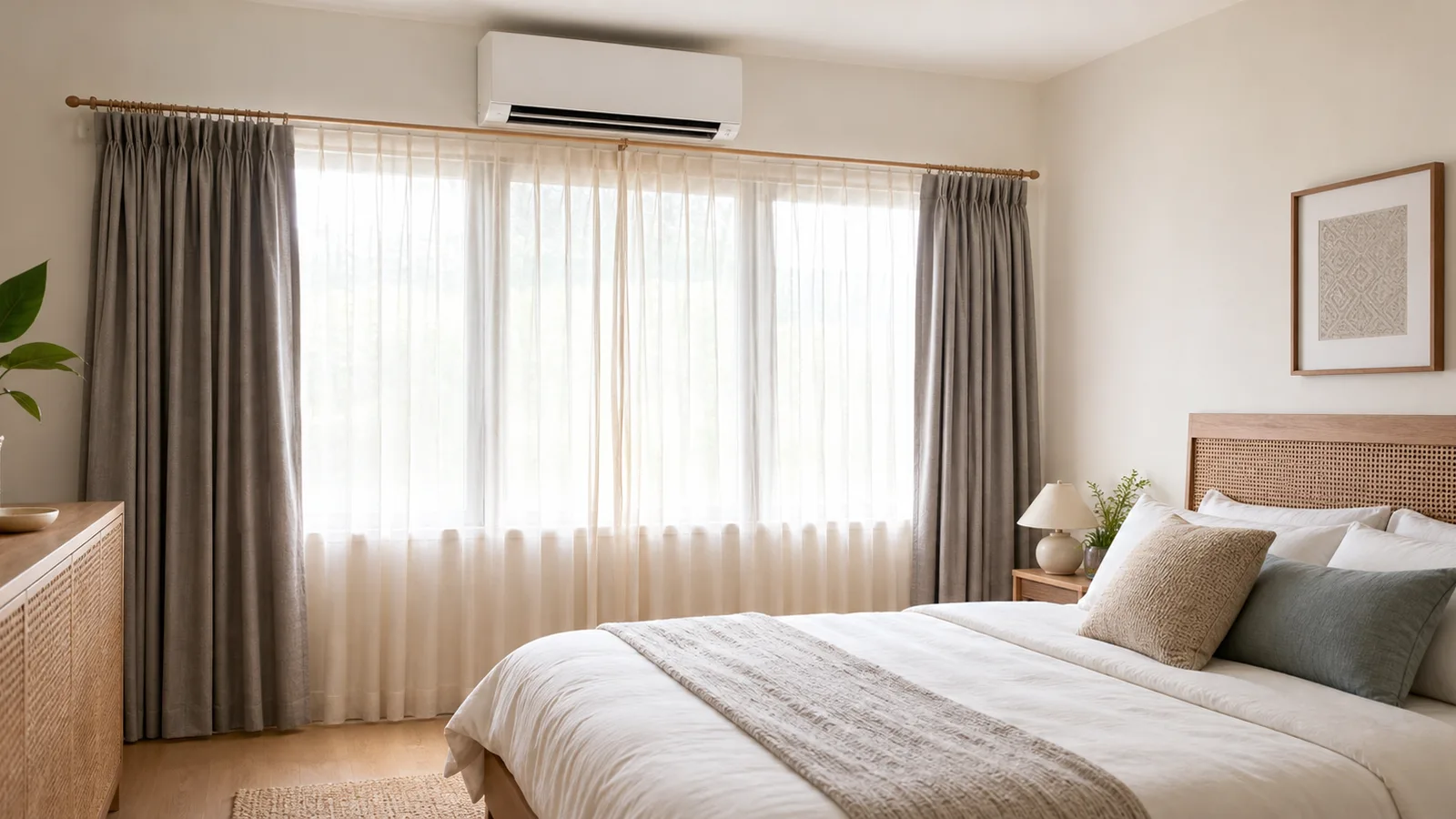
Most Filipino homes now run a hybrid: bedrooms conditioned at night, the rest of the house open. That works, with one caveat worth naming — the conditioned rooms are the ones that never exchange air, and they are also the rooms people sleep in for eight hours.
Air those rooms deliberately in the morning, when they are empty and the outside air is coolest. The reasoning is set out in full in indoor air in an air-conditioned home, which covers what a recirculating unit does and does not do.
Where devices fit
After all of the above, not instead of it. A purifier treats the air already in a room; it cannot exchange it, and it cannot outpace a source that keeps producing. Which technology addresses which problem is covered in what a home air purifier can and cannot do.
General household information, not medical advice. Persistent damp, mould growth or breathing difficulty at home warrant professional attention rather than a ventilation tip.
The short version
Two openings, not one. Early morning and late evening. Straight after cooking. Fans for the still corners in the wet months. Furniture off the walls.
Every item on that list is free, and together they do more for the air in a tropical house than any appliance sold for the purpose.
Sources
Filed under
- Healthy Home
- ventilation
- airflow
- tropical house
- rainy season
- home design