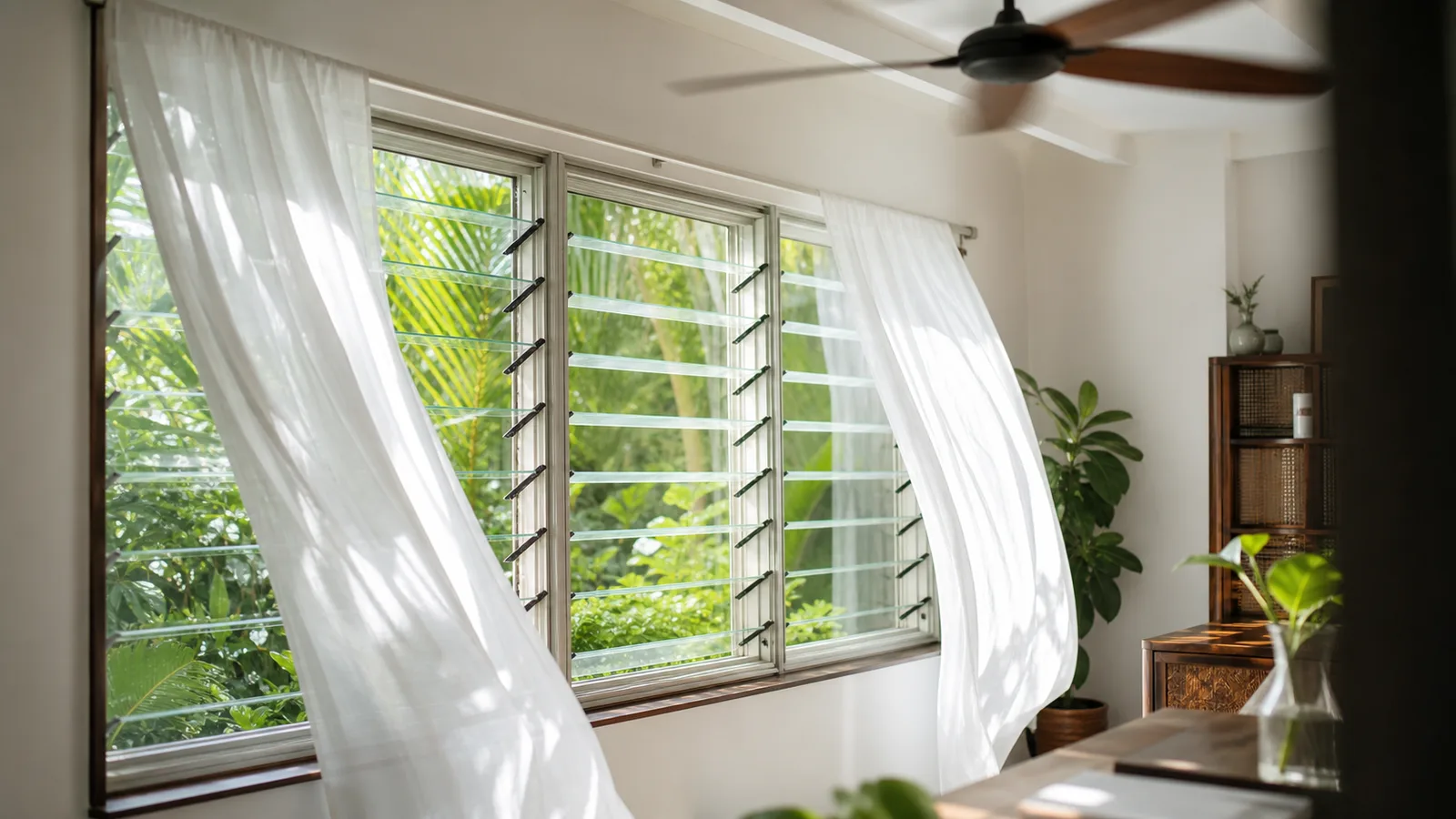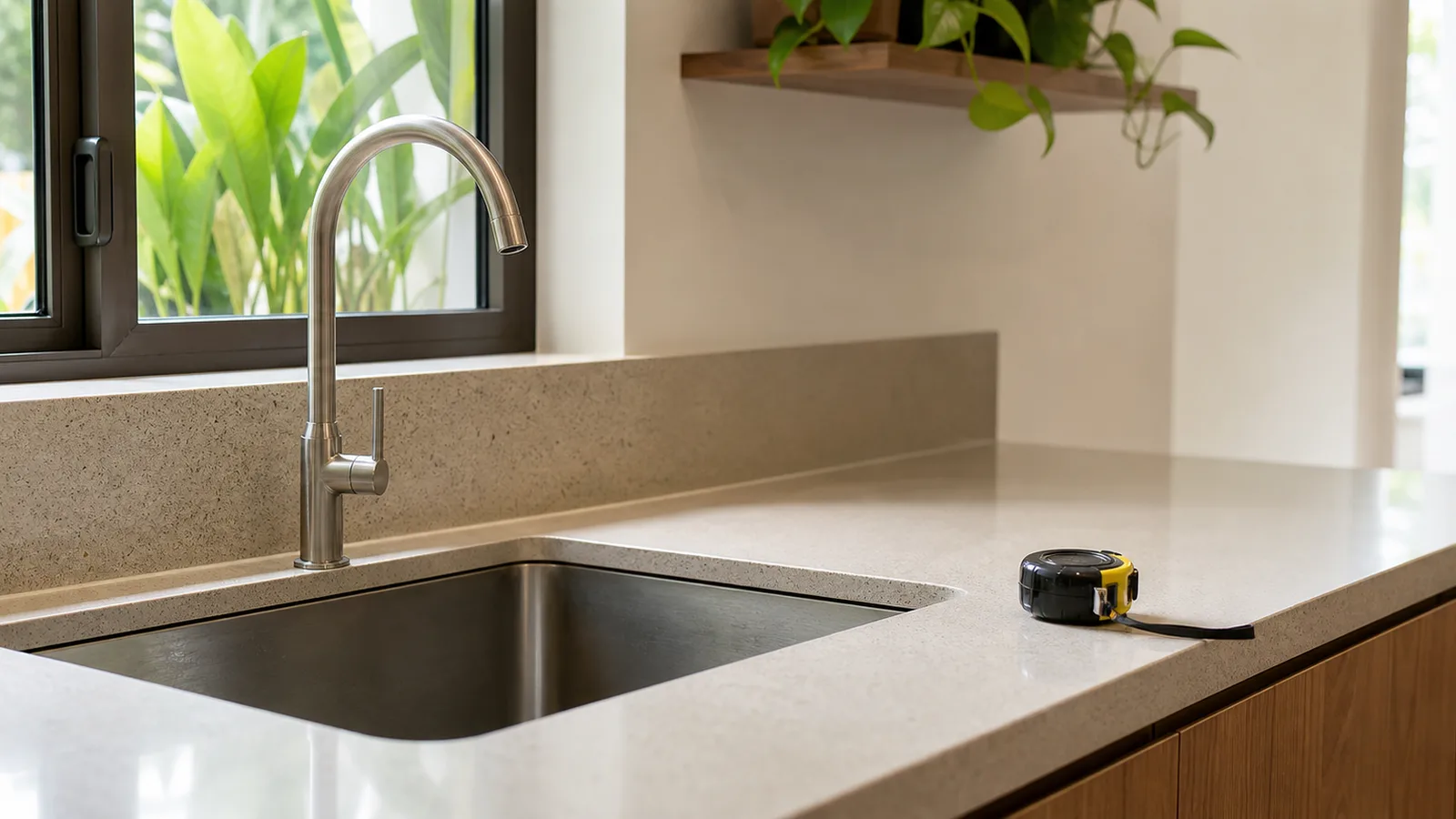
Most healthy-home content is aspirational: air purifiers, plants, a renovation. This is the other kind — a walk through an ordinary Philippine house looking for the things that cost little to fix now and a great deal to fix later.
It takes about twenty minutes. Do it once a year, ideally before the rainy season rather than during it.
Kitchen
Bathroom
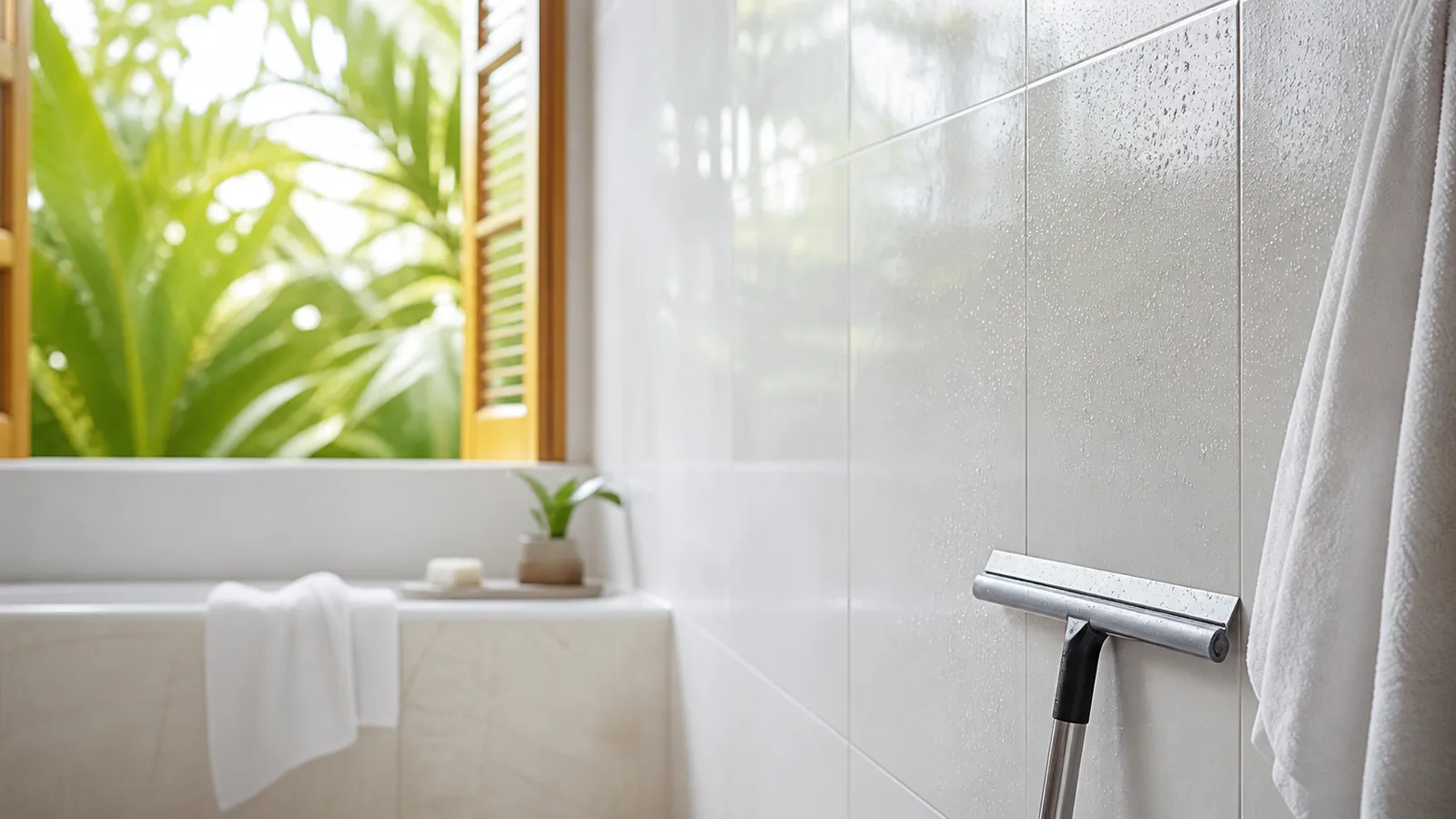
In this climate the bathroom is the room most likely to be quietly deteriorating, particularly in a condo where it may have no window at all.
- Does it dry out between uses? If the answer is never, that is the finding — damp, mould and the bathroom that never dries.
- Check the grout and the ceiling corners, which is where it starts.
- Is the exhaust fan working, or just making noise? Hold a tissue to it.
- Count the plastic on the shelf while you are there — a small, optional exercise in a plastic-free bathroom.
Bedrooms
The most closed rooms in the house, and often the least aired. Two questions: when was this room last opened up properly, and is it genuinely dark at night? Both are covered in light and darkness in a bedroom and indoor air in an air-conditioned home.
If there is an aircon, when was the filter last washed? It is a ten-minute job that most households do far less often than the manual asks.
The whole house
What this list deliberately does not include
Equipment, mostly. Almost everything above is a habit or a ten-minute maintenance job, and habits are what a house actually runs on.
Where a device genuinely helps, it helps with a specific, bounded problem — an air purifier addresses airborne particles and does nothing about damp or ventilation, which is the distinction drawn in what air purifiers can and cannot do. Buying one to solve a problem it does not address is the most common expensive mistake in this category.
General home-maintenance information, not medical advice. Extensive mould, persistent damp or a suspected electrical fault should be handled by a professional.
Sources
Filed under
- Healthy Home
- checklist
- home maintenance
- ventilation
- damp
- philippines