Sustainability advice has an odd habit of arriving as a shopping list — buy the bamboo one, buy the steel one, buy the refill. The single most effective thing a household can do rarely appears on it, because nobody profits from it: keep using what you already own.
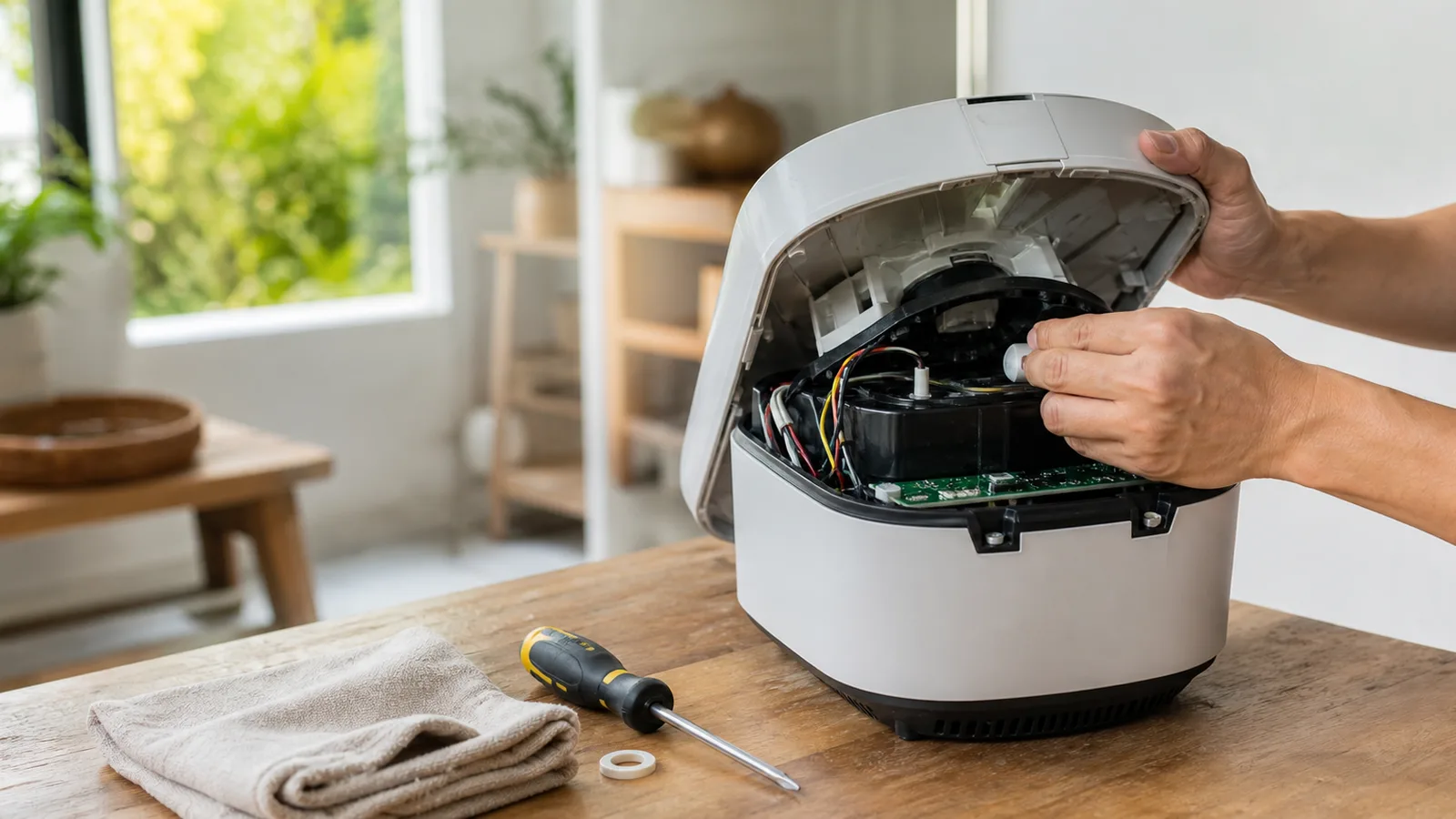
Everything already made has already cost what it cost — the materials, the manufacturing, the shipping. Replacing a working item resets that bill. Repairing one does not. It also starts a second problem, because the thing being replaced has to go somewhere, and where an old appliance actually ends up is rarely the tidy recycling people picture.
The arithmetic behind the slogan
A product's environmental cost is heavily weighted toward the day it was made. For most household goods, extending the life of the existing item beats buying a more efficient replacement, unless the old one is genuinely wasteful in daily running.
That is the exception worth naming honestly: a very old, very inefficient always-on appliance — an ancient refrigerator, for instance — can consume enough electricity that replacement wins. That is a calculation, not a rule, and it applies to a small number of items rather than to everything with a scratch on it.
The advantage this country already has
Repair culture never disappeared here. There is a shop for shoes, a man who fixes electric fans, someone who rewinds motors, a tailor who alters rather than discards. In much of the world that infrastructure was lost; here it is a short walk away.
That is a genuine advantage and it is worth using deliberately rather than by default. A fan that costs a few hundred pesos to repair against a few thousand to replace is not a close decision — but it only happens if the repair option occurs to you before the shopping app does.
Judging whether something is worth fixing
Buying things that can be repaired at all
The decision that most determines whether repair is possible is made years earlier, at purchase. Some products are built to be opened and serviced; others are sealed, glued and effectively disposable at the first fault.
- Are spare parts sold separately? Filters, gaskets, lids, belts. A manufacturer that sells parts expects the product to outlive them.
- Is there local service, or does it ship abroad? For anything substantial, this decides whether a fault is an inconvenience or an ending.
- Is it screwed together or glued? You can often tell by looking.
- What is the warranty, and what does it actually cover? Who will still be around to honour it matters as much as how many years it names.
Those questions apply to any household system with a motor, a pump or a filter — including a water ionizer, where filter availability and local service matter more over ten years than any specification on the box, as how to read a water system spec sheet argues. What those ten years actually cost is mostly filters.
Maintenance is the cheapest repair
Most appliance failures are the end of a process that started much earlier: the filter not changed, the coil not cleaned, the hose not checked. Maintenance is repair performed before the failure, at a fraction of the cost — the argument made in detail for one appliance in cleaning cycles and ionizer maintenance.
It is also the least likely thing to happen, because nothing goes visibly wrong when it is skipped. Put the intervals on a calendar rather than trusting anyone to remember.
The close
Ask for the repair quote before shopping. Buy things that can be opened. Do the maintenance while everything still works. None of that requires buying anything, which is exactly why it never appears on a sustainability shopping list.
Sources
Filed under
- Sustainable Living
- repair
- appliances
- consumption
- waste
- sustainable living