Most of the argument about these machines happens over the purchase price, which is the one number that is fixed and paid once. The number that actually determines whether the household is content in year four is the running cost, and it is rarely put in front of anyone.
Here is what it consists of. This article deliberately contains no prices — they change, they vary by region, and quoting them would make it wrong within months. What it gives you is the structure to fill in with your own figures.
Prices, filter intervals and service terms vary and change. Get current figures from an authorized Enagic representative and do the arithmetic with your own household's numbers. This is appliance information, not medical or financial advice.
Filters, which are effectively the whole answer
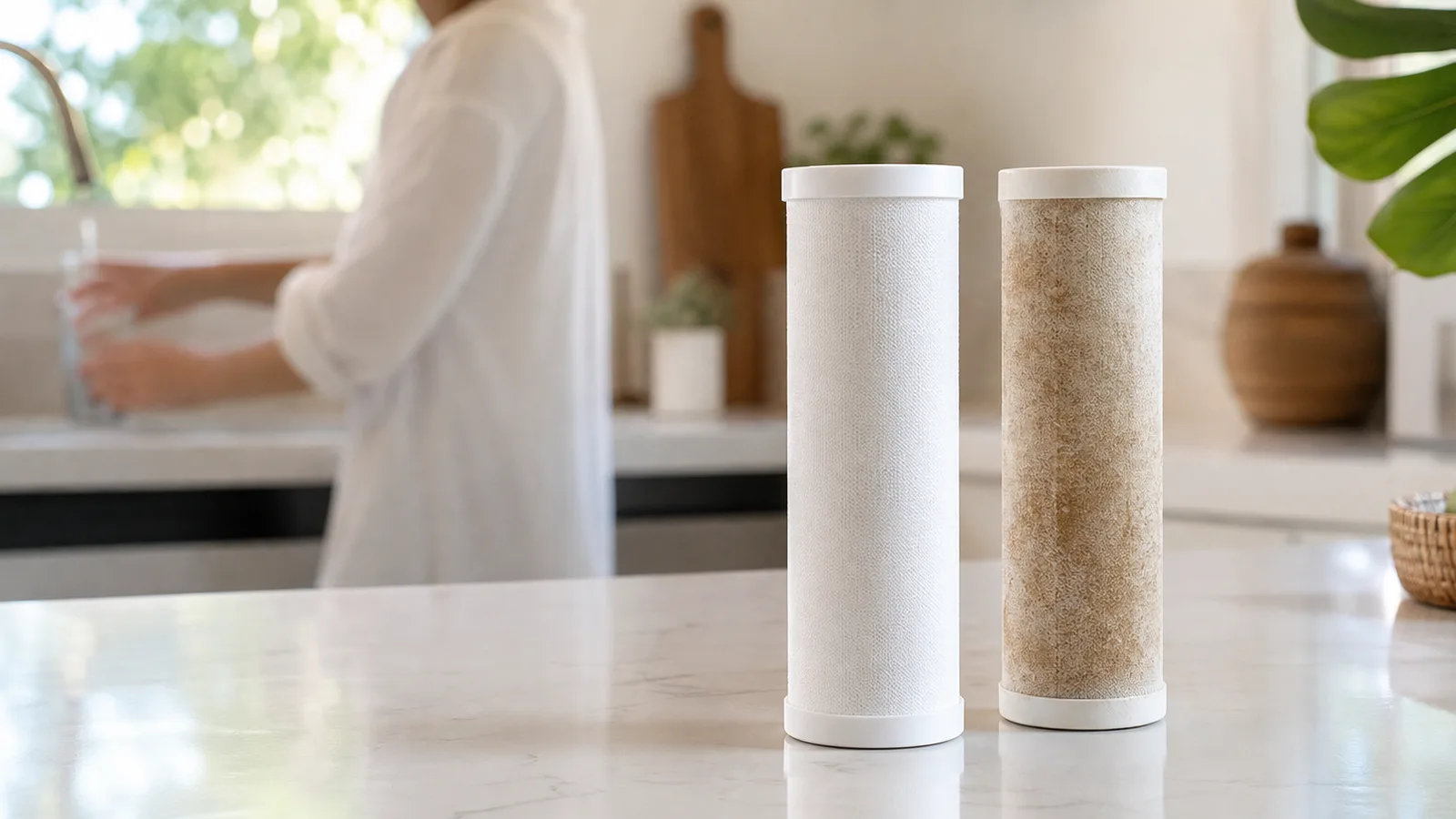
Cartridges dominate the running cost of any home water system by a wide margin. Everything else on this page is a rounding error next to them.
Cost per cartridge divided by its rated litres gives you a cost per litre, and that multiplied by your household's annual draw gives you the annual filter cost. It is the only calculation on this page that matters, and it takes five minutes.
Electricity, which is smaller than people expect
The units in this showroom's catalogue draw roughly 120 to 230 W depending on model, and they draw it only while water is actually flowing. A household running the machine for a few minutes a day is looking at a fraction of a kilowatt-hour per month.
That is a genuinely small figure and it is worth stating in both directions: it is not a hidden expense, and it is not a saving worth advertising either. The arithmetic behind why bursts of high wattage barely register is in the energy your appliances actually use.
Water, including the stream you pour away
The line most comparisons omit. Electrolysis produces two streams, so filling a litre of drinking water also produces a quantity of acidic water at the same time.
On a metered supply that is a real, if modest, cost — and it is a genuine reason to find a use for the second stream rather than sending all of it to the drain, per the second stream: acidic water and its household uses.
Servicing, and the cost of not planning for it
Budget nothing for years and then something at some point. Cleaning cycles are routine and free; a fault is not, and what it costs depends almost entirely on decisions made before purchase — where the nearest authorized service centre is, what the warranty excludes, and who pays for transport.
Scale is the most common avoidable cause of trouble and it depends on your local supply, which you can test cheaply — water hardness and home water testing. The questions to settle before buying are in warranty and service: settle it before you buy.
Comparing it against what you do now
The comparison only means something against your household's actual current spend — delivery, refilling station runs, or bottled water bought on the way home. Total that for a year first; most households have never added it up and are surprised in one direction or the other.
Then set purchase price plus annual running cost against it and find the break-even in months. If it does not break even in a period you find reasonable, that is a finding rather than a failure — the fuller version of this reasoning is in is hydrogen water worth it? and refilling stations, delivery and a home system.
One thing that should not enter the arithmetic is any health benefit, because none is established — what hydrogen water research has and has not shown. This is a convenience-and-cost decision, and it holds up or does not on those terms alone.
Sources
Filed under
- Hydrogen Water
- cost
- filters
- ownership
- running cost
- buying