Home water testing is genuinely useful and routinely misunderstood, usually in the direction of thinking it has told you more than it has.
The tools available to a household measure the things that are easy to measure. Almost nothing that would constitute a real safety problem is on that list.
This article is about measurement, not safety assessment. If you have reason to doubt your water — a sudden change, discolouration, an advisory, or illness in the household — contact your water provider or an accredited laboratory rather than buying a test kit.
What a household can measure
All four are worth knowing. None of them tells you whether the water is safe to drink.
TDS, and why the number gets misused
A TDS meter does not identify anything. It measures how well the water conducts electricity and reports a figure that lumps together calcium, magnesium, sodium, bicarbonate and anything else dissolved and charged.
Which means a high reading is usually minerals — the same minerals that make water taste like something — and a low reading is not a quality grade. Distilled water reads near zero and mineral water from a spring reads high; neither fact says anything about contamination.
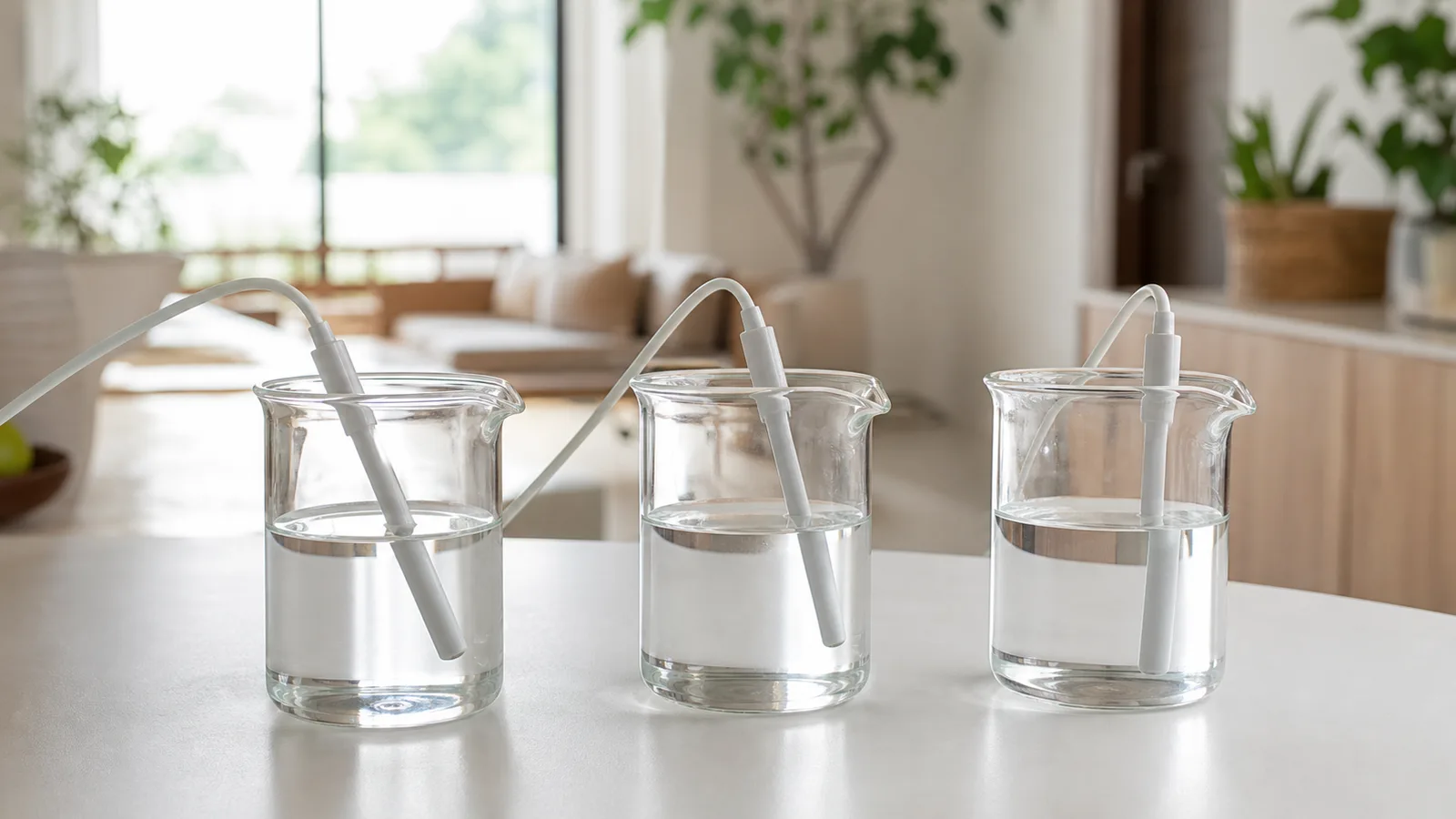
The other demonstration prop is an electrolysis device that turns tap water brown in a glass. That colour comes from the sacrificial iron electrode corroding, not from anything that was in your water. It is a chemistry demonstration performed as a scare, and the appropriate response is to ask what the electrode is made of.
What no home kit will tell you
- Microbiological contamination — bacteria, viruses, protozoa. The most consequential category and the one requiring laboratory culture.
- Heavy metals at the concentrations that matter, which need instrumentation.
- Most organic chemicals, pesticides and industrial residues.
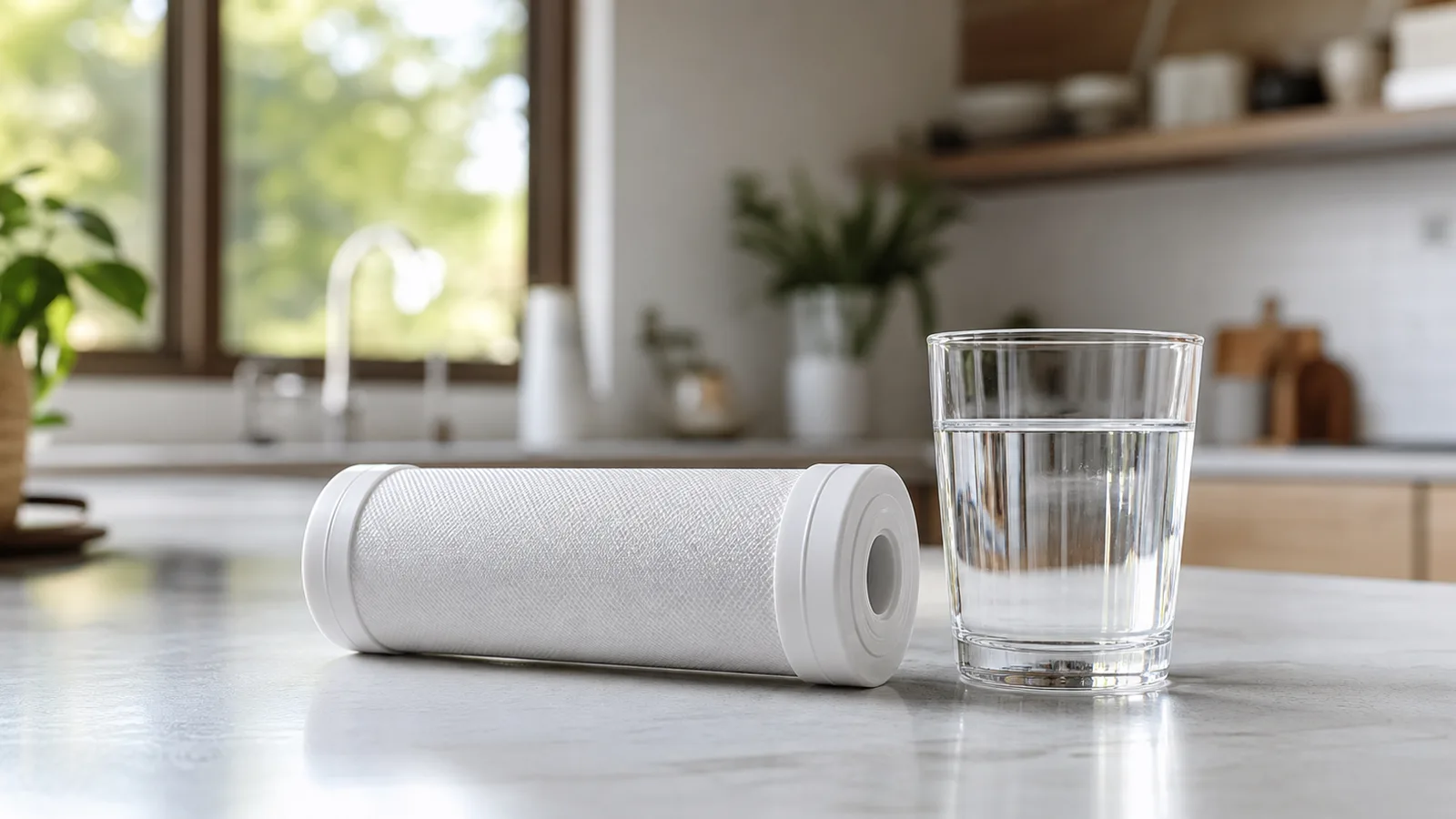
- Whether a filter is still working. There is no strip for a saturated carbon cartridge, which is why the schedule matters — what filters remove and what they do not.
This is the important half of the article. A household that tests pH and TDS, sees numbers it likes, and concludes the water is fine has drawn a conclusion the test cannot support.
When to have it tested properly
- After flooding, or after any event that could have affected the supply.
- If the water changes — colour, smell or taste, suddenly rather than gradually.
- If your source is a well or a private supply rather than a utility.
- If someone in the household is repeatedly unwell and the water is a suspect, in which case start with a doctor.
- Before spending significantly on treatment, so that what you buy addresses something that is actually there.
An accredited laboratory tests against the Philippine National Standards for Drinking Water and returns figures with the method attached. It costs more than a strip and is the only version of this that answers a safety question.
The useful conclusion
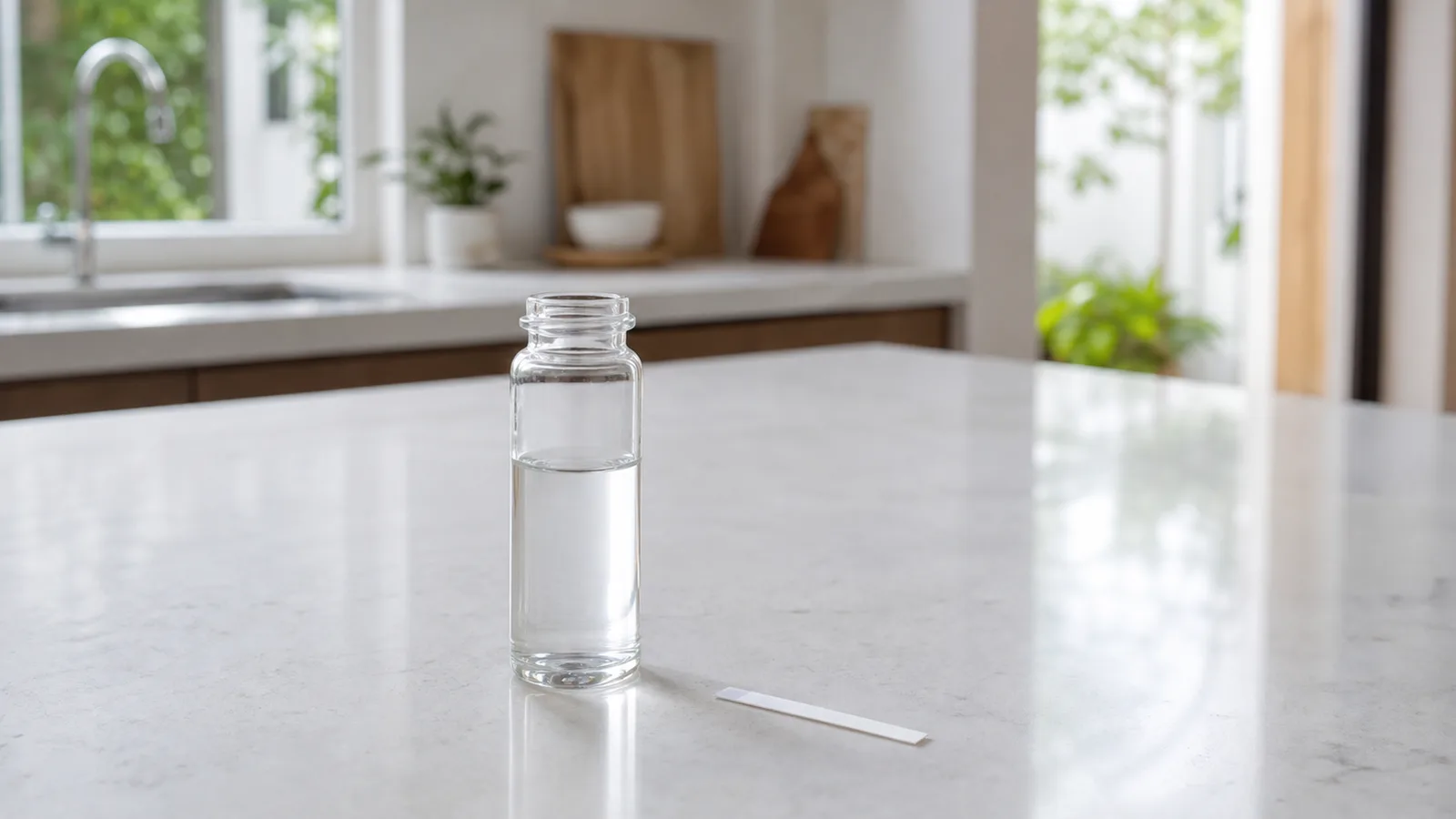
Test at home to understand your water — its hardness, its chlorine, why it tastes the way it does, why the kettle scales. Those answers are real and they inform sensible decisions about filters and maintenance.
Do not test at home to establish safety, and do not accept anyone else's meter as evidence of it. Taste, appearance and a two-peso strip are all poor proxies — why water tastes different from different sources.
Sources
Filed under
- Water Technology
- testing
- TDS
- pH
- laboratory
- demonstrations