Bathroom sustainability content has a recognisable shape: a photograph of a shelf holding six identical amber bottles, a bamboo brush, and nothing anyone actually uses. It photographs beautifully and it survives about three weeks.
The bathroom is a hard room for this because everything in it is used daily, wet constantly, and unforgiving of products that do not work. So the useful article is not a list of swaps — it is which swaps hold.
The swaps that hold
What tends to fail in this climate
Humidity is the variable most guides ignore, and it decides several of these.
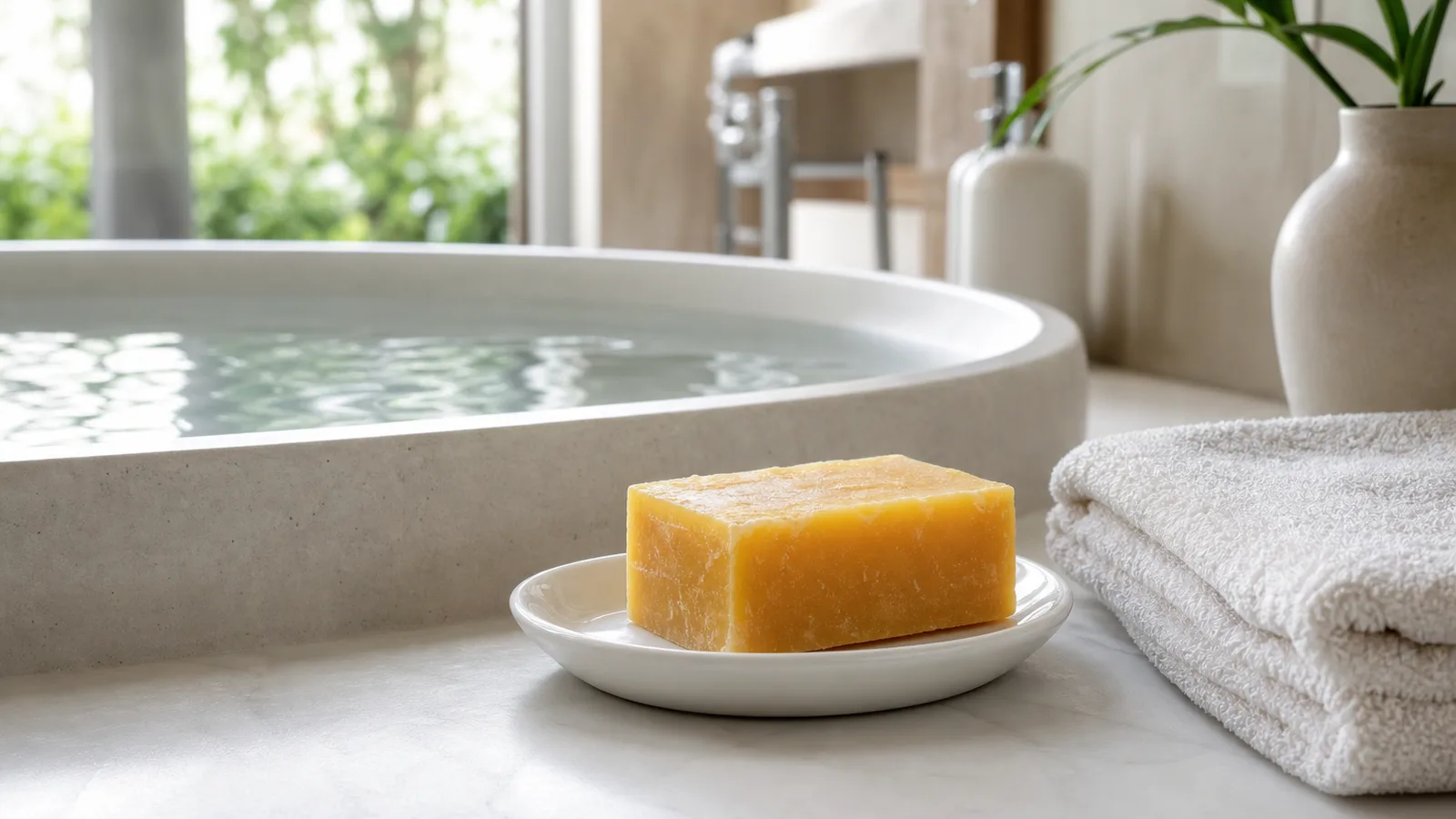
- Shampoo bars work for some hair and not others, and in humid bathrooms they stay soft and dissolve fast unless kept somewhere dry and draining. Worth trying, not worth pretending is universal.
- Bamboo toothbrushes mould at the base if left wet in a closed bathroom — the same damp problem described in damp, mould and the bathroom that never dries. Stand them somewhere with air movement.
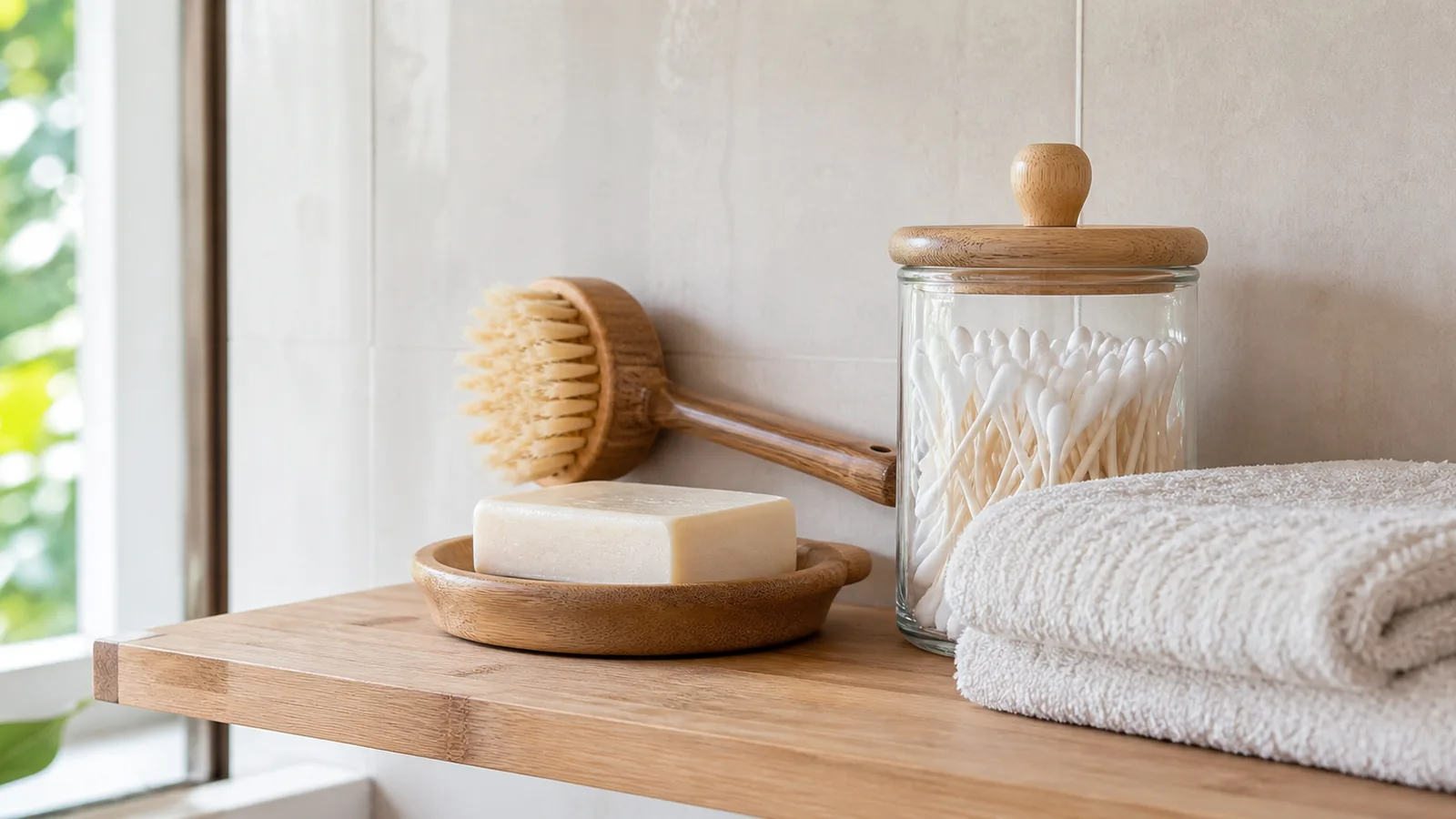
- Wooden brushes and boxes generally struggle in a wet room unless they dry properly between uses.
- Toothpaste tablets divide people sharply. Try a small pack before committing to a subscription.
The things not worth bothering with
Two honest exclusions, because a list that pretends everything is swappable is a list nobody trusts.
Medicines and anything medical stay in their packaging, which exists for good reasons. Products that manage a real problem — a prescribed shampoo, a skin product that works — are not worth trading for a worse version in nicer packaging. Sustainability is not a reason to make a health-managed routine harder.
The largest line, which is not a product
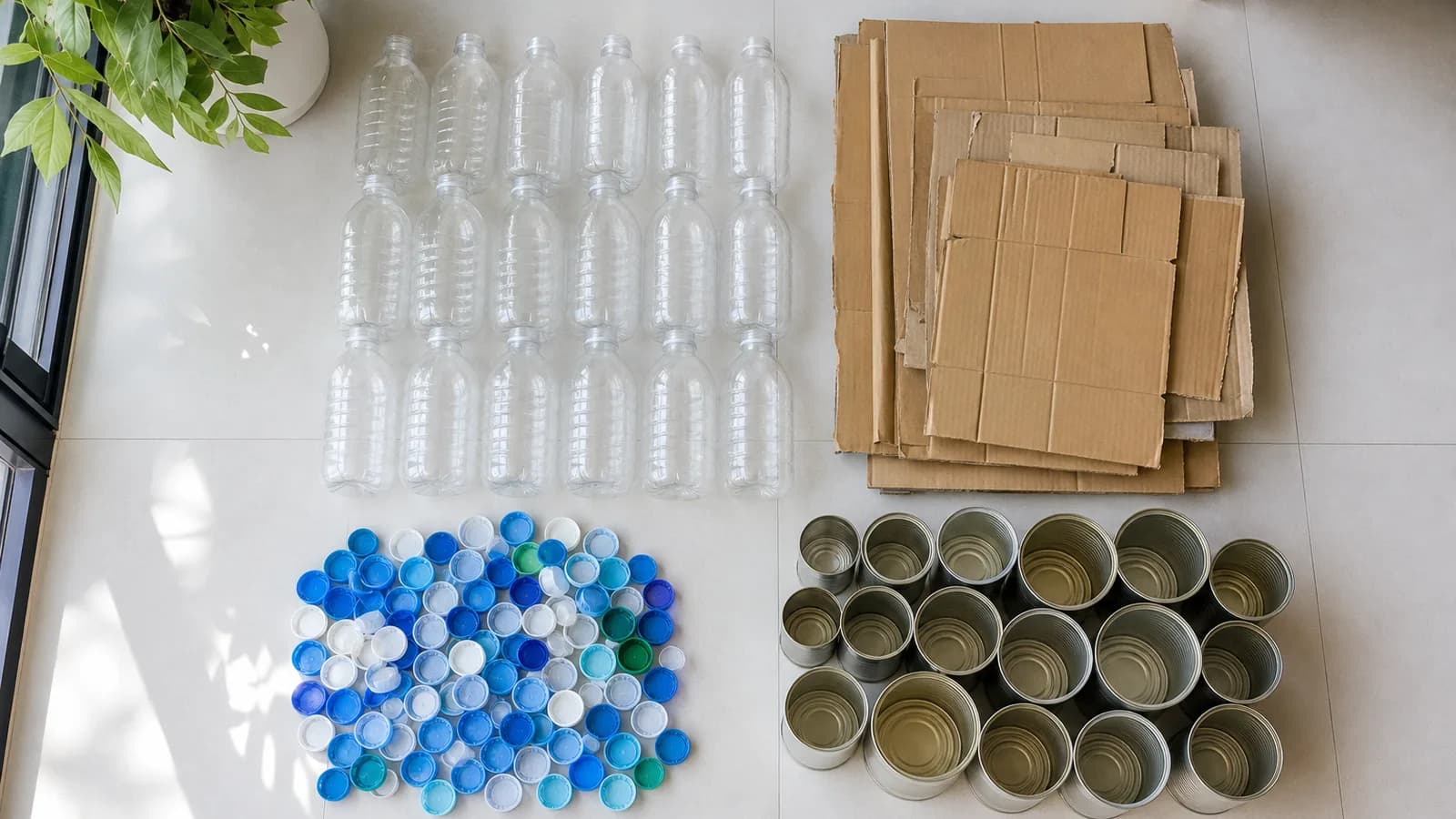
Before swapping anything, count what the bathroom actually throws away in a month. The result is usually dominated by one or two recurring items, and those are where a single change is worth more than five cosmetic ones.
The counting method — a week, a sheet of paper, no app — is in a one-week household waste audit, and it works just as well pointed at one room as at a whole house.
The realistic target
Not a plastic-free bathroom. A bathroom with less plastic in it than last year, where every change made is one the household did not have to think about twice.
That is an unexciting goal and it is the one that is still in place in two years, which is the only measure that counts — the same argument made about bottles in reusable bottles that survive real use.
General household information. Nothing here makes any health or skin claim about any product mentioned.
Sources
Filed under
- Sustainable Living
- bathroom
- plastic reduction
- swaps
- humid climate
- household