Soap is about as old as manufacturing gets, and most people have never thought about how it works. It is worth five minutes, because the mechanism explains nearly every complaint people have about washing — the tight feeling, the scum, the bar that dissolves in a fortnight.
This article describes how cleansing products work in general terms. It is not medical or dermatological advice, and no product mentioned treats or prevents any skin condition. Persistent skin problems are a matter for a doctor.
How soap actually works
Soap molecules have two ends with opposite preferences: one is attracted to water, the other to oil. In a wash, the oil-loving ends bury themselves in grease and grime while the water-loving ends face outward — lifting the whole parcel off the surface and letting the rinse water carry it away.
This is why rinsing matters as much as lathering. Soap does not destroy anything; it surrounds it and makes it rinsable. Stop halfway and you have simply relocated the problem.
True soap and the other kind
Two different products sit side by side on the same shelf.
| True soap | Syndet (synthetic detergent) bar | |
|---|---|---|
| Made by | Saponification — fats or oils reacted with an alkali | Blended synthetic surfactants pressed into a bar |
| Typical pH | Alkaline | Formulated closer to skin's own pH |
| In hard water | Forms soap scum with dissolved minerals | Largely avoids the scum reaction |
| Feel | Squeaky, thorough; can feel stripping on dry skin | Milder feel; sometimes described as less "clean" |
Neither is better in the abstract. A true soap suits oily skin and grubby hands; a syndet bar suits dry skin and frequent washing. Most complaints about a soap are really a mismatch between the two.
The water you wash with
Hard water — water carrying dissolved calcium and magnesium — reacts with true soap to form the grey film known as soap scum. It clings to skin, tiles and the bar itself, and it is the reason a soap that behaved beautifully in one house feels different in another. Whether your own supply is hard is checkable, and what hardness does to kettles, taps and water systems is mostly a maintenance story rather than a quality one.
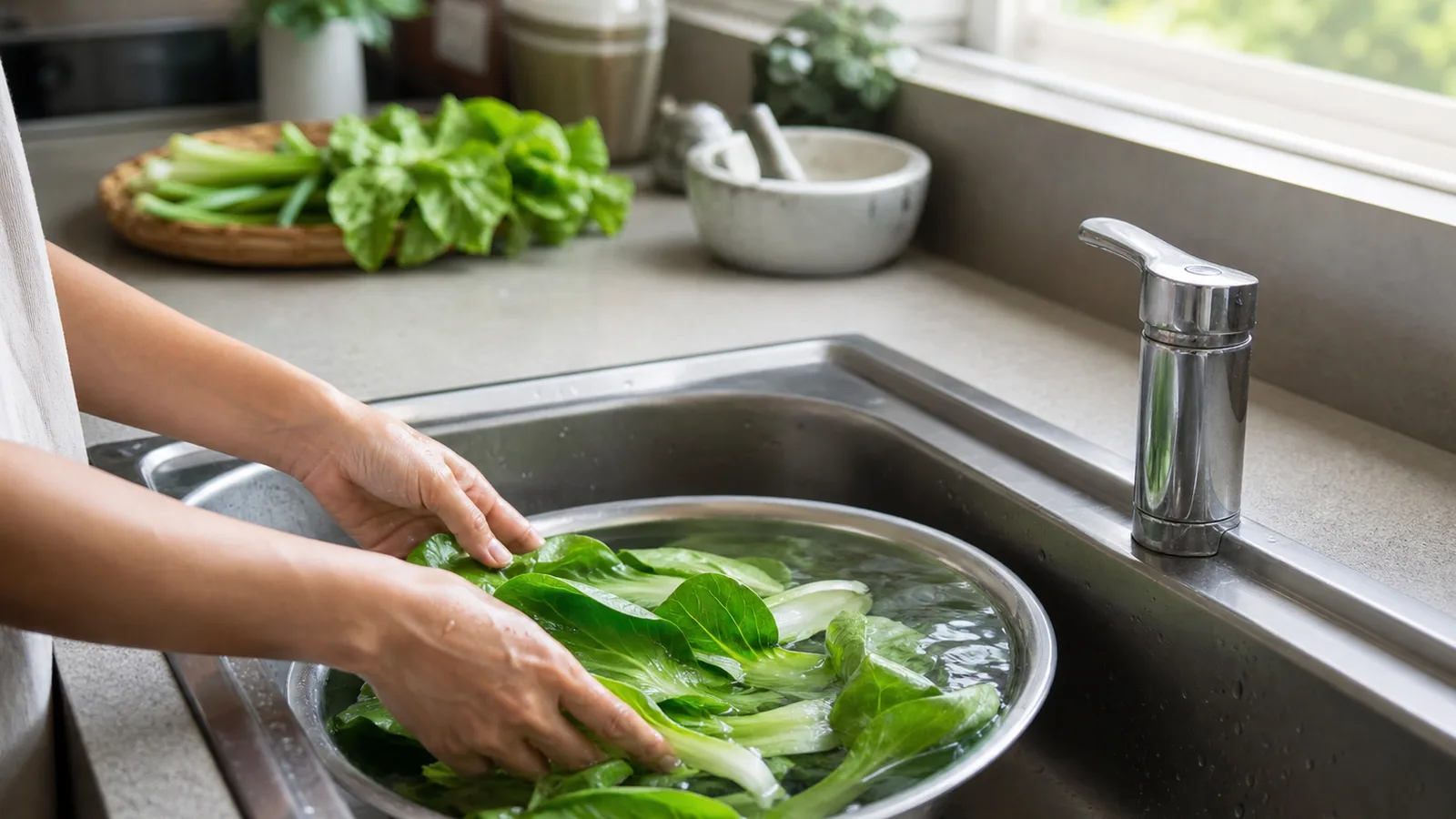
The practical consequences: you use more soap to get the same lather, rinsing takes longer, and the bathroom needs cleaning more often. None of that is a fault in the soap. It is a property of the supply, and it is worth knowing before you blame the product — the same variable that shows up in water use in the kitchen.
Making a bar last
Bars do not usually get used up. They get dissolved.
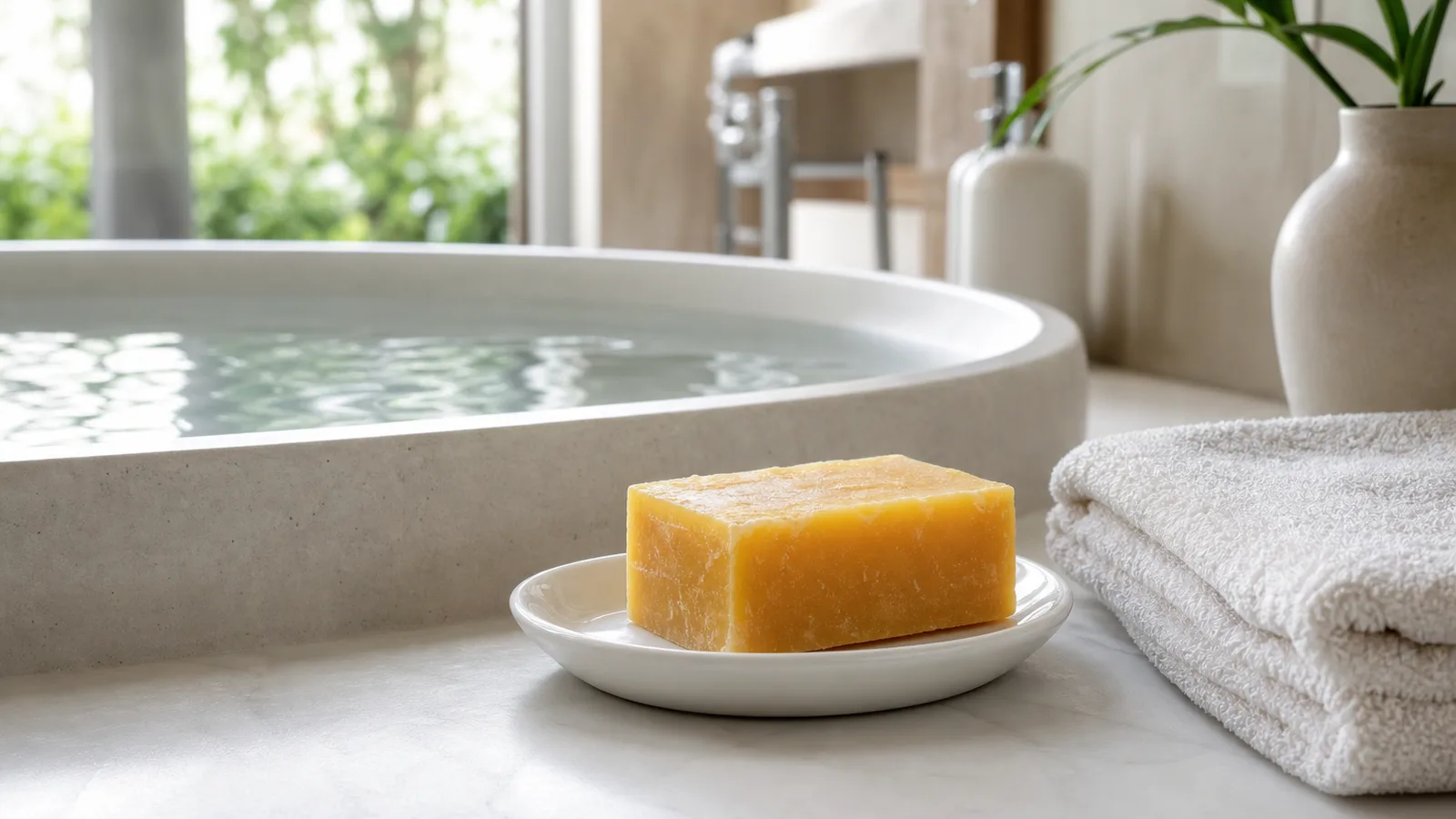
The showroom's own bar — Kangen Ukon & Honey Soap, made with ukon and honey and sold in a resealable pouch — is used exactly as any bar is: lather with water, then rinse. The pouch helps with the storage half of the problem; the dish is still up to you.
Reasonable expectations
A soap cleans and rinses away. A pleasant one makes washing something you do properly rather than quickly, which is the only mechanism by which any bar improves anything.
Beyond that, claims get ahead of what a cleansing product can be shown to do — a distinction we hold to across this publication and set out in our editorial standards. The ingredient itself, if you are curious about the ukon part rather than the soap part, is described in what Japanese turmeric actually is.
Sources
Filed under
- Lifestyle
- soap
- washing
- skin
- water hardness
- everyday habits