Water conservation advice has a habit of targeting the wrong things. It arrives as a list of small sacrifices — shorter showers, fuller kettles — and skips the two places where households genuinely lose water without gaining anything: the running tap and the invisible leak.
The kitchen is the best room to start in, because its habits are visible, repeated daily, and mostly changeable without anyone feeling worse off.
Where kitchen water actually goes
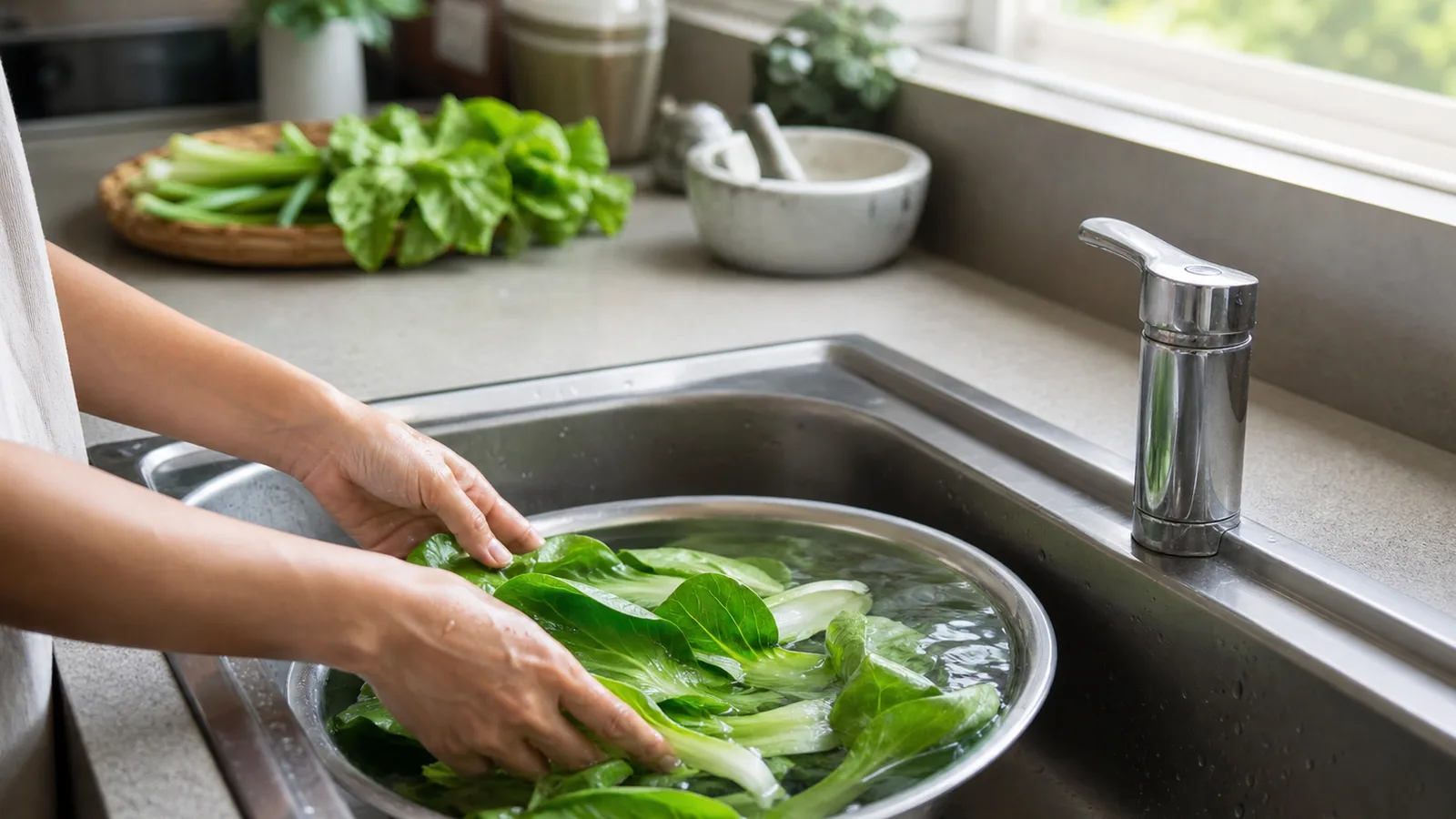
Roughly in order of volume in an ordinary household: washing up, rinsing produce and rice, cooking itself, and drinking. Drinking water — the thing most households spend the most attention and money on — is the smallest line by volume by a wide margin.
That inversion is worth holding onto. It means the conservation question and the drinking-water question are almost entirely separate, and conflating them leads to households doing awkward things with the water they drink while a tap runs behind them.
Changes that hold, and why
The changes that survive are the ones that need no willpower after the first week.
Notice what is not on that list: using less water for cooking, rinsing rice less thoroughly, or drinking less. Those trade a real thing for a small saving, which is why they never last.
The drinking-water corner of the kitchen
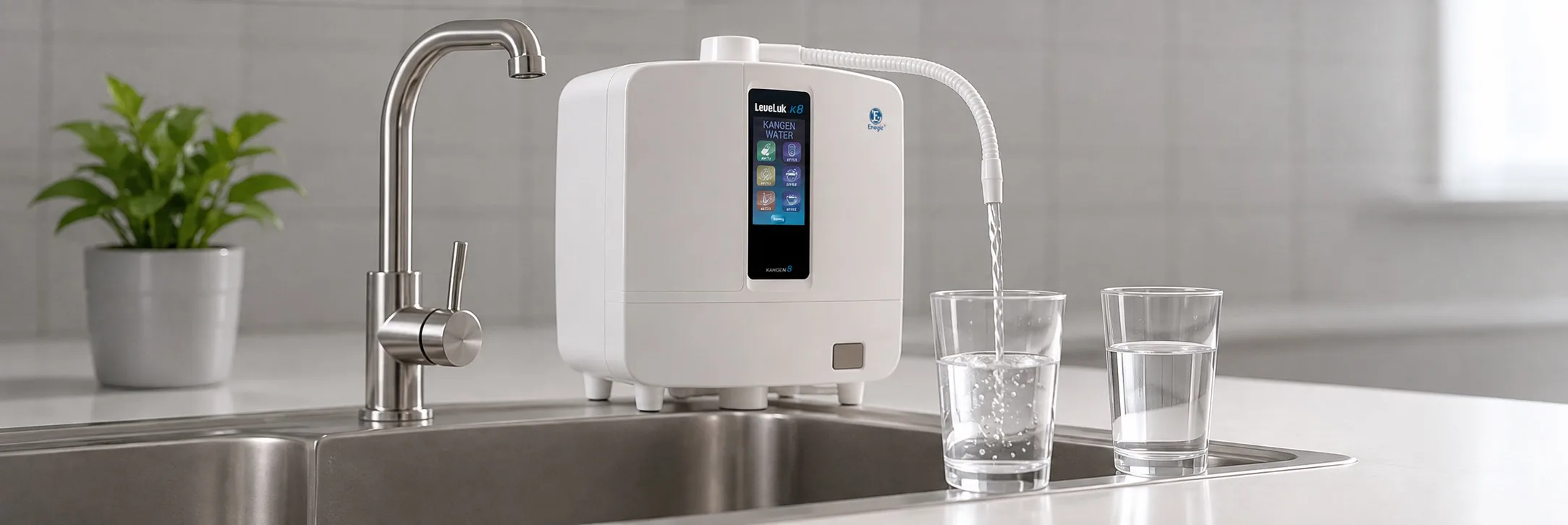
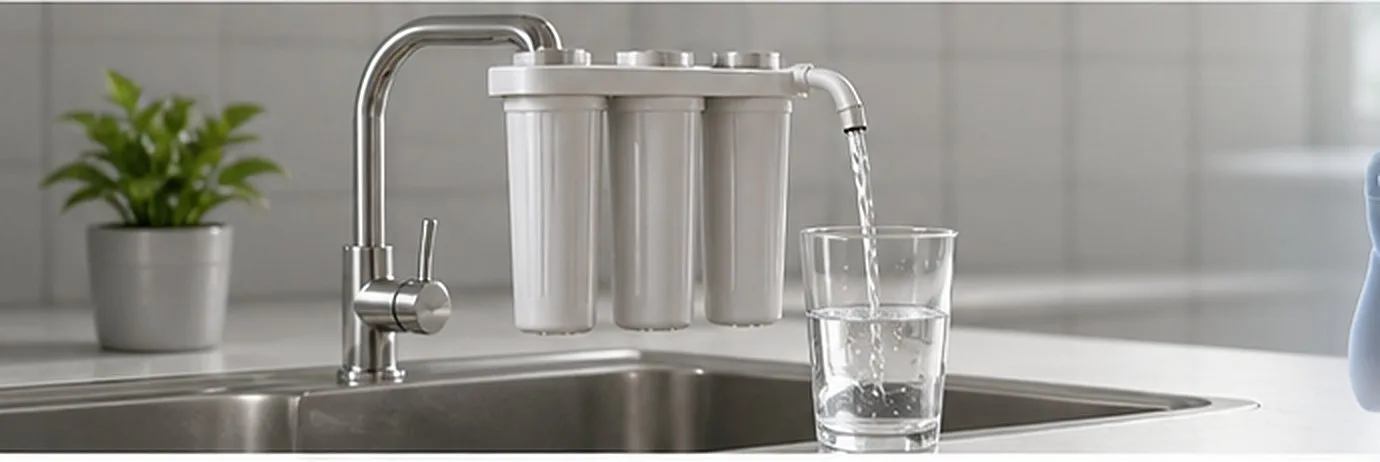
Drinking water is a small volume with a large footprint, because of how it arrives rather than how much of it there is. That is why it gets its own treatment on this site: the packaging, transport and cost attached to a few litres a day outweigh the water itself. Counted properly, a refill station and a system plumbed into the kitchen consume quite different things.
One point specific to systems that treat water at the tap: electrolysis produces two streams, and the acidic one is often sent straight to the drain. Households that use it — for rinsing, cleaning surfaces and the few other jobs that stream suits — recover part of that. It is not free water, but it is water that was already produced. The mechanism is explained in electrolysis, explained without the jargon.
Measuring, if you want to be sure
- Read your meter before bed and again before anyone uses water in the morning. Any movement is a leak, and finding one this way is worth more than a year of careful habits.
- Time your tap into a measuring jug to learn its litres per minute. Most people are shocked by the figure and never need to be told twice.
- Note your monthly bill for three months before and after a change, rather than judging by feel.
The US EPA's WaterSense programme publishes practical guidance in the same spirit — find the leak first, then change the habits, then consider the fixtures. That order holds outside the kitchen too, where the bathroom and the leak nobody has found account for more than any habit will save.
The honest scale of it
One household's kitchen habits will not resolve a water shortage, and framing them that way invites the eye-roll they usually get. The reasons to bother are smaller and more reliable: the bill goes down, the leak gets fixed before it damages anything, and the habits cost nothing to keep once they are in place.
If you would rather see where your household's real losses are before changing anything, the counting method in a one-week household waste audit works just as well pointed at water as at rubbish.
Sources
Filed under
- Sustainable Living
- water conservation
- kitchen
- household habits
- sustainable living
- utilities