There is a lot of language around water ionizers, and most of it is doing work that the underlying chemistry does not need. Strip it back and one process is running inside every one of these machines: electrolysis. It was demonstrated in 1800, it is taught in secondary school, and it is not remotely controversial.
What is worth understanding is not whether electrolysis happens — it plainly does — but what it produces, what it does not, and which claims about the result are chemistry and which are marketing.
What electrolysis actually is
Electrolysis means using an electric current to drive a chemical reaction that would not happen on its own. Pass a current through water between two electrodes and the water splits: hydrogen gas forms at the negative electrode, oxygen at the positive one.
The US Department of Energy describes the same process at industrial scale, where it is used to produce hydrogen fuel. A home water ionizer is running that reaction at a very small scale, and — this matters — deliberately incompletely. An industrial electrolyser wants to convert as much water as possible into gas. A drinking-water ionizer wants the opposite: to split a tiny fraction and leave you with water.
Why two streams come out of the machine
This is the part that confuses most people the first time they see one running, and it follows directly from the chemistry.
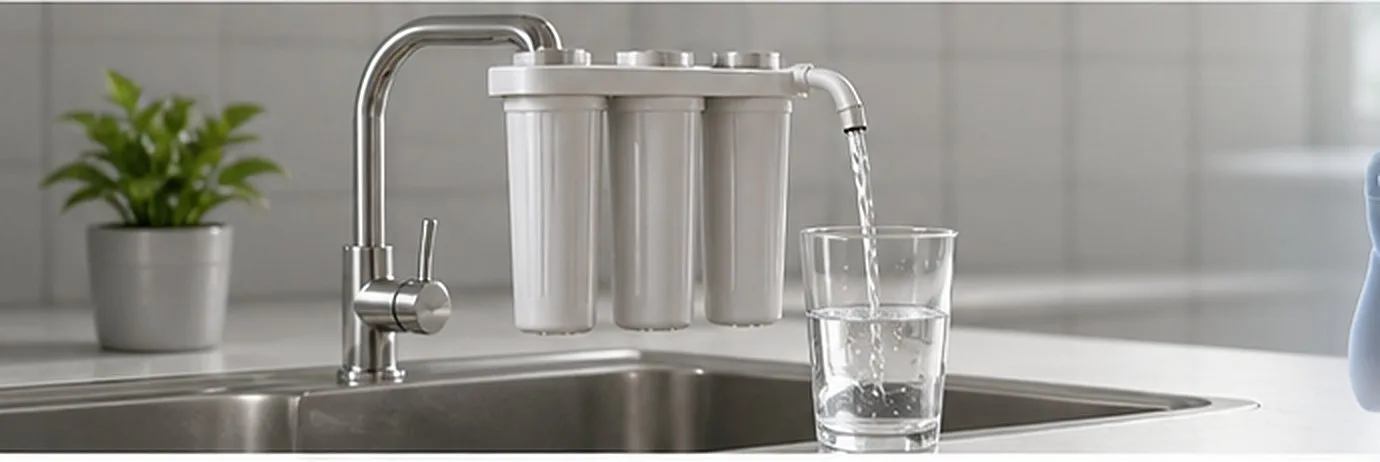
At the negative electrode, water gains electrons: hydrogen gas is released and hydroxide ions are left behind, so the water on that side becomes alkaline. At the positive electrode, water loses electrons: oxygen is released and hydrogen ions accumulate, so the water on that side becomes acidic. A membrane between the two chambers keeps the streams apart long enough for them to leave the machine separately.
- The alkaline stream carries the dissolved hydrogen and comes out of the flexible spout. It is the one you drink. The pH shift and the dissolved gas arrive together here, which is why alkalinity and hydrogen get treated as one thing when they are not.
- The acidic stream leaves through a second hose, usually to the sink. It is not waste in the sense of being dirty — it is the same source water with a different pH — and households commonly use it for cleaning and rinsing.
- Neither stream is created from nothing. Both are your tap water, filtered, with ions redistributed between them.
That last point is the useful mental model. Electrolysis does not add minerals to your water. It separates what is already there, which is also why the source water matters so much: a machine cannot make a stream alkaline if the incoming water has almost nothing dissolved in it to work with.
What the current is actually doing
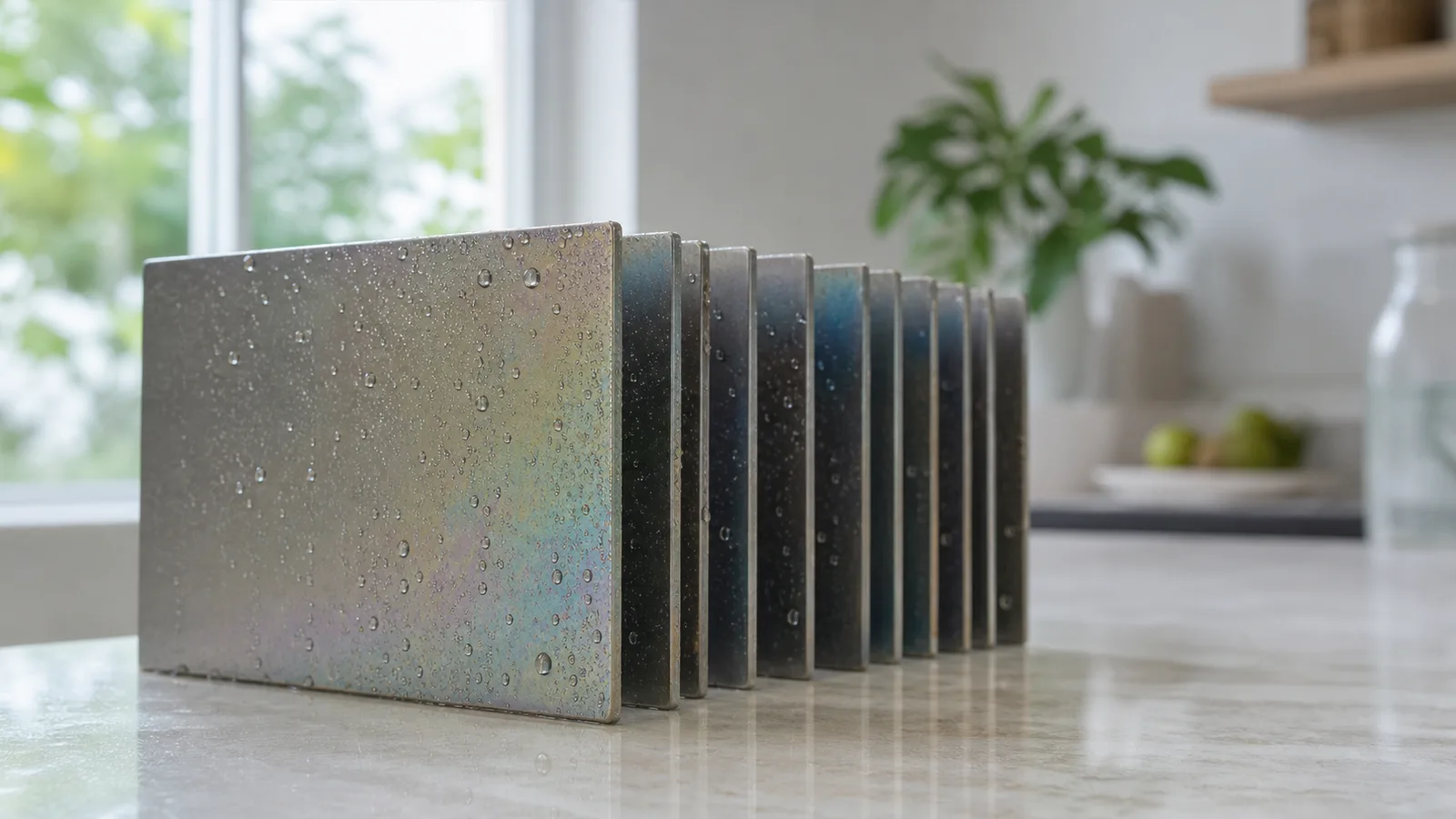
The plates in an ionizer are usually titanium coated with platinum. Titanium survives constant contact with water and current; platinum is a good catalyst and does not corrode into the water. That is the entire reason for an expensive-sounding material choice — it is durability, not magic.
The amount of current, the surface area of the plates and how long the water is in contact with them together decide how far the reaction goes. That is why plate count appears on every spec sheet in this category — and why it is worth reading as one factor among several rather than as a score. The side-by-side comparison puts plates, flow rate and capacity on the same row so they can be weighed together.
Flow rate matters for the same reason. Water moving quickly across the plates spends less time in the reaction than water moving slowly, so machines trade throughput against how far the water shifts.
What electrolysis does not do
Being clear about the limits is what makes the rest credible.
This article describes how a household appliance works. It is not medical advice, and no system described here treats, prevents or cures any condition.
Reading the claims once you know this
With the process in hand, most marketing sorts itself into three piles.
- Chemistry. Two streams, one alkaline and one acidic; dissolved hydrogen at some concentration; pH shifted within a range. These are measurable and either true of a given machine or not.
- Engineering. Plate count, flow rate, filter life, cleaning cycles, warranty. Verifiable from a spec sheet and a service record.
- Everything else. Claims about what the water does inside a person. This is where the evidence is thin and where a careful seller says so.
A seller who is comfortable with the first two piles and honest about the third is worth listening to. One who blurs all three into a single pitch is telling you something about themselves rather than about the water.
Where to go next
If the filtering question is the one you actually care about, the next piece is filtration and ionization are two different jobs — they are routinely conflated, including by people selling both. If it is the research question, why hydrogen-rich water matters sets out what has and has not been established.
And if you would rather see the reaction than read about it, a demonstration runs it on your own tap water, which tells you more about your particular supply than any article can.
Sources
Filed under
- Water Technology
- electrolysis
- water ionizer
- how it works
- electrode plates
- water technology