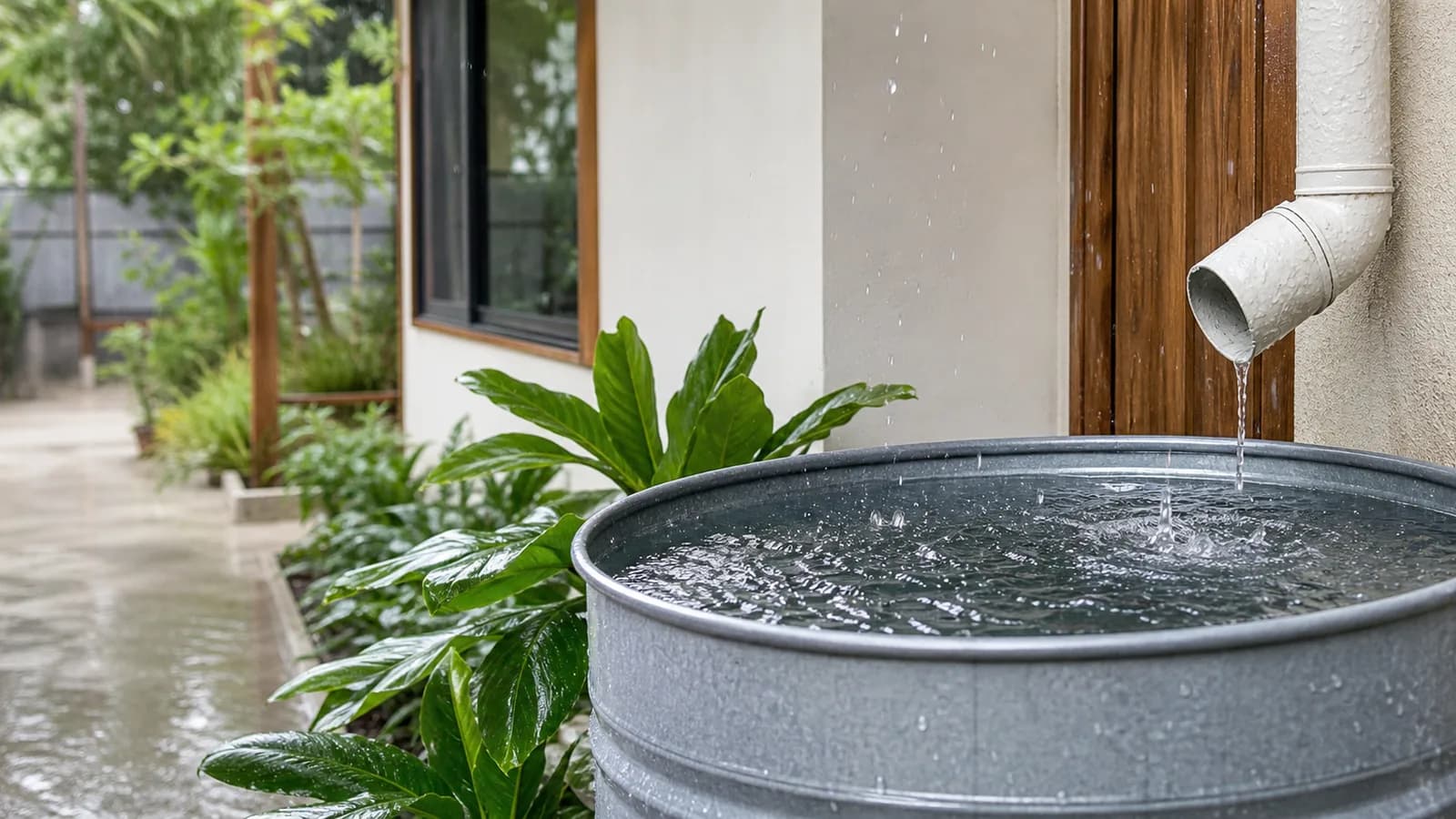
The Philippines receives a great deal of rain, and almost all of it leaves a property within minutes of arriving. Households then pay for water to wash a car, flush a toilet and keep plants alive — jobs the rain would have done for free had anyone caught it.
Collection is not complicated. The part that needs care is being clear about which uses rainwater suits, because the honest answer is: most of them, but not the one people ask about first.
The drinking question, answered first
Collected rainwater is not drinking water. It arrives having passed through the air, across a roof and along a gutter, picking up dust, bird droppings, leaf debris, roof material and whatever has settled since the last downpour.
Systems that make rainwater potable exist and they are serious installations — filtration, disinfection, testing and maintenance, designed and commissioned properly. That is a different project from a drum under a downspout, and it is not what this article is about. Treat household collection as a supply for everything except drinking, cooking and washing food, and the whole subject becomes simple.
Do not drink or cook with collected rainwater without a properly designed and maintained treatment system. This is general household information, not engineering or medical advice.
What it genuinely suits
Between them, those cover a meaningful share of a household's non-drinking water, which is the majority of what most homes use — a point that sits alongside the kitchen breakdown in water use in the kitchen.
It also belongs next to the two household questions it partly answers. Most conservation advice aims at habits when the largest single loss in many homes is an unfound leak — the meter test and the food-colouring cistern test are in water conservation at home. And in the months when rainwater is abundant, supply is least reliable, which is the argument for a properly stored reserve in storing drinking water safely at home and rainy season living.
Setting it up
- Pick the downspout that serves the largest roof area. Volume comes from roof size, not from the size of the drum.
- Divert the first flush. The first minutes of a downpour carry most of the roof's accumulated dirt. Simple first-flush diverters exist, and even manually starting collection a few minutes in helps considerably.
- Cover the tank. Non-negotiable, for reasons below.
- Put a mesh over the inlet to keep leaves and debris out.
- Provide an overflow that runs somewhere sensible rather than into a wall or a foundation.
- Raise the tank if you want gravity to do the work — a tank on blocks fills a watering can without a pump.
The mosquito problem, which is the serious one
This is the part of the subject that matters most in this country, and it is why casual collection can do more harm than good. Standing water is mosquito habitat, and dengue is not a hypothetical risk here.
The rule is simple and absolute: every container must be sealed or screened. A covered tank with a mesh-screened inlet and overflow is fine. An open drum, an uncovered pail, a saucer under a plant pot, a disused tyre — those are the problem, and they are also the most common way households collect rain by accident.
Keeping it usable
Clean gutters before the rainy season starts, not during it. Rinse the tank between long dry spells, when sediment has settled and gone stale. And do not store rainwater for months expecting it to stay fresh — it is a working supply, not a reserve.
In a long dry period, empty and dry the tank rather than leaving a small amount of stagnant water at the bottom.
The honest scale of it
A single household drum will not transform a water bill. What it does is cover the garden and the outdoor washing through the wet months, which is a real if modest saving, and it makes visible how much water a property receives and discards — which tends to change behaviour more than the saving itself does.
And it keeps the two questions properly separate: rainwater for the jobs that do not need treated water, and a considered arrangement for the water your household actually drinks.
Sources
Filed under
- Sustainable Living
- rainwater
- water conservation
- household
- rainy season
- sustainable living