Water that was safe when it left the tap can stop being safe on your shelf. Not usually, and not quickly — but the container and where it stands account for most of the drinking-water problems that arise inside a home rather than upstream of it.
In the Philippines this matters more than in places with continuous supply, because storage is not optional here. Interruptions, low pressure and typhoon season mean most households keep water, and the practice is rarely examined.
General guidance for household drinking water. During a boil-water advisory or after flooding, follow the instructions issued by your local water provider or health authority rather than this article.
The container
Where it stands
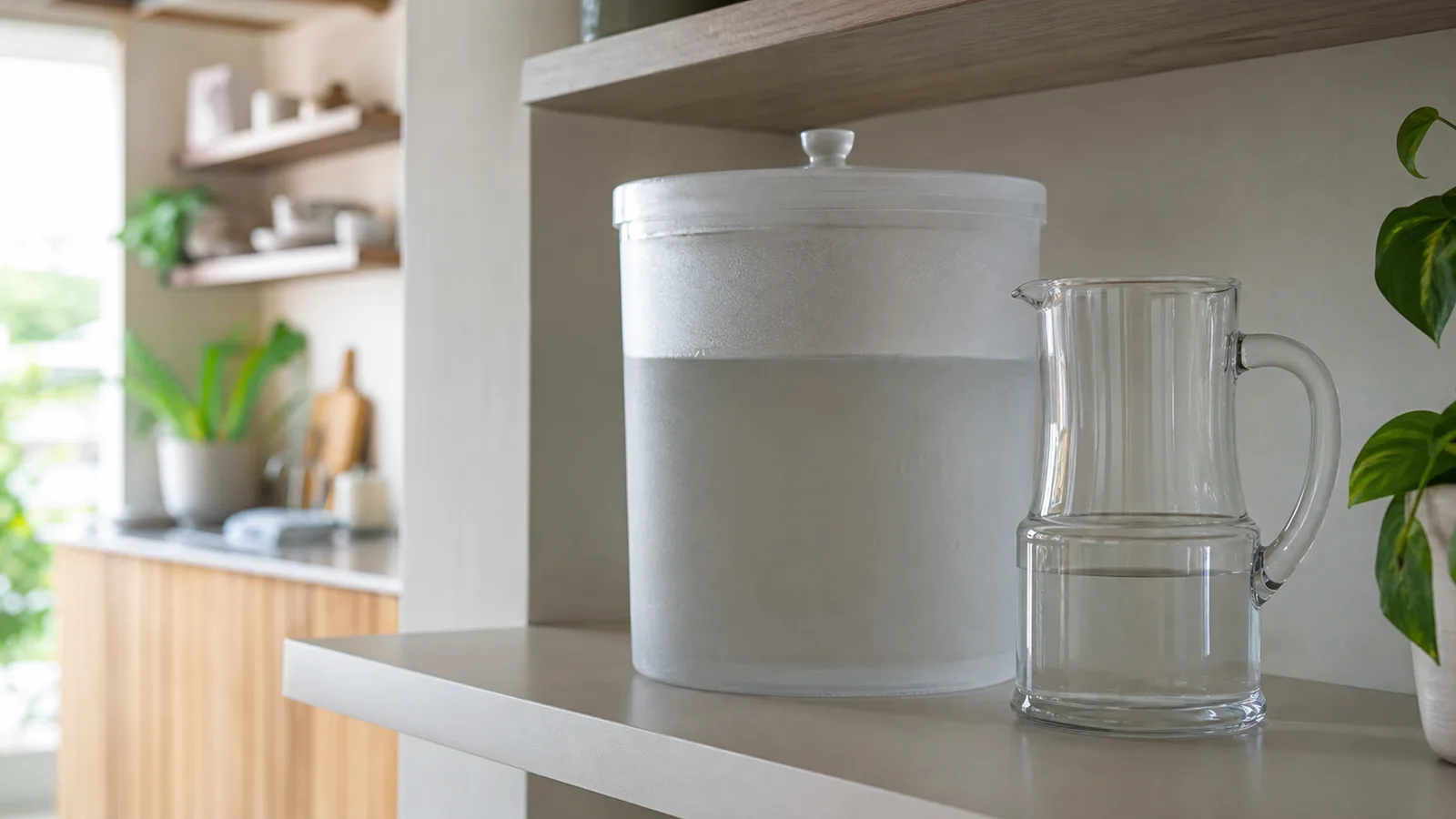
Cool, shaded, off the floor, and away from cleaning products and pesticides. Warmth accelerates everything unwanted, and a container on the floor collects whatever gets mopped or splashed near it.
How long it keeps
Properly stored municipal water in a sealed, clean container keeps for a long time — but there are two useful distinctions.
The first is taste. Stored water goes flat within a day or two as it absorbs carbon dioxide and loses dissolved gases, which is why yesterday's glass tastes stale. That is a taste change and not a safety one, and the reasons are in why water tastes different.
The second is protection. Municipal water carries a residual disinfectant that dissipates over hours, so stored water is progressively less protected against anything introduced afterwards. That is the argument for the lid, not for panic.
For emergency stock, a rotation of about six months is a common recommendation — write the fill date on the container and use it for ordinary purposes before refilling.
Cleaning, which is the part everyone skips
- Empty completely before refilling. Topping up a partly full container keeps the oldest water in it indefinitely.
- Scrub, do not rinse. Biofilm is a film — it does not leave under running water, and a bottle brush is the whole solution.
- Pay attention to the lid, the neck and the tap, which is where most of it lives.
- Dry it, or refill it immediately. A damp sealed container is the worst of both.
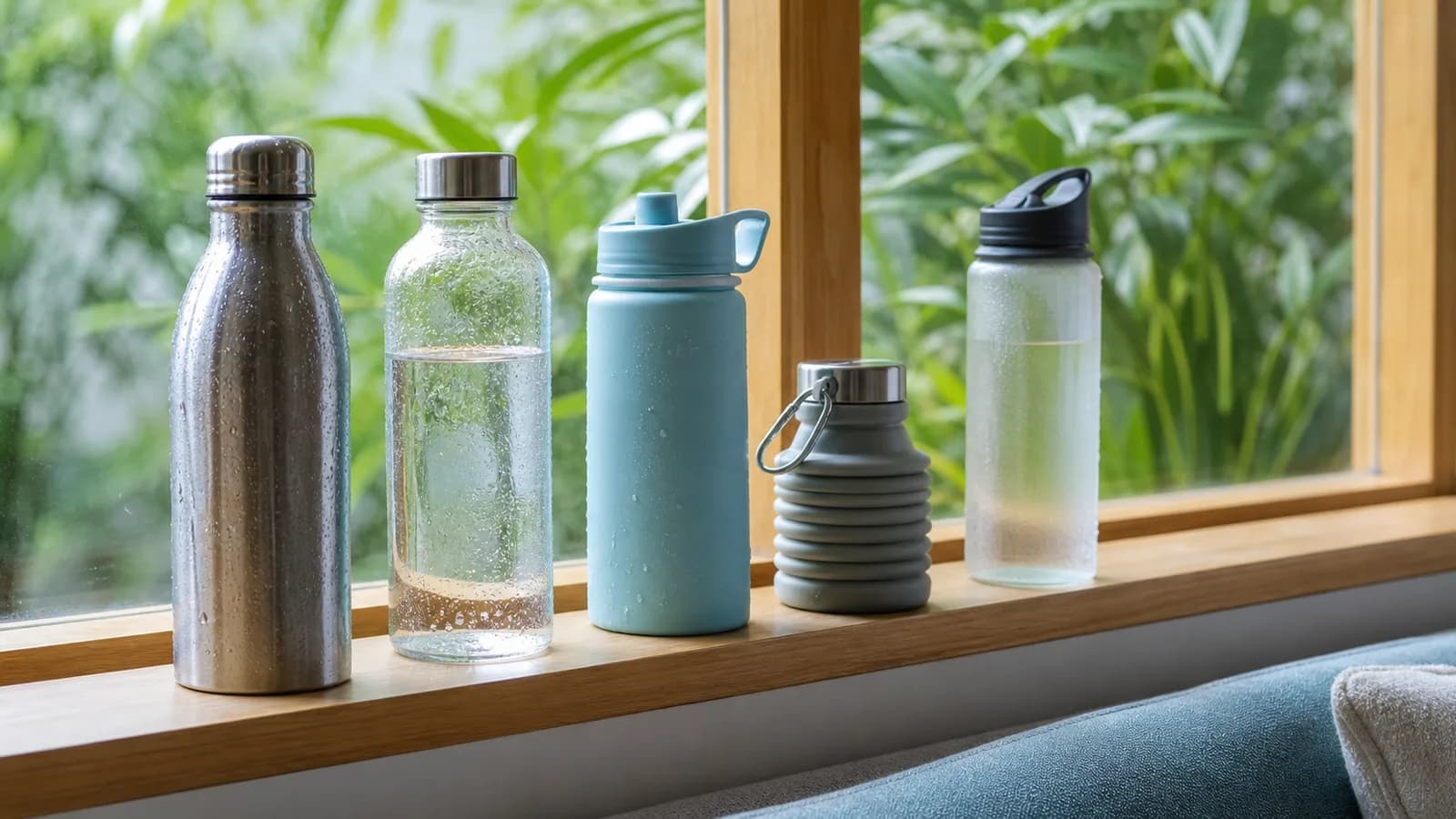
- Do this on a schedule, because there is no visual cue until it is well established — the same reasoning as reusable bottles that last.
Typhoon season and supply interruptions
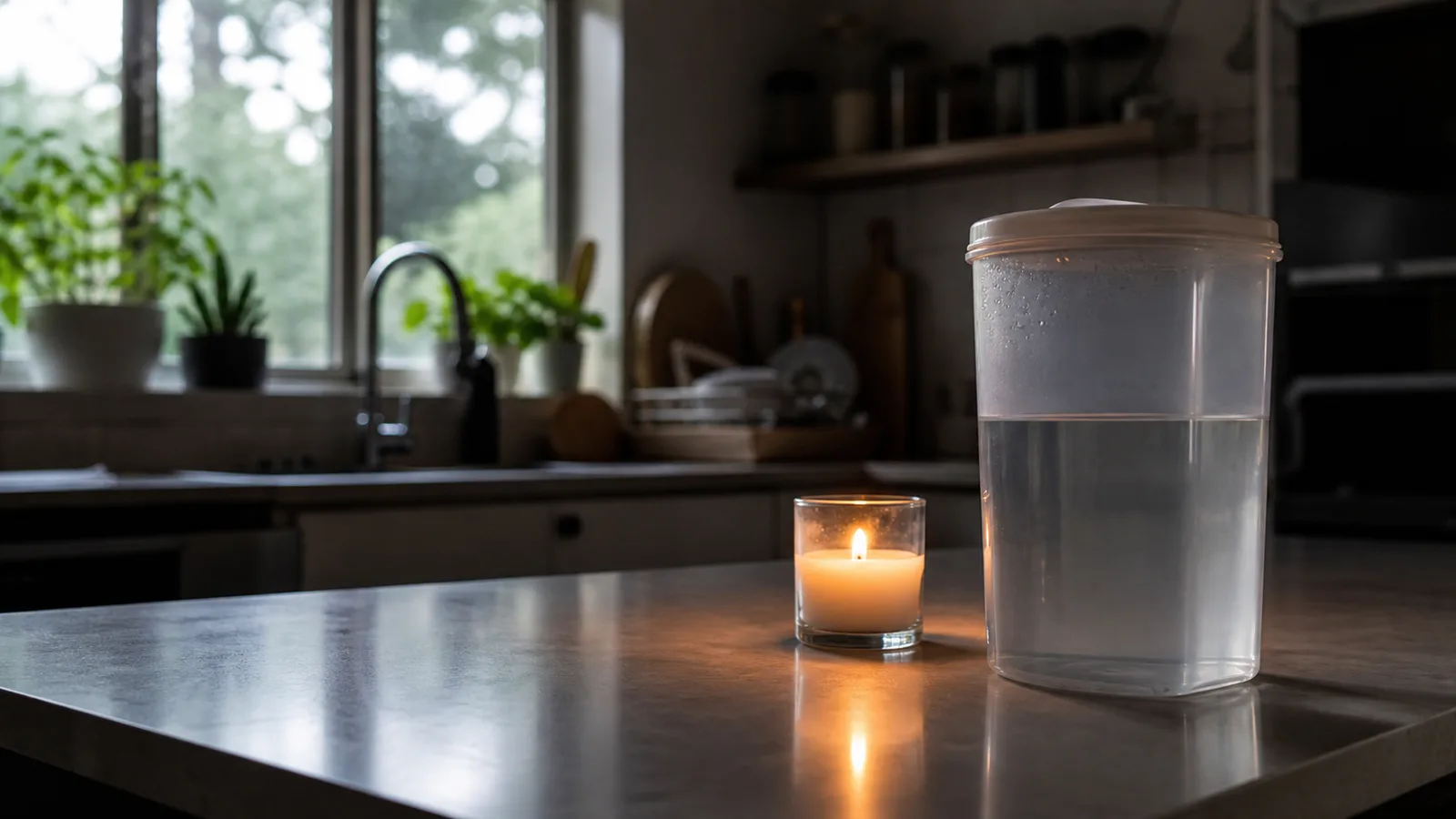
Two habits worth having before you need them: keep a modest reserve in sealed, dated containers, and fill additional clean containers when an interruption is announced rather than after it starts.
After flooding or during a boil-water advisory, treat the supply as unsafe until the provider says otherwise. Boiling is the accessible household treatment and works against microorganisms; a filter is not a substitute for it unless specifically rated for microbiological reduction, which most household filters are not — what filters remove and what they do not.
A household water system is not an emergency plan either. It needs power and pressure, and both are the first things to go — which is worth knowing before you rely on one, alongside the pressure questions in water pressure and what it means for appliances.
Sources
Filed under
- Healthy Home
- storage
- containers
- safety
- emergency
- philippines