Almost every household already owns a reusable bottle. Rather a lot of them own four, three of which are in a cupboard. That is the real problem with this category: not that people refuse to buy them, but that the ones they buy stop being used.
And the reasons they stop are almost never environmental. They are mechanical and sensory — a lid that leaks into a bag, a smell that will not wash out, a size that does not fit a car holder or a day.
The break-even nobody mentions
A reusable bottle carries the environmental cost of its manufacture up front. Stainless steel, in particular, is materially more expensive to produce than a single disposable bottle. It only comes out ahead by displacing many disposables — which means the number of times you actually use it is the entire argument.
This reframes the buying decision completely. The question is not "which is the most sustainable bottle" but "which one will I still be carrying in two years", which is a question about your habits rather than about the product.
Materials, honestly compared
| Material | Strengths | What ends the relationship |
|---|---|---|
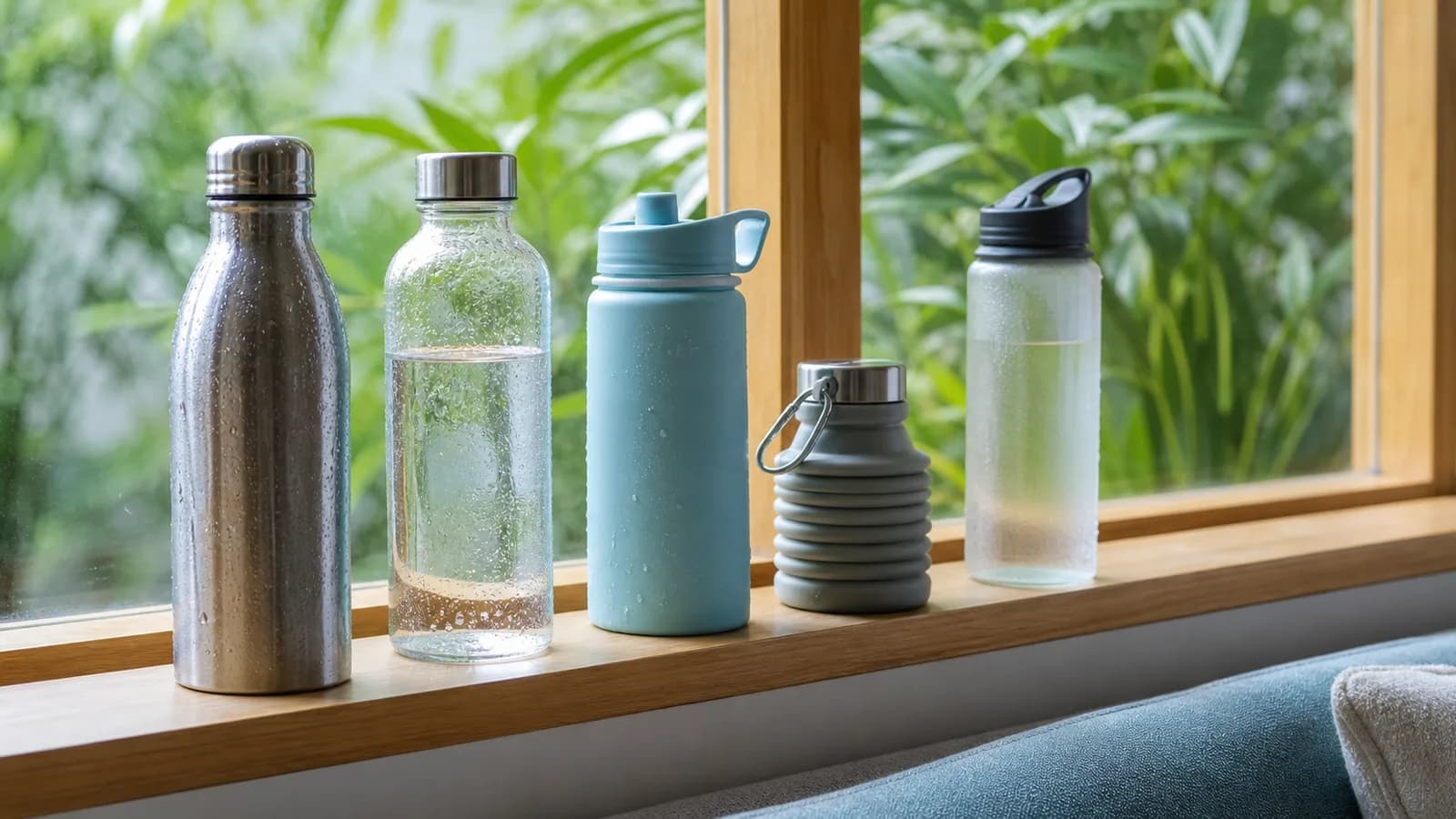
| Stainless steel | Durable, no flavour transfer, insulated versions keep water cold in the heat | Weight; dents; costly; slow to dry inside |
| Glass | No taste at all, easy to see when it is dirty, easy to clean | Breaks; heavy; usually needs a sleeve |
| Hard plastic (Tritan and similar) | Light, cheap, survives being dropped | Holds odours over time; scratches; looks tired quickly |
| Collapsible silicone | Packs down, good for bags and travel | Awkward to clean thoroughly; can retain smell |
In a hot, humid climate the insulated steel bottle wins more often than the specification sheet suggests, for one reason: cold water gets drunk and lukewarm water does not. A bottle that keeps water cold until the afternoon is a bottle that is still being emptied at 3pm.
The lid decides everything
More reusable bottles are abandoned over their lids than over any other feature, and lids are the part nobody examines in the shop.
Cleaning, which is where most of them die
The smell that ends a bottle's life is biofilm — a thin layer that forms wherever water sits, particularly in narrow spouts, straws and under gaskets. It is not a sign of an unusual failure; it is the default outcome of daily use and a quick rinse. Jugs and dispensers go the same way for the same reason: storage is where safe drinking water most often stops being safe.
- Wash properly at least weekly with a brush that actually reaches the base, not just a rinse.
- Take the lid apart. The gasket is the part that smells.
- Dry it open and upside down. Bottles stored damp and sealed are the ones that develop a permanent odour.
- If a bottle already smells, a soak often rescues it — most bottles are thrown away one wash short of recovery.
The refill question at home
A bottle only removes packaging if what fills it does not arrive in packaging of its own. Filling a reusable bottle from a delivered container is better than buying a single-serve bottle, but the packaging has moved rather than disappeared — a point worked through in refilling stations and home systems.
Households that get the most out of reusable bottles usually have a low-friction source at home: a tap they trust, at a height that fits the bottle. That is a small design detail with a large behavioural effect, and it is worth checking against any system you are considering — a spout that will not clear a 1-litre bottle is a daily irritation. Where the unit sits decides that clearance.
If you want to know how much of your household's plastic is actually bottles rather than everything else, count it first: a one-week household waste audit takes seven days and settles the question.
Sources
Filed under
- Sustainable Living
- reusable bottle
- plastic reduction
- everyday habits
- hydration
- sustainable living