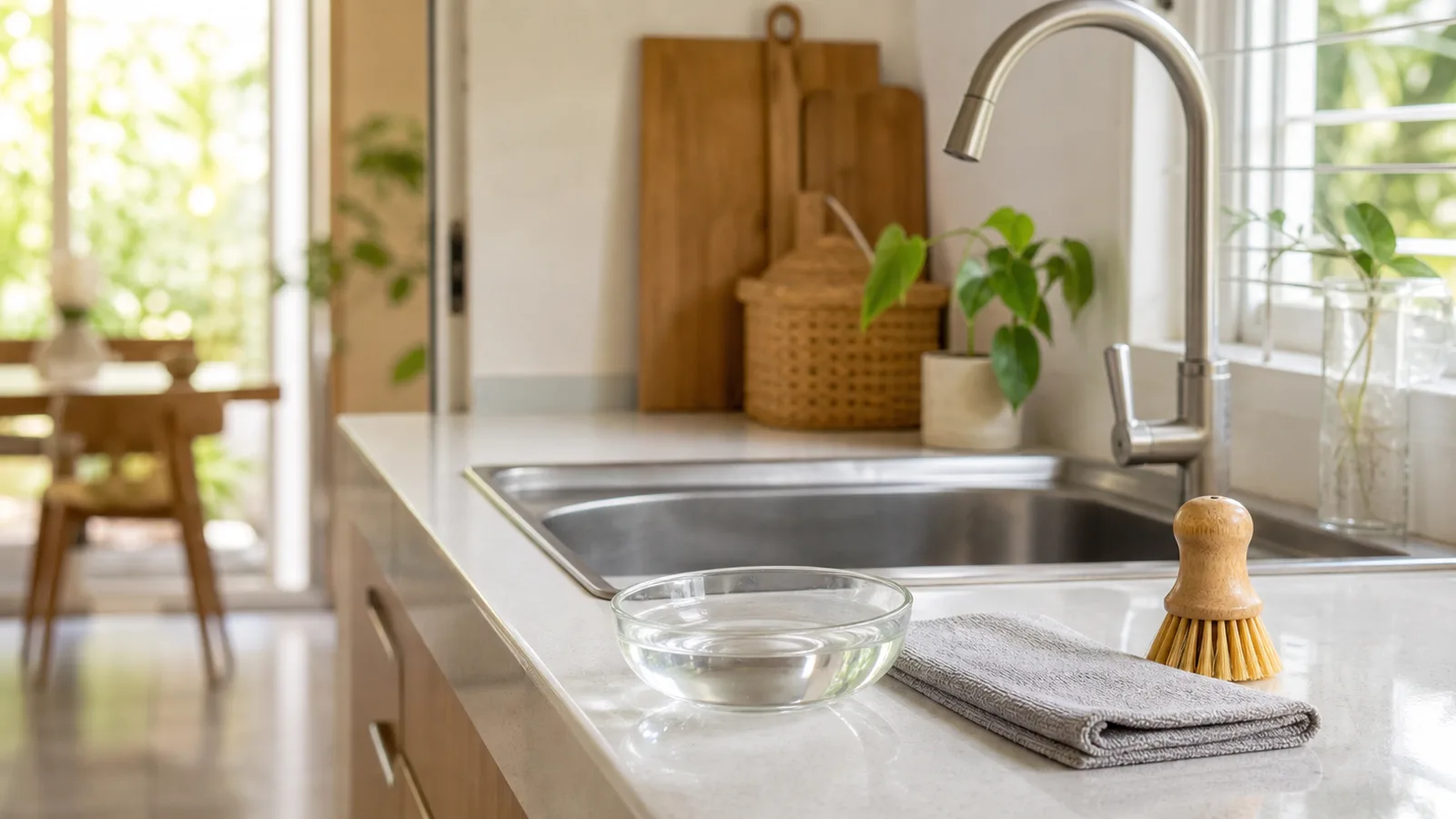
Most attention in this category goes to which machine to buy. The decision that shapes the next ten years of using it is quieter: where it sits. A unit on the counter and the same unit hidden below are different appliances in daily practice, and the second choice is much harder to undo.
Worth settling before the joinery is ordered rather than after, for reasons that become expensive later.
The trade, in one table
| Countertop | Under-counter | |
|---|---|---|
| Counter space | Occupies a permanent footprint | Frees the surface entirely |
| Servicing | Easy — everything is reachable | Requires emptying a cabinet, sometimes kneeling |
| Filter changes | A two-minute job | A job that gets postponed |
| Tap arrangement | Machine's own spout | A separate dedicated tap, drilled into the counter |
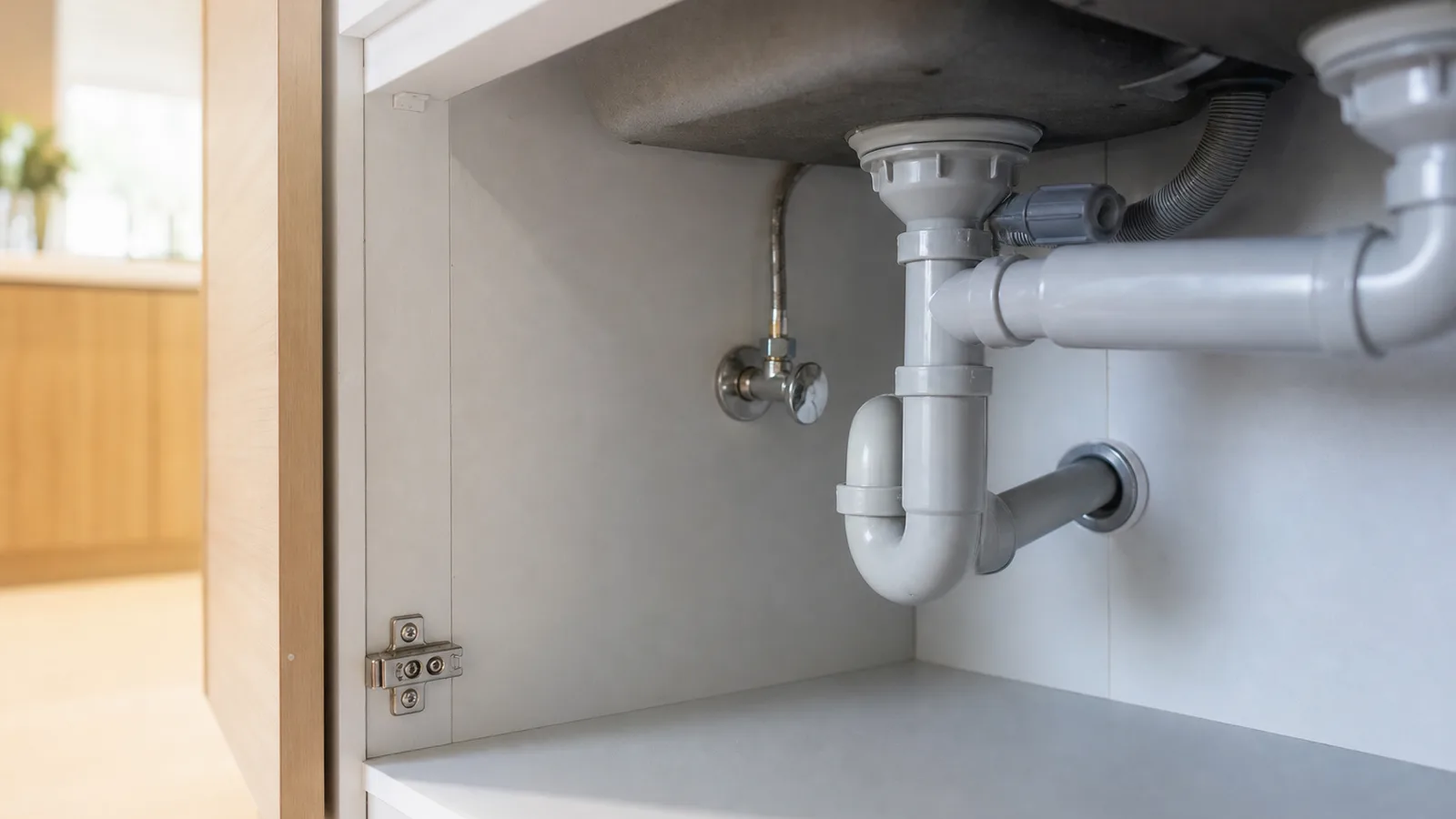
| Visibility of faults | Leaks and drips are seen immediately | A slow leak can run inside a cabinet unnoticed |
| Installation cost | Low — plumb, plug, place | Higher — joinery, tap drilling, plumbing work |
| Moving house | Take it with you | Partly a fixture; the tap hole stays |
The point most people underestimate
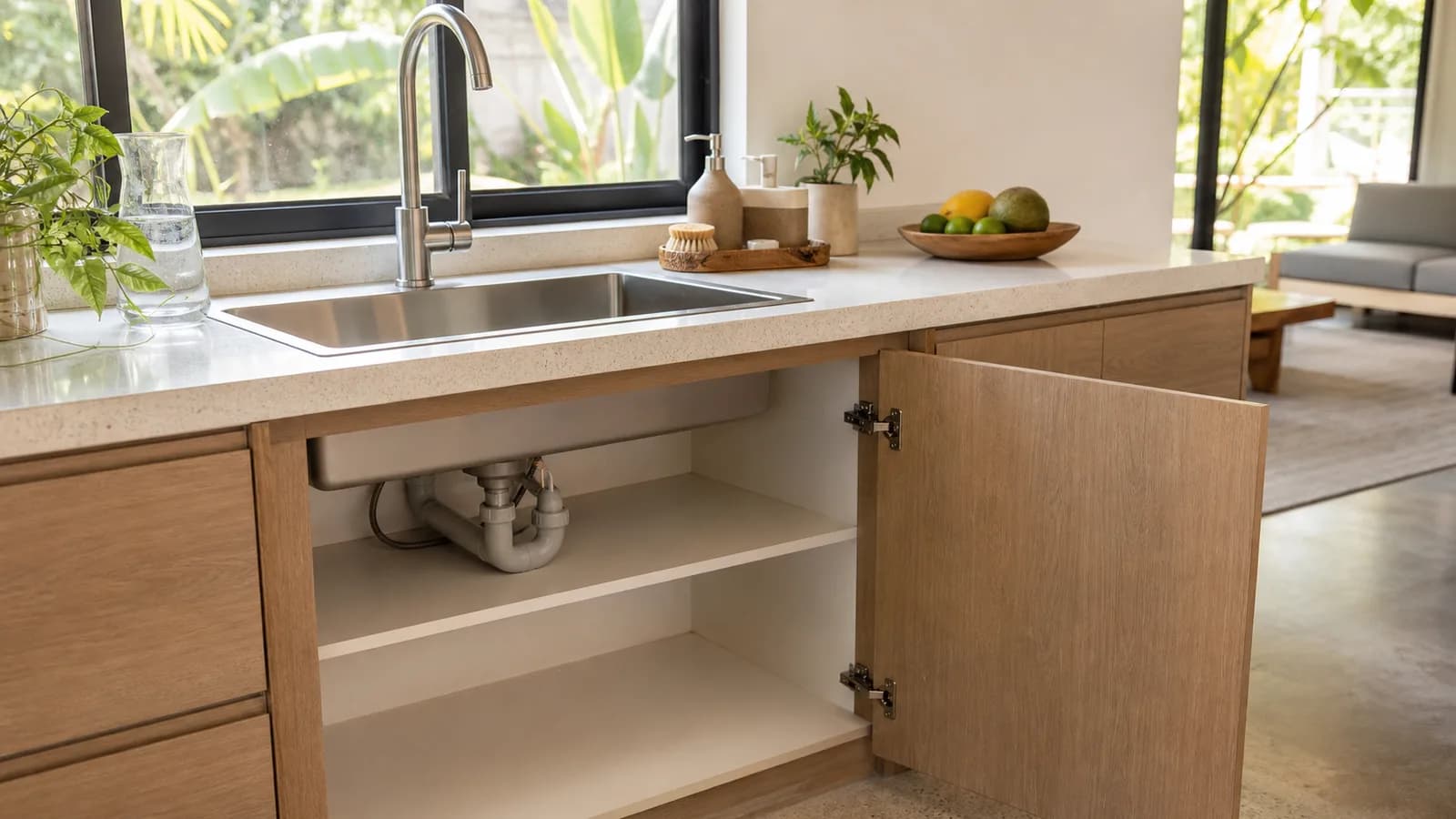
Access decides maintenance, and maintenance decides how well a machine works in year three. An under-counter unit behind stored bottles and a bin gets its filter changed late, every time — not through negligence, but because the friction is real and the machine gives no warning that it minds.
If you go under-counter, design the access deliberately: nothing stored in front of it, a cabinet door that opens fully, and the filter head positioned where a hand can reach it without moving anything. The maintenance schedule this protects is in cleaning cycles and ionizer maintenance.
Footprint, honestly measured
Countertop units are not small. Across the current lineup the Super 501 measures 352 × 384 × 250 mm and the Jr. IV 264 × 338 × 171 mm — and those are the machine only, before clearance for the hose, the spout swing and the socket behind it.
Measure the intended spot with a tape and add clearance rather than trusting a photograph. In a small Filipino kitchen, the honest question is what currently occupies that space and where it will go instead.
The tap question
An under-counter installation needs a dedicated tap on the counter, which means a hole drilled in the worktop. On stone that is a specialist job, and it is permanent.
Two practical details people discover afterwards: the new tap must not crowd the main mixer, and it needs enough clearance beneath it for the tallest thing you fill — a 1-litre bottle, a stock pot, a pitcher. A spout too low to clear a bottle is a small daily irritation that never stops being one.
If you rent
Countertop, almost without exception. It requires no permanent alteration, it moves with you, and it does not leave a drilled worktop behind for someone else's deposit dispute.
The wider question of whether a system suits a short-term arrangement at all is covered in who should not bother with hydrogen water.
Deciding
- Choose countertop if you rent, if the kitchen is already built, if servicing is likely to be neglected, or if you want to see a fault the day it starts.
- Choose under-counter if the kitchen is being built or renovated now, if the surface must stay clear, and if you will design proper access rather than filling the cabinet with storage.
And settle it before cabinetry is ordered. Retrofitting drainage and a tap into a finished kitchen is the most common avoidable expense in this whole category — the point made from the design side in planning a kitchen around a water system.
Dimensions quoted come from the showroom's catalogue and can change; confirm against official Enagic materials. Installation work should follow the manufacturer's instructions and local plumbing practice.
Sources
Filed under
- Water Technology
- installation
- kitchen design
- under-counter
- countertop
- buying guide