Somewhere in the last decade, wellness stopped being a category of product and became a category of decision. Homes are now designed with attention to daylight, ventilation, acoustics and material choice — considerations that used to be the preserve of specialists and are now simply part of a competent brief.
Water arrived late to that list. It is the household utility most people still treat as delivered rather than designed: it comes from the municipal supply, or it arrives in containers, and the design conversation stops at which tap looks best. That is beginning to change, and the reasons are more practical than aspirational.
Wellness as infrastructure, not decoration
The useful distinction in this field is between wellness as a finish and wellness as infrastructure. A rainfall shower head is a finish. A ventilation strategy is infrastructure. One is chosen late from a catalogue; the other has to be settled early because it touches services, layout and structure.
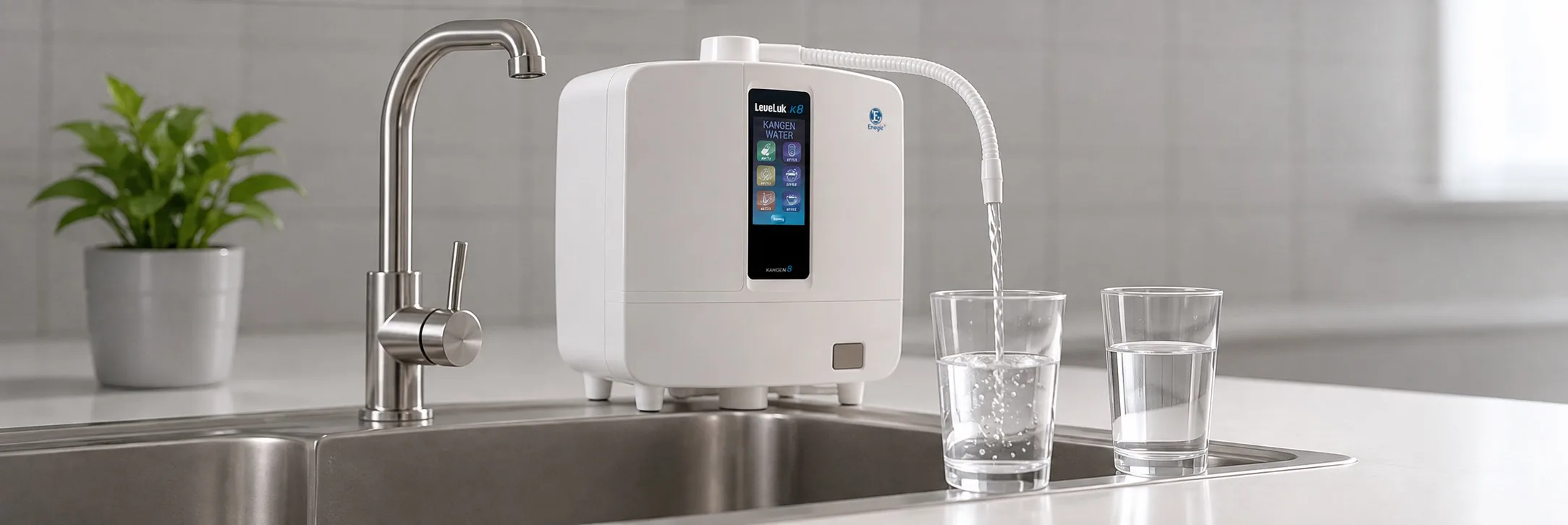
Water systems belong firmly in the second group, which is precisely why they end up on drawings. A machine that needs an inlet, a drain, a socket and 40 centimetres of counter is not a decision you can defer to the styling stage without regret.
Anything that needs plumbing is an architectural decision, whether or not anyone treats it as one.
The kitchen is where it happens
In most homes the kitchen already carries the household's water logic: the drinking supply, the filter under the sink, the dispenser in the corner, the stack of containers nobody wants to look at. A designed solution is largely an exercise in absorbing that logic into the cabinetry.
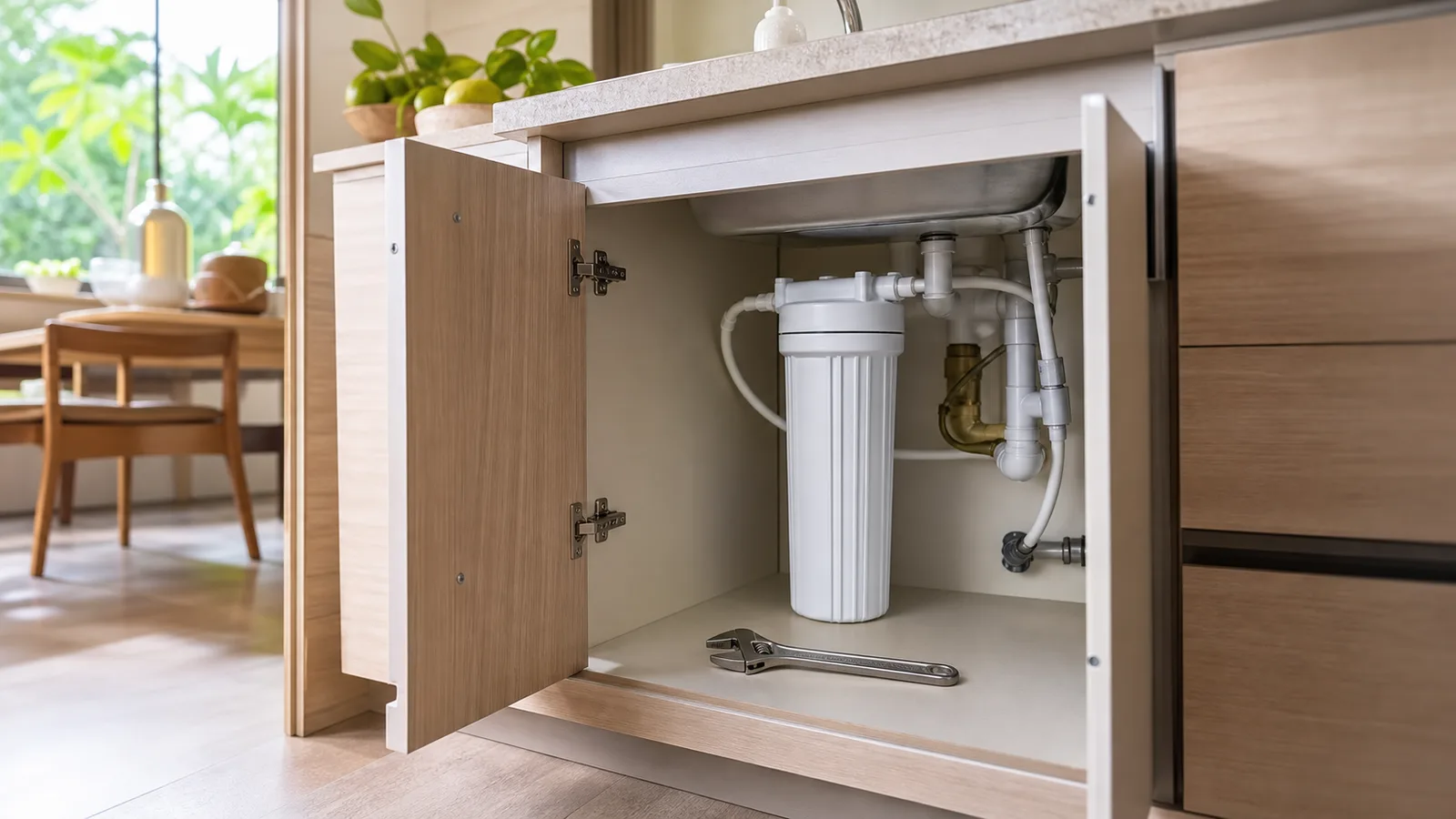
- Counter or under-counter. A counter-standing unit is simpler to service and visible; an under-counter arrangement with a dedicated tap keeps the surface clear but commits joinery early.
- A second tap, not a replaced one. Systems of this kind sit alongside the main mixer rather than replacing it, so the tap layout needs to accommodate both without crowding the sink.
- Drainage. Electrolysis produces a second stream. It needs somewhere to go, and retrofitting that afterwards is the most common avoidable expense.
- Power. A socket near a wet zone has to be planned, not improvised.
- Service access. Filters get changed. If reaching the unit means emptying a cabinet, they will be changed late.

Beyond the kitchen
Once water is being specified rather than assumed, the bathroom follows naturally — showering and bathing account for far more household water contact than drinking does. A shower-side system such as the Anespa DX is a different proposition from a drinking-water ionizer, and it raises its own questions: where the unit mounts, how the hose is routed, and whether the existing pressure suits it.
The general principle holds in both rooms. Systems that are planned into the layout disappear into it. Systems added afterwards are visible forever, usually beside a socket that was never meant to be there.
Why designers raise it at all
Three reasons come up repeatedly, and none of them requires believing anything unproven about the water itself.
What designers should not do — and what a good specifier will decline to do — is present a water system as a health intervention. The research on molecular hydrogen is active and preliminary rather than settled, a distinction we set out plainly in why hydrogen-rich water matters. Specify it for what it demonstrably does: it produces fresh water at the tap, it removes the packaging, and it takes the containers out of the room.
This article is about design and specification. Nothing here is medical advice, and no system described treats or prevents any condition.
Specifying well: five questions
- How many people, and how much water a day? Household size drives capacity and flow rate more than any other factor — a compact unit in a large home is a daily bottleneck.
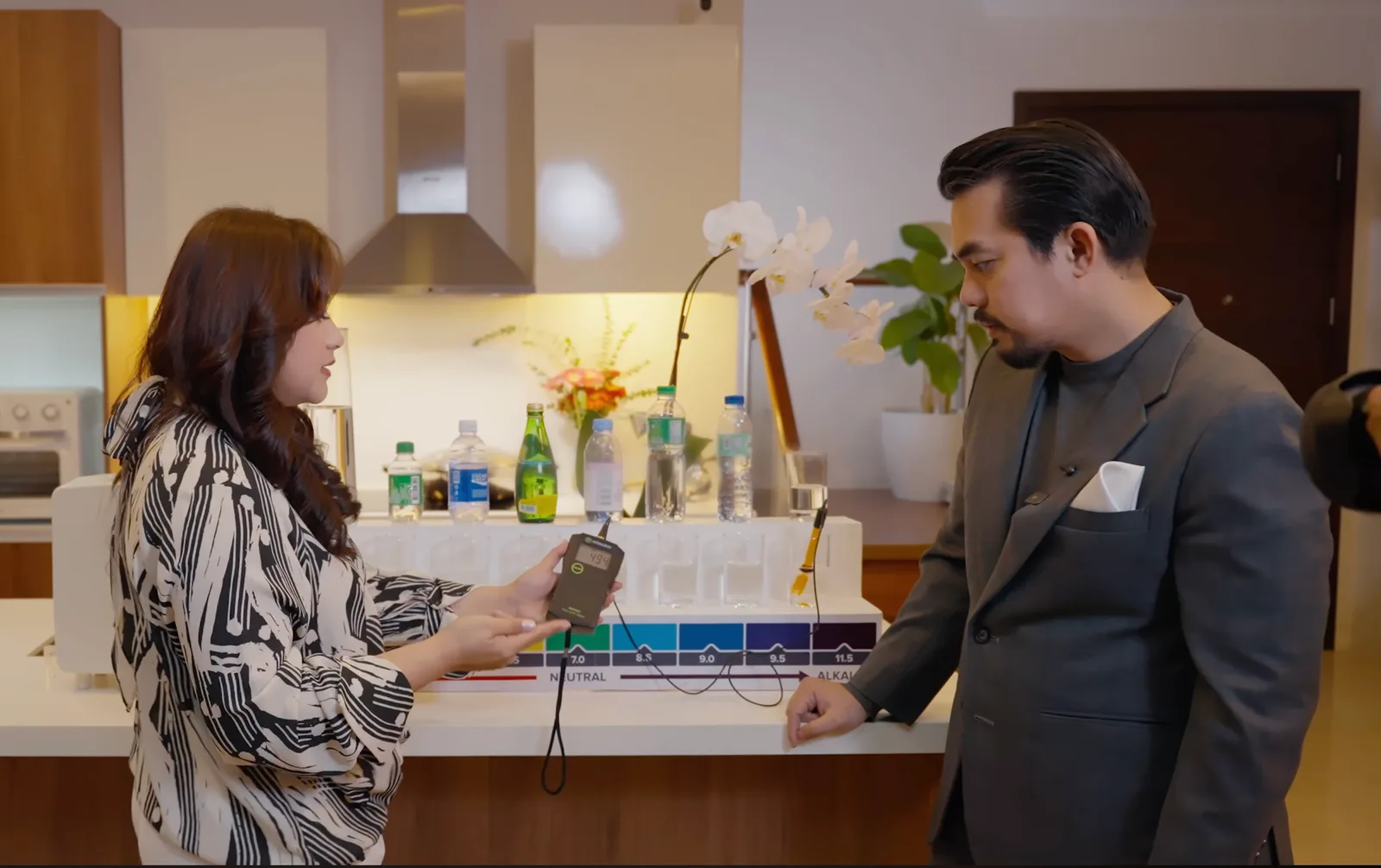
- What is the incoming water like? Source water varies by area and by building. Test before specifying, on site.
- Where do the inlet, drain and socket run? Settle this before the joinery is ordered.
- What is the maintenance schedule and who performs it? Establish the filter interval, the cost and the service route.
- What happens on a power interruption? In a country with occasional outages, the household needs a fallback that does not involve buying a case of bottles at 9pm.
Answer those five and integration is straightforward. Skip them and the machine ends up on a worktop with a hose running to a laundry sink, which is where most retrofits eventually arrive.
Sustainability in the brief
Sustainability in residential design is often reduced to material selection, where it is hardest to verify. Water is one of the few areas where the arithmetic is legible: a household either brings drinking water in as packaged goods or produces it on site.
For clients who ask what they can actually change without rebuilding, that is a real answer, and a smaller version of it — reducing bottles without replacing anything — is set out in simple ways to reduce plastic bottles at home.
The broader brief
Water is one variable among several that shape how a home feels to live in, and it is rarely the first one worth addressing. Ventilation usually is. Light usually is. The companion piece to this one — the hidden factors that shape wellness at home — works through the full list in the order a household should actually take them.
If the water question is the live one and the kitchen drawings are still open, the current lineup and a demonstration on site are the two practical next steps — in that order, since capacity and footprint determine which model belongs in the drawing at all.
Sources
Filed under
- Healthy Home
- wellness home
- kitchen design
- home technology
- water systems
- sustainable living
- specification