No household ever decided to get through a thousand plastic bottles a year. It arrives the way most household habits arrive — one convenient choice at a time, repeated until it stops looking like a choice at all.
This is not an argument that you are doing something wrong. It is a look at where the bottles actually come from, which changes tend to survive past the third week, and which ones quietly fail no matter how good the intention was.
Count before you change anything
Do this before buying a single reusable bottle: for one ordinary week, count every plastic bottle the household goes through. Not an estimate — a count, including the ones from the office, the school bag and the weekend.
It takes no effort and it does two useful things. It tells you the real number, which is almost always higher than the guess. And it tells you where the bottles come in, which is the part that determines what will actually work.
The five doors bottles come through
Almost every household bottle arrives through one of five routes, and each needs a different fix. Trying to solve all five with one reusable bottle is why most attempts stall.
- The weekly shop. Cases bought on autopilot because that is what the household drinks. The highest-volume door, and the easiest to close.
- Deliveries. Standing orders for refill containers or cases. Convenient enough that nobody revisits the decision.
- Out of the house. Bottles bought at work, at school, in transit — bought because nothing else was to hand.
- Guests and occasions. Parties, visitors, family gatherings. Low frequency, surprisingly high volume.
- The emergency stash. Typhoon-season supplies, which are entirely reasonable and should stay.
Notice that only the first two are really about what your household drinks at home. The others are about what happens when people leave the house, and no amount of changing your kitchen setup will touch them.
Fix the default, not the willpower
The reliable principle here is the same one that governs most household behaviour: whatever is easiest is what happens. A home that makes bottled water the convenient option will keep producing bottles regardless of how anyone feels about plastic.
So the work is not motivational. It is logistical — moving the friction from the good option to the less good one.
- Put a filled jug in the fridge, in front. The first cold thing anyone sees is what they take.
- Move the case out of easy reach. Not hidden — just not the first thing in the doorway.
- Keep filled bottles by the door, not empty ones in a cupboard. Nobody fills a bottle on the way out.
- Give everyone their own, in a colour they recognise. Shared bottles get abandoned.
- Stop the standing delivery before buying anything else. It is the change that requires no new habit at all.
This is the same logic covered in 5 Hidden Factors That May Affect Wellness at Home — most household health outcomes are decided by what is convenient, not by what is intended.
The reusable bottle problem
Nearly every household already owns reusable bottles. Most of them are in a cupboard. It is worth being honest about why, because the reasons are consistent and fixable.
They fail on washing, not on intention. A bottle that needs a brush and a drying rack becomes a chore, and chores lose to convenience within a fortnight. They also fail on quantity: one bottle per person means the day it is dirty is the day someone buys a plastic one.

Guests, parties and travel
The two doors nobody plans for. Occasions are straightforward once you decide in advance: a pitcher and glasses on the table, or a dispenser with cups, handles a gathering perfectly well and costs less than cases of bottles.
Travel is where a sealed bottle genuinely wins, and pretending otherwise is how sustainable-living advice loses credibility. Keep bottled water for long journeys and for the emergency supply. Cutting the daily habit is the goal; eliminating every bottle from your life is not, and chasing it usually ends with people abandoning the whole project.
The options, compared honestly
There is a ladder here, and most households do not need to climb all of it. Each step removes more plastic and costs more effort or money than the one before.
| Approach | Plastic removed | Upfront cost | Ongoing effort |
|---|---|---|---|
| Reusable bottles only | Out-of-home bottles | Very low | Washing, remembering |
| Pitcher filter | Some of the home volume | Low | Refilling, cartridges |
| Refill station containers | Small bottles, not the containers | Low | Carrying, ordering |
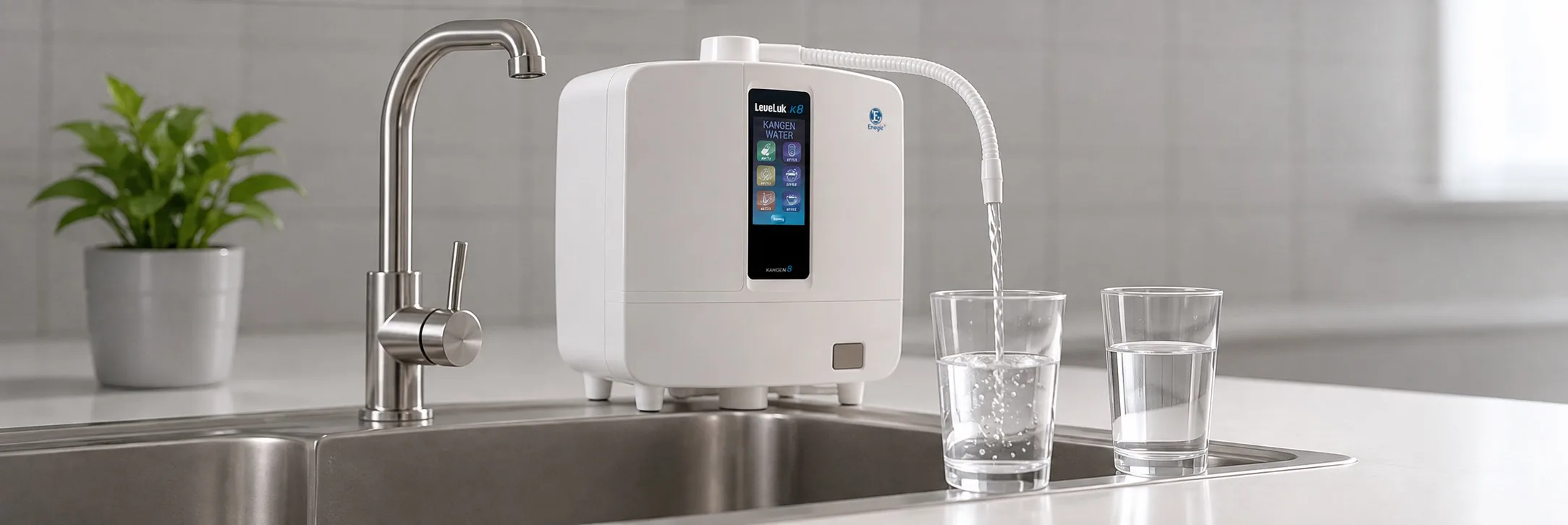
| Plumbed filter at the tap | Nearly all home volume | Moderate | Filter changes |
| Water treatment system | Nearly all home volume | High | Filter changes, servicing |
The step most households underestimate is the second-to-last one. A plain filtered tap removes the great majority of household plastic for a fraction of the cost of a full system, and for a lot of families that is where the sensible answer sits. Hydrogen Water vs Bottled Water works through the arithmetic for the larger end of that ladder.
A word on recycling
It is worth knowing, without turning it into a lecture, that putting bottles in the right bin is the weakest link in the chain. Collection and processing vary enormously between cities and provinces, PET is only recycled a limited number of times before quality degrades, and a bottle's journey after it leaves your house is genuinely difficult to trace.
None of which is an argument against recycling. It is an argument for treating it as the last resort it was always meant to be, rather than the reason a household feels fine about the volume.
A realistic thirty-day plan
In order, because doing them in this order is what makes it stick.
- Week one — count. Change nothing. Just get the real number and note which door each bottle came through.
- Week two — fix the home default. Jug in the fridge, filled bottles by the door, two bottles per person, case moved out of the way.
- Week three — close the biggest door. Usually the standing delivery or the weekly case. Cancel it and see whether anyone notices.
- Week four — count again. Compare against week one. Whatever is left tells you honestly whether you need a filter, a system, or nothing further at all.
Most households find that weeks two and three do the majority of the work, and that the remaining bottles are the travel and emergency ones that were always going to stay. That is a good outcome, and it costs nothing.
If the leftover is still large, the question has become a water-quality question rather than a habit one — and Hydrogen Water vs Bottled Water is the place to take it next. If you also want your household drinking more water in general, How Much Water Should You Drink Each Day? covers that side of it.
Wellness Insights publishes general educational content about hydration, water quality and healthy-home living. It is not medical advice, and nothing here is intended to diagnose, treat or prevent any condition.
Sources
Filed under
- Lifestyle
- sustainable living
- plastic
- household habits
- family wellness
- mindful living
- water quality