Water pressure gets attention when the shower is weak and is otherwise ignored — right up to the moment somebody installs an appliance that quietly depends on it.
In a Philippine home it varies more than most people assume: by floor, by time of day, by season, and by whether the building runs a pump and a roof tank.
General information about home plumbing. Pressure problems inside a building are a matter for a licensed plumber or the building administration; supply problems are for your water provider.
Why it varies so much
What actually needs it
Appliances differ enormously here, and the difference is not obvious from the outside.
- Anything with a membrane — reverse osmosis in particular — needs real pressure to work at all, and produces less water and more waste without it. What RO does and costs is in what filters remove and what they do not.
- Filters generally flow more slowly as pressure drops, and slower still as the cartridge loads up.
- Water ionizers are fed from the tap and quote a flow rate measured under normal supply. Weak pressure means the quoted litres per minute is not what you will see — flow rate, explained.
- Instant water heaters often need a minimum flow simply to switch on.
- Washing machines fill slowly and lengthen every cycle, which is usually the first thing a household notices.
Checking your own, roughly
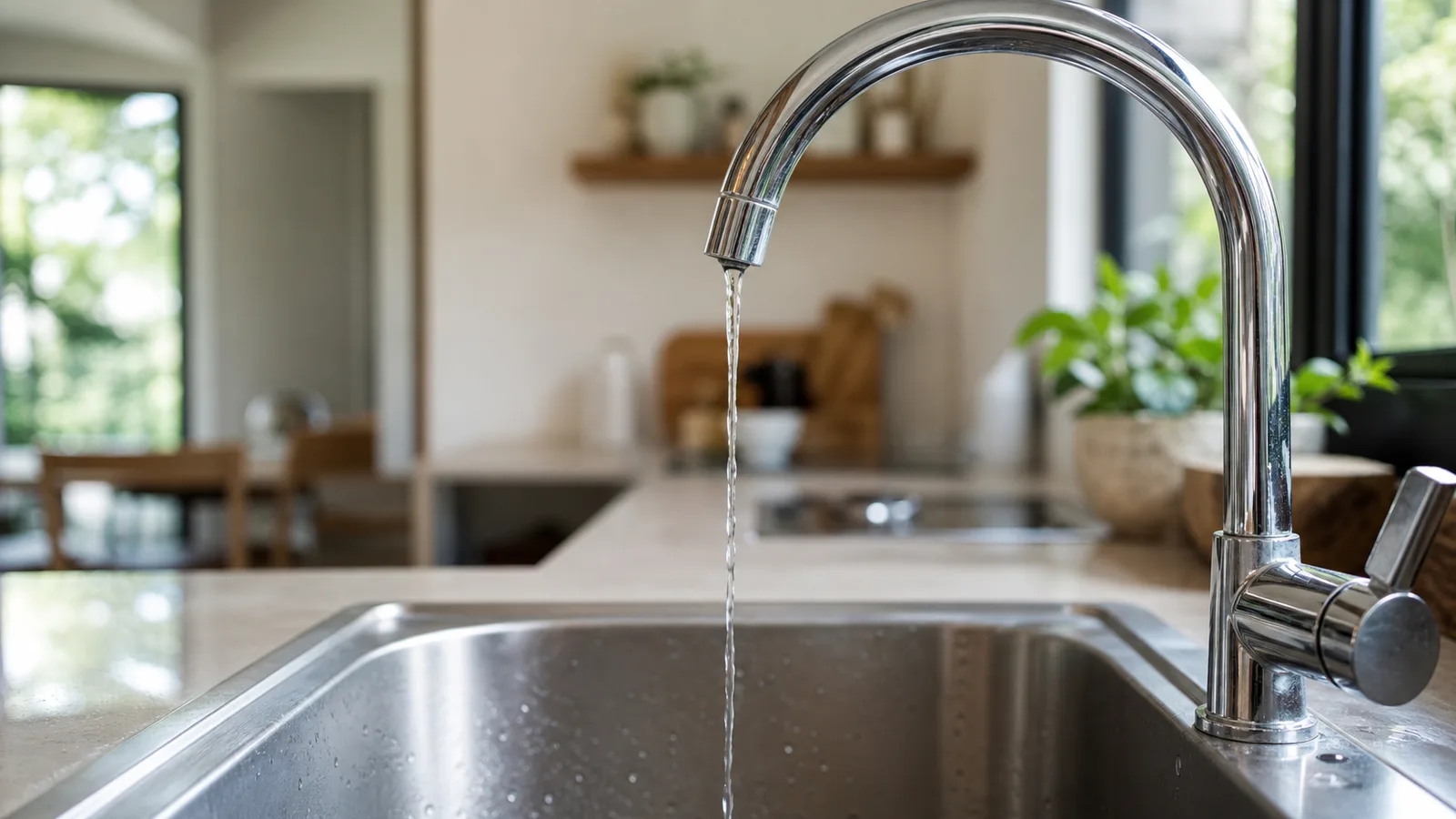
You do not need a gauge for a first pass. Time how long a one-litre container takes to fill from the kitchen tap, fully open, and do it twice — once at 6am and once at 2pm.
That gives you two things: an approximate flow, and how much your supply swings during the day. If the morning figure is dramatically worse, the problem is peak demand rather than your plumbing, and the practical fix is filling containers off-peak.
A cheap pressure gauge that screws onto a tap will give you an actual figure if you want one, and it is worth having before any installer quotes you for a pump.
What to do about it
- Establish whether it is the building or your unit. If neighbours have the same problem, it is not your pipes.
- Check the simple things first — a partly closed shut-off valve, a clogged aerator on the tap, a loaded sediment filter.
- Fill off-peak for anything that takes time, which costs nothing and solves the common case.
- Ask about the tank and pump before assuming you need your own — in a condo this is usually the administration's equipment, not yours.
- Only then consider a booster pump, which is a real solution and needs a professional, permission from the building, and an honest look at what it adds to the electricity bill.
And if you rent, settle what you are allowed to change before you buy anything that plumbs in — the constraint that shapes every option in water filters for renters.
Sources
Filed under
- Healthy Home
- water pressure
- plumbing
- appliances
- installation
- philippines