Every household serves water several times a day and almost none of them have thought about it. The drink that appears at every meal is the one nobody plans, and it shows: a dispenser in the corner, whatever glass is clean, and a jug that lives in the fridge because that is where it has always lived.
This is a small subject with a measurable effect. How water reaches a table is one of the few reliable levers on how much of it a household actually drinks.
The single change that does the most
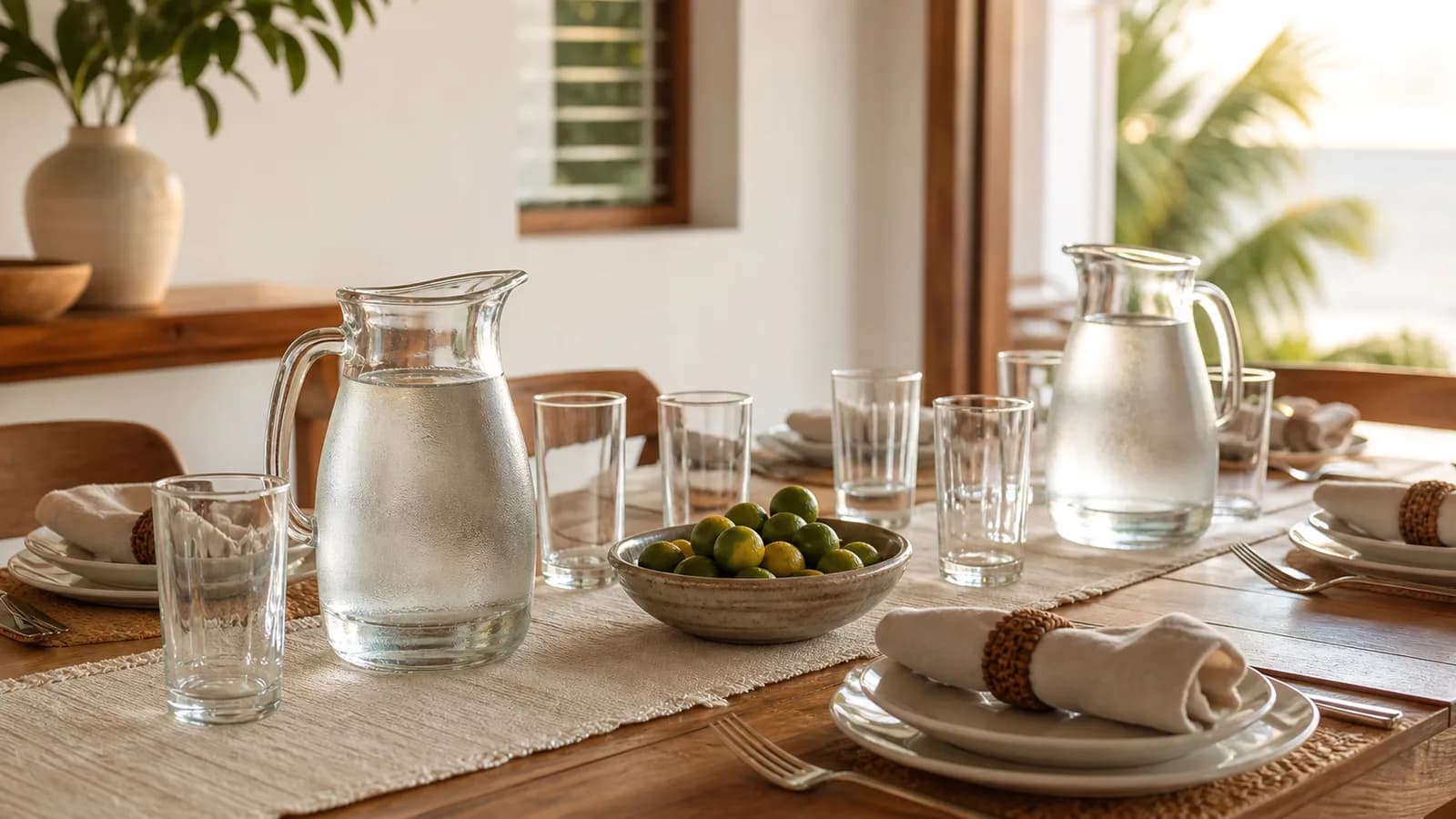
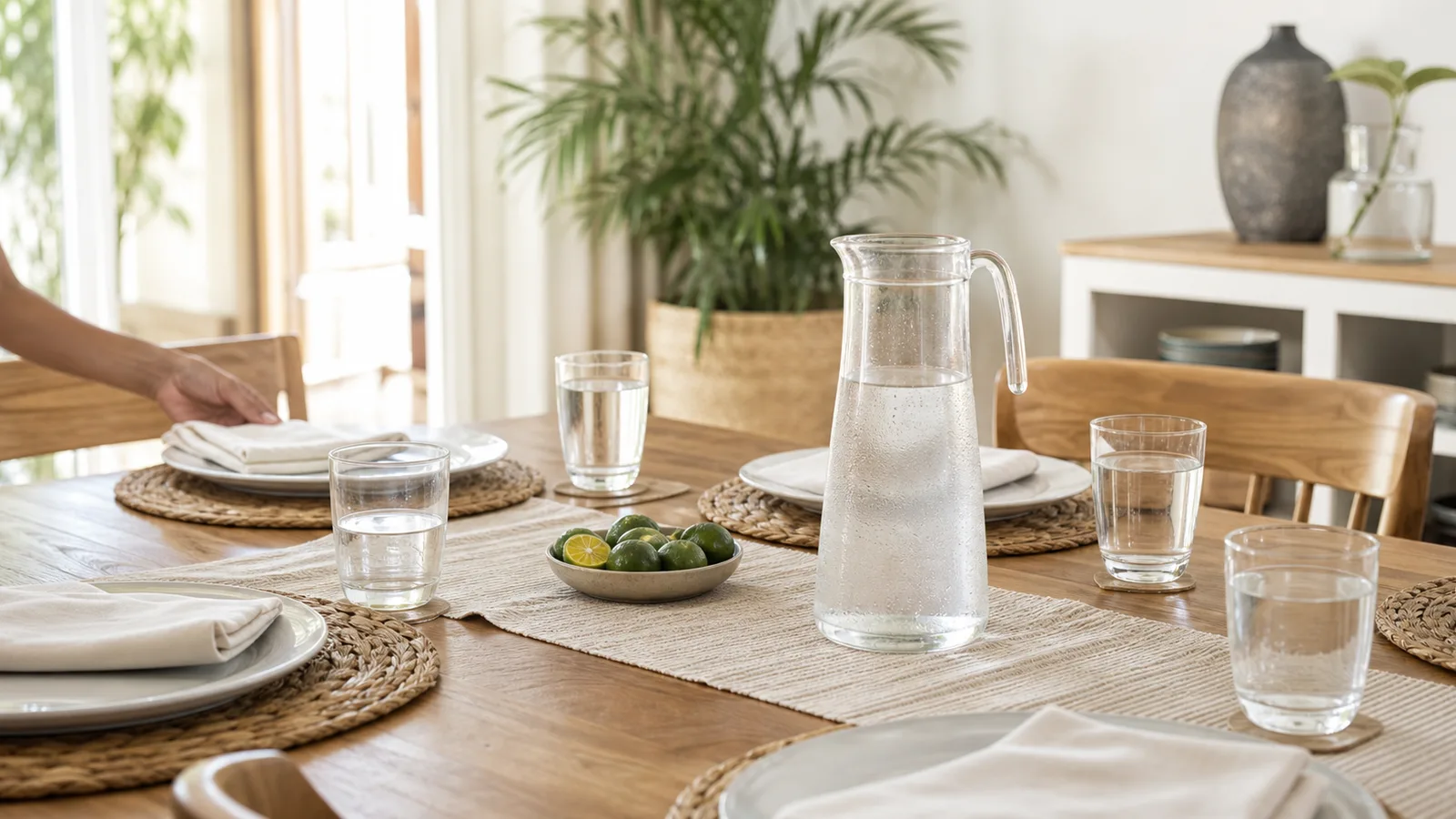
Put the water on the table before the meal starts, not in the kitchen for people to fetch.
That is the whole intervention. A pitcher within reach gets poured from repeatedly through a meal; water that requires standing up gets poured once, at the beginning, if at all. The same principle governs office pantries and gatherings — visibility and proximity decide consumption far more than preference does.
Choosing a pitcher that gets used
The glass, which matters more than expected
People drink more from glasses they like holding. That sounds trivial and is not — a pleasant glass is one that gets picked up, and picking it up is the entire behaviour in question.
Practical considerations: enough glasses that a clean one is always available, because washing something first is where the habit dies; a size that suits actual thirst rather than a formal place setting; and, for households with children or older members, something unbreakable within their reach.
Serving guests
Water offered is different from water available. A guest will rarely ask, so a household that keeps water in the kitchen effectively serves none.
The complete version — including why households that never buy bottled water still buy a case for visitors, and how to avoid it without anyone feeling short-changed — is in hosting without single-use plastic.
The small additions
Calamansi, cucumber, a few mint or pandan leaves. None of these does anything nutritionally worth claiming, and that is not why they are worth doing. They signal that the water was prepared rather than merely provided, which is the difference between a jug on a table and hospitality.
They also, straightforwardly, make water more appealing to people who find it boring — which is most children and a fair number of adults. They shift what the rest of the table drinks, where most of a household's sugar sits.
And the water itself
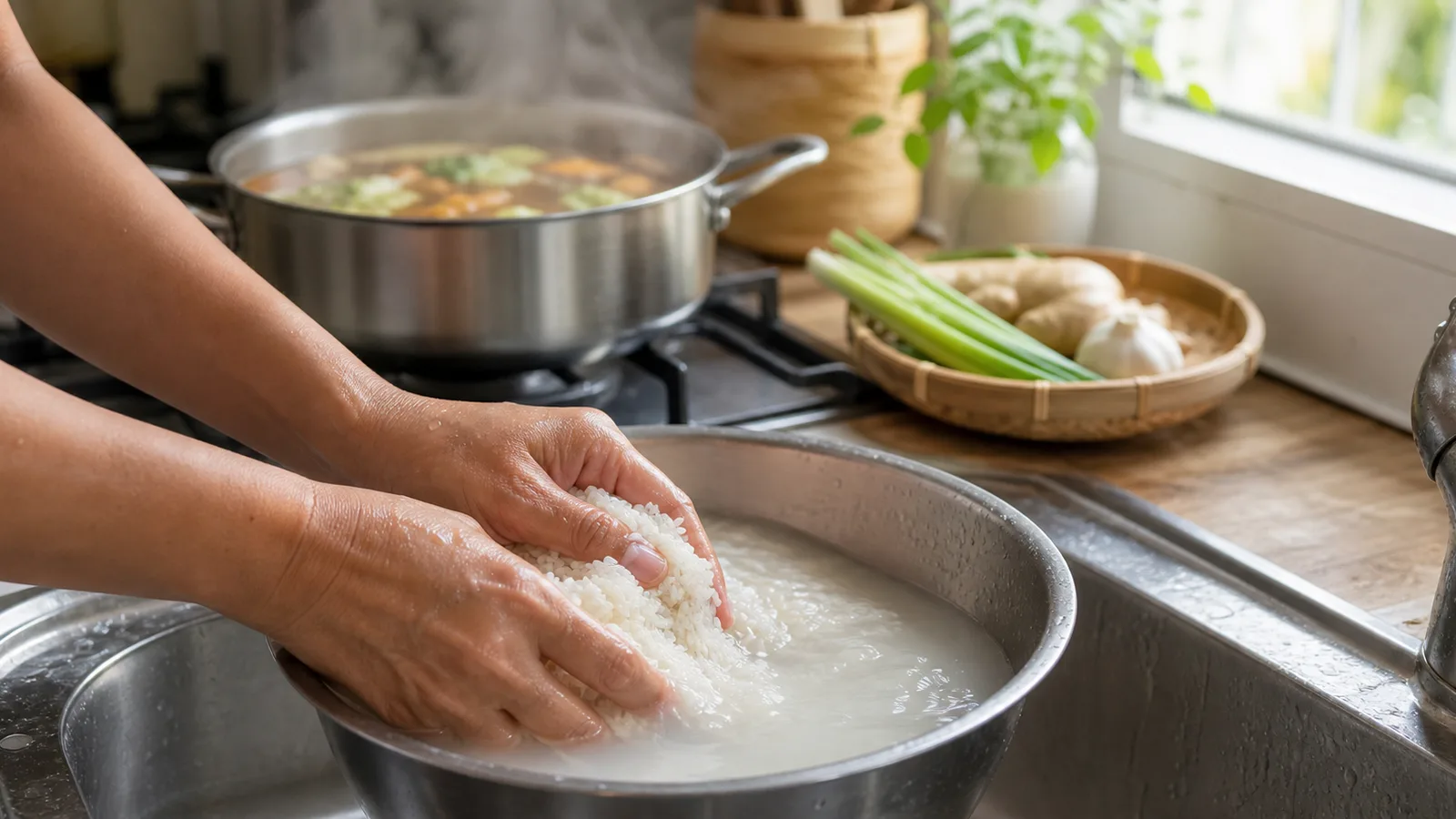
Everything above is about presentation, which only works if the water underneath is pleasant to drink. If yours has a taste, it will show up most clearly in a plain glass at a table — the same reason it shows up in coffee and rice, as water in the everyday Filipino kitchen sets out.
That is a taste question rather than a health one, and it is the honest reason to care about it.
Sources
Filed under
- Lifestyle
- serving
- table
- glassware
- hosting
- everyday habits