Count the water in an ordinary Filipino meal and the total is larger than it looks. Rice rinsed two or three times and then cooked in more. A pot of sabaw that is mostly water by weight. Vegetables washed, meat rinsed, the kettle for coffee, the pot for pasta on a lazy night.
Almost all of it is invisible — until a batch of rice comes out wrong or the coffee tastes flat, and then it becomes very visible indeed.
Rice, where most of it goes
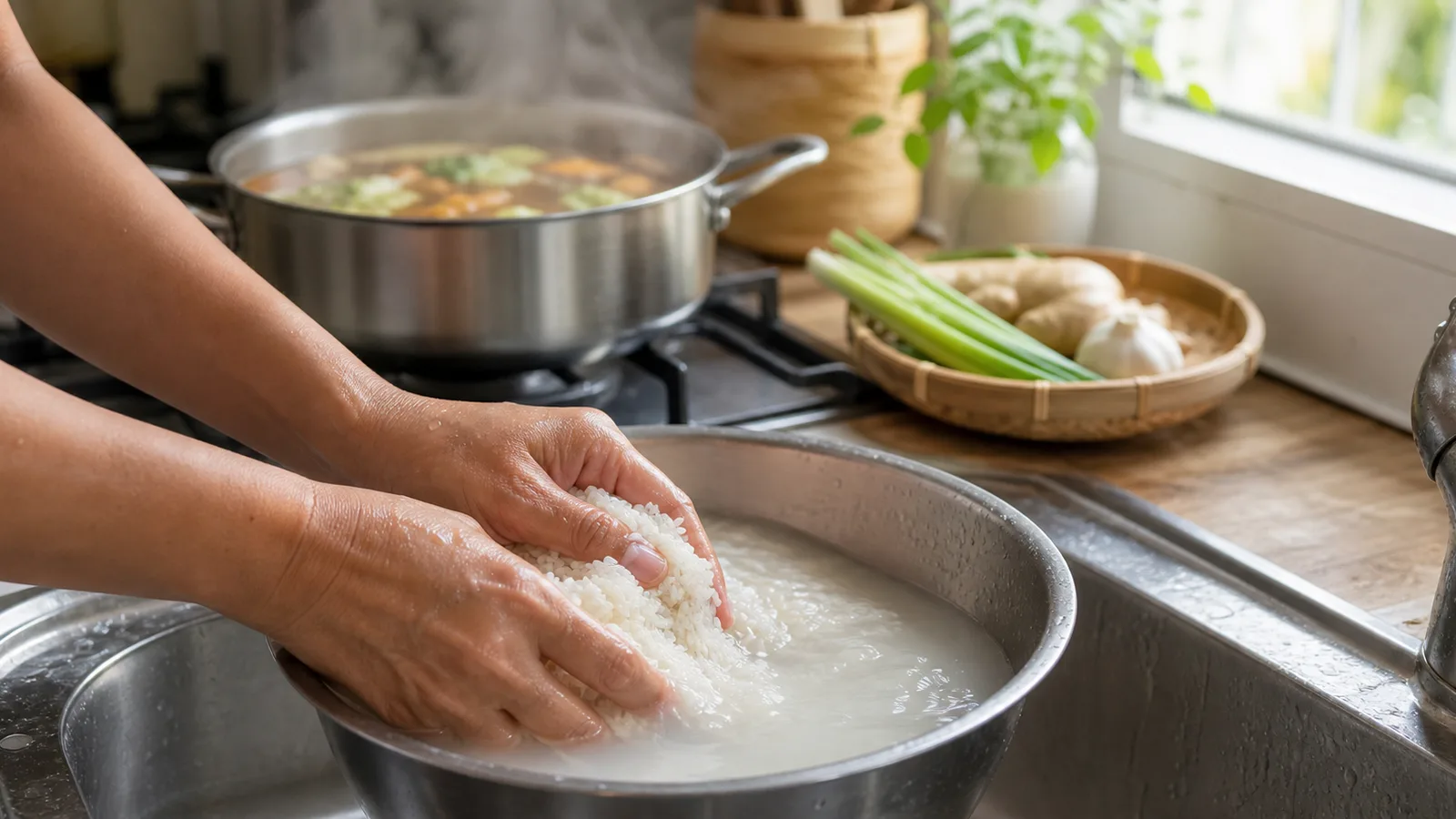
Rinsing rice removes surface starch, which is why it is done and why the water runs cloudy. How many times is a household preference rather than a rule — more rinses give separate grains, fewer give a softer, stickier result.
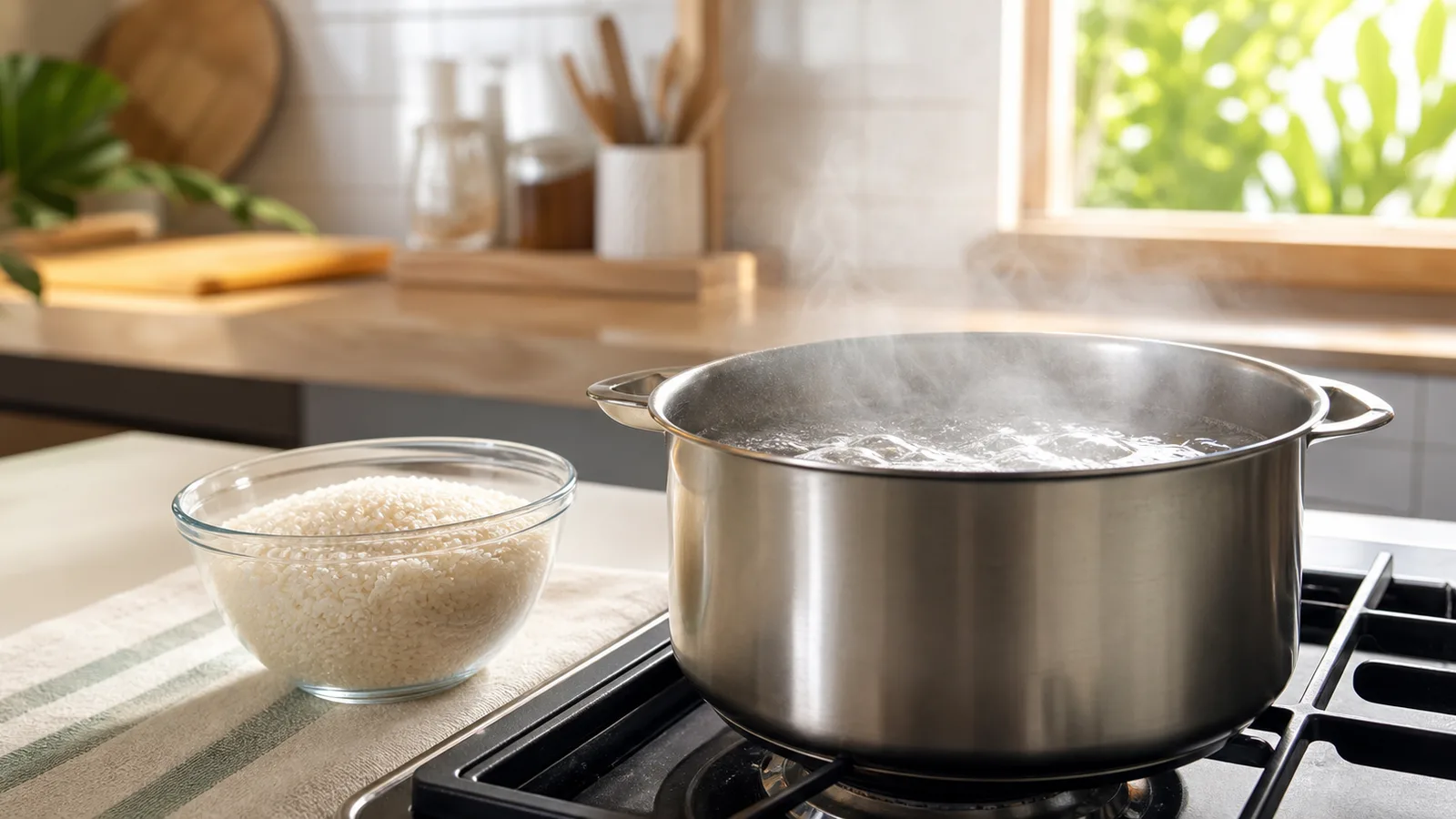
The cooking water is the part worth attention, for a reason nobody mentions: the rice absorbs essentially all of it. Whatever is in that water ends up in the pot, concentrated, with nowhere to go. If your tap water has a taste, boiled rice is one of the places it reappears most reliably.
Sabaw and broth-based cooking
Sinigang, tinola, nilaga, bulalo — a great deal of Filipino cooking is water plus time. In these dishes the water is not a medium, it is the dish, and everything else is seasoning it.
Two practical notes. Hard water — carrying dissolved calcium and magnesium — can leave a faint chalky edge in a long-simmered broth and slows the softening of dried beans and some vegetables. And a broth reduced over an hour concentrates whatever the water brought with it, in the same way rice does.
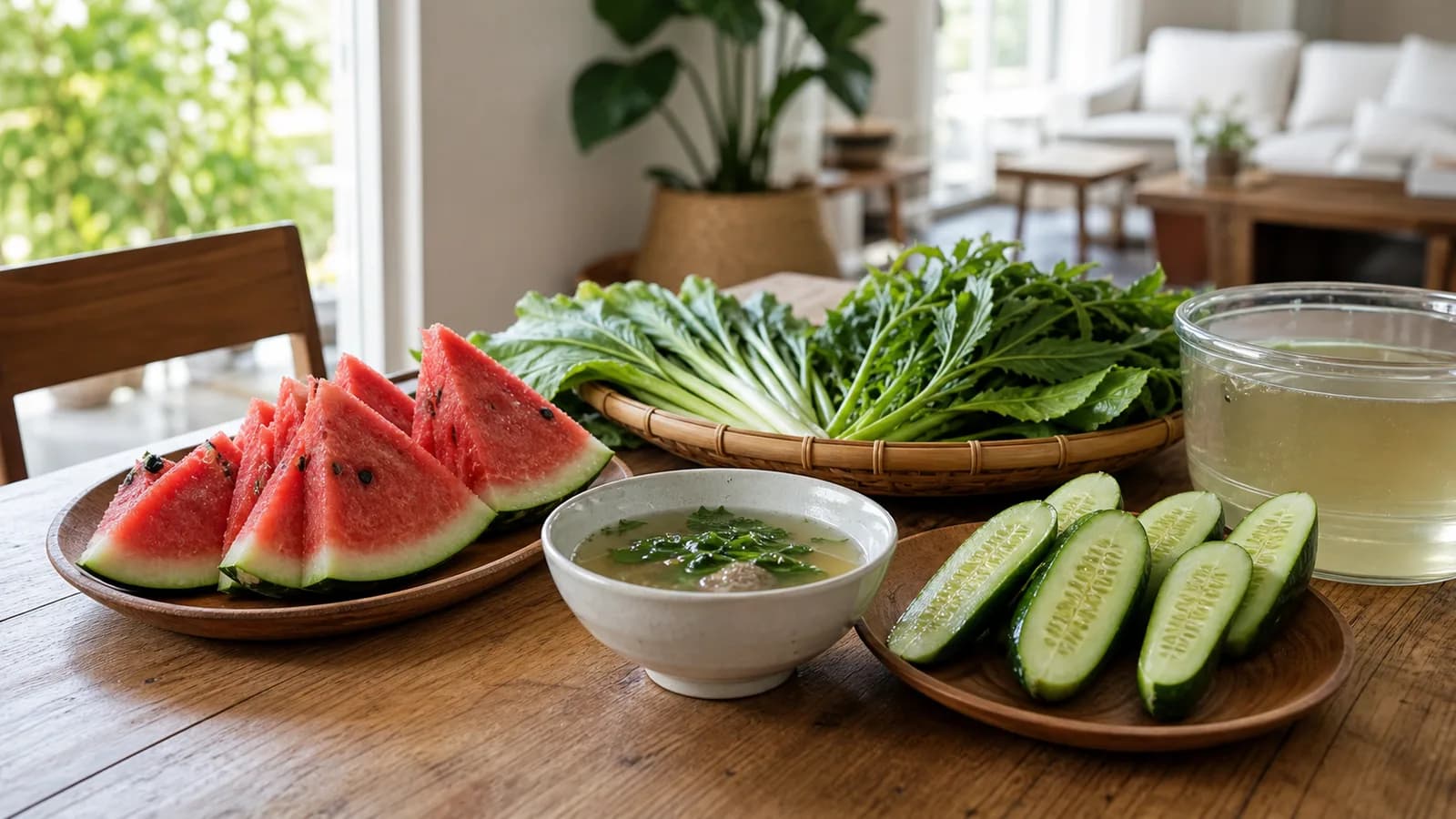
This is also the reason broth dishes contribute so much to daily fluid intake, a point worth reading alongside water from food.
Coffee and tea, where it is most obvious
Brewed coffee is around 98% water and an infusion is close to 99%. There is nowhere for water flavour to hide, which is why households that change their drinking water almost always notice it first in the cup.
Very hard water flattens the brew and leaves a film on the surface of tea; heavily chlorinated water is unmistakable. Neither is a health question — it is a taste one, and it is the honest reason brewing water matters, covered further in turmeric tea in an everyday routine.
Washing, rinsing and the running tap
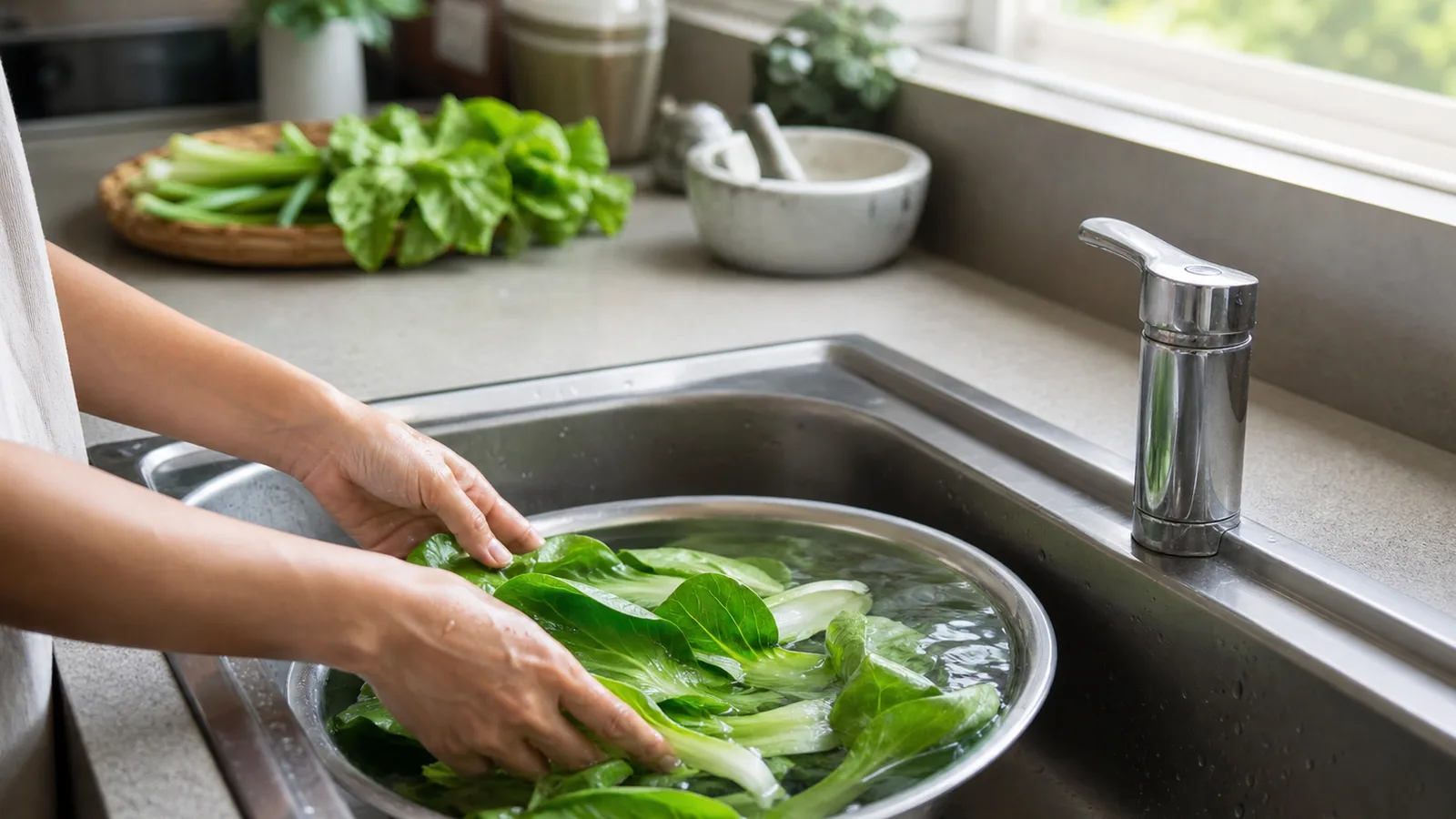
The largest volume in the kitchen is not cooking at all — it is rinsing and washing up, and most of that is lost to a tap left running while hands are busy elsewhere.
The full version of that argument, including how to find a leak with your meter, is in water use in the kitchen.
Where filtered water genuinely changes something
Not everywhere, and it is worth being specific rather than sweeping.
| Use | Does water quality show? |
|---|---|
| Drinking plain | Yes — most obviously of all |
| Coffee and tea | Yes — the drink is almost entirely water |
| Rice | Often — the grain absorbs all of it |
| Long-simmered broth | Sometimes — reduction concentrates it |
| Boiling pasta, blanching | Rarely — most is poured away |
| Washing up, rinsing | No, beyond hard-water scum on glassware |
Which is a useful ordering if you are deciding where a home system earns its place: the top three lines are where a household actually notices, and the bottom two are where it does not.
This article is about cooking and taste. It makes no health claim, and no product mentioned treats or prevents any condition.
Sources
Filed under
- Lifestyle
- cooking
- Filipino food
- rice
- kitchen
- water quality