There is a detail buried in every hydration guideline that changes how the whole subject should be read, and it is almost always left out of the versions that circulate: the figures are for total water, not for what you pour into a glass.
The European Food Safety Authority's reference values — around 2.0 litres a day for women and 2.5 for men — explicitly include the water contained in food. Which means anyone treating those numbers as a drinking target has set themselves a harder goal than the guideline actually asks for.
How much actually comes from food
The usual estimate is that food contributes somewhere around a fifth to a third of total water intake, depending heavily on what is being eaten. That range is wide for a good reason: a diet of soup, rice and fruit and a diet of bread and crackers are not remotely the same on this measure.
The Filipino plate does well here
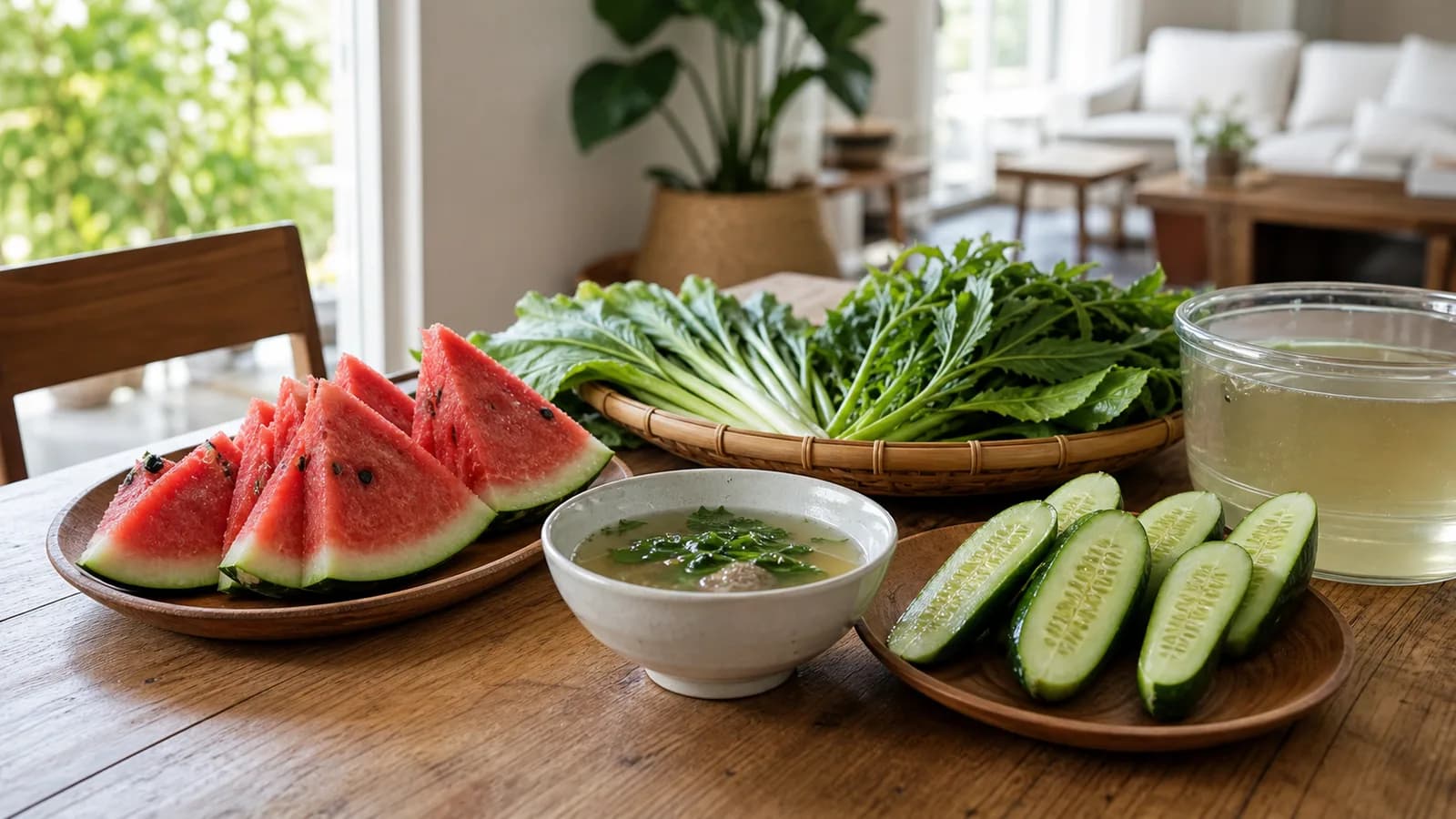
This is one of the few areas where local eating habits have an unremarked advantage. A meal built around rice with a soup-based ulam, plus fruit in the heat, carries a great deal of water.
| Food | Roughly |
|---|---|
| Cucumber, lettuce, watermelon | Above 90% water |
| Tomato, papaya, pineapple, melon | Around 90% |
| Sinigang, tinola, and other broth dishes | Mostly water by weight |
| Cooked rice | Around two-thirds water |
| Bread, pandesal | Under half |
| Crackers, chips, dried fish | Almost none |
A household eating three broth-based meals a week with fruit in the afternoons is starting from a very different baseline than one eating mostly dry, packaged food — which is a more useful observation than any target number. The water going into those meals matters in its own right, and what water changes at the stove takes that up.
What this changes in practice
The last point is the one worth carrying around. Rather than aiming at a fixed number, notice what kind of eating day you are having — the drinking side should move to compensate, and in the heat it should move further. That is the argument in hydration in a tropical climate.
Food is a contribution, not a substitute
None of this is an argument for drinking less. Food water is a real part of the total, but it arrives slowly, is tied to mealtimes, and cannot respond to a hot afternoon or physical work the way a glass can.
The sensible reading is simply that the guideline number is not as intimidating as it looks, and that a household eating well is already further along than it thinks. Where the drinking half is concerned, the thing that actually determines how much gets drunk is how easy it is to reach — which is a kitchen question rather than a nutrition one, and the subject of how much water should you drink each day.
General information about everyday hydration, not medical or dietary advice. Anyone advised by a doctor to manage fluid intake — for a kidney or heart condition, for instance — should follow that guidance rather than a general article.
Sources
Filed under
- Hydration
- water from food
- total water intake
- diet
- hydration
- Filipino food