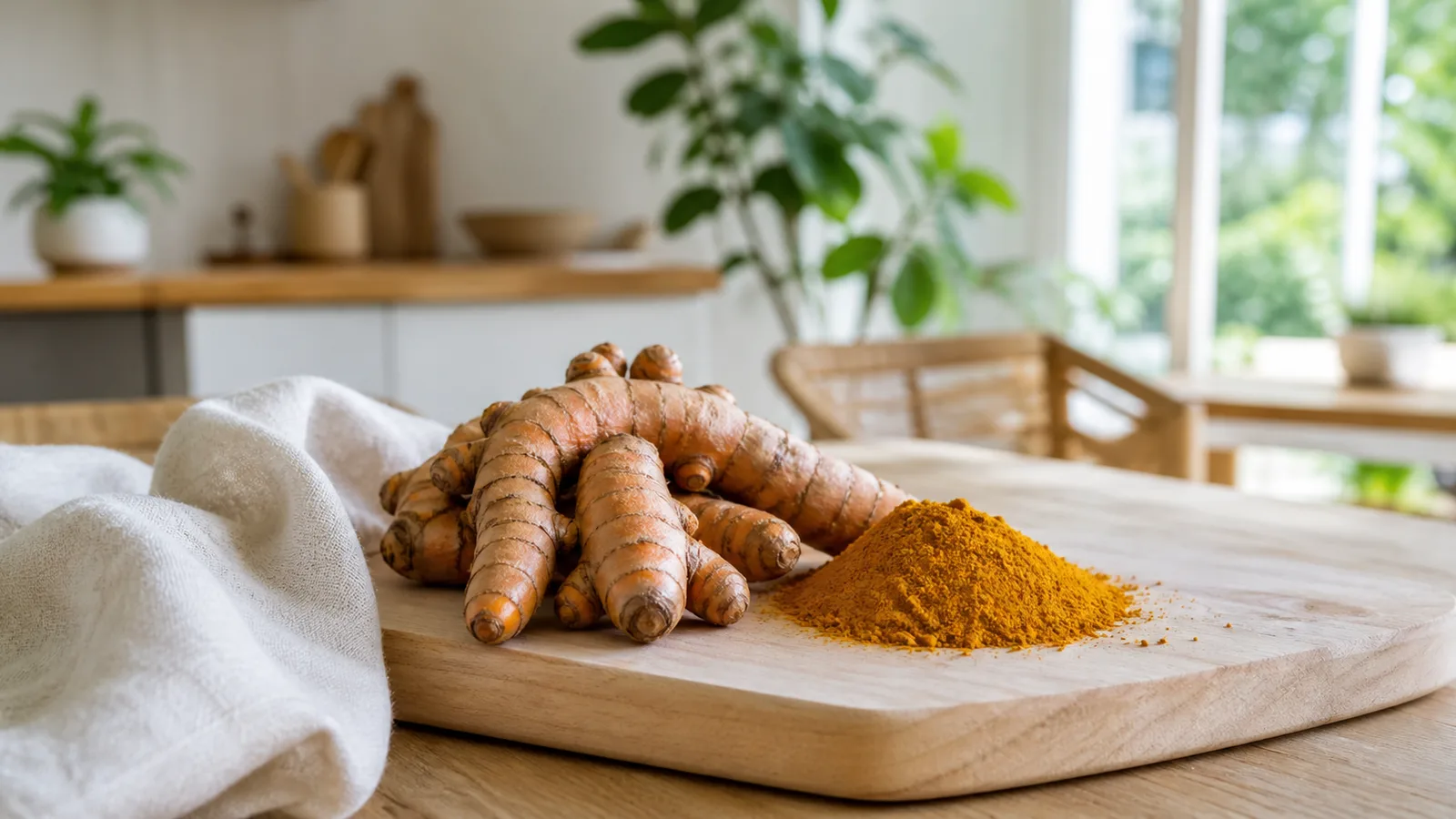
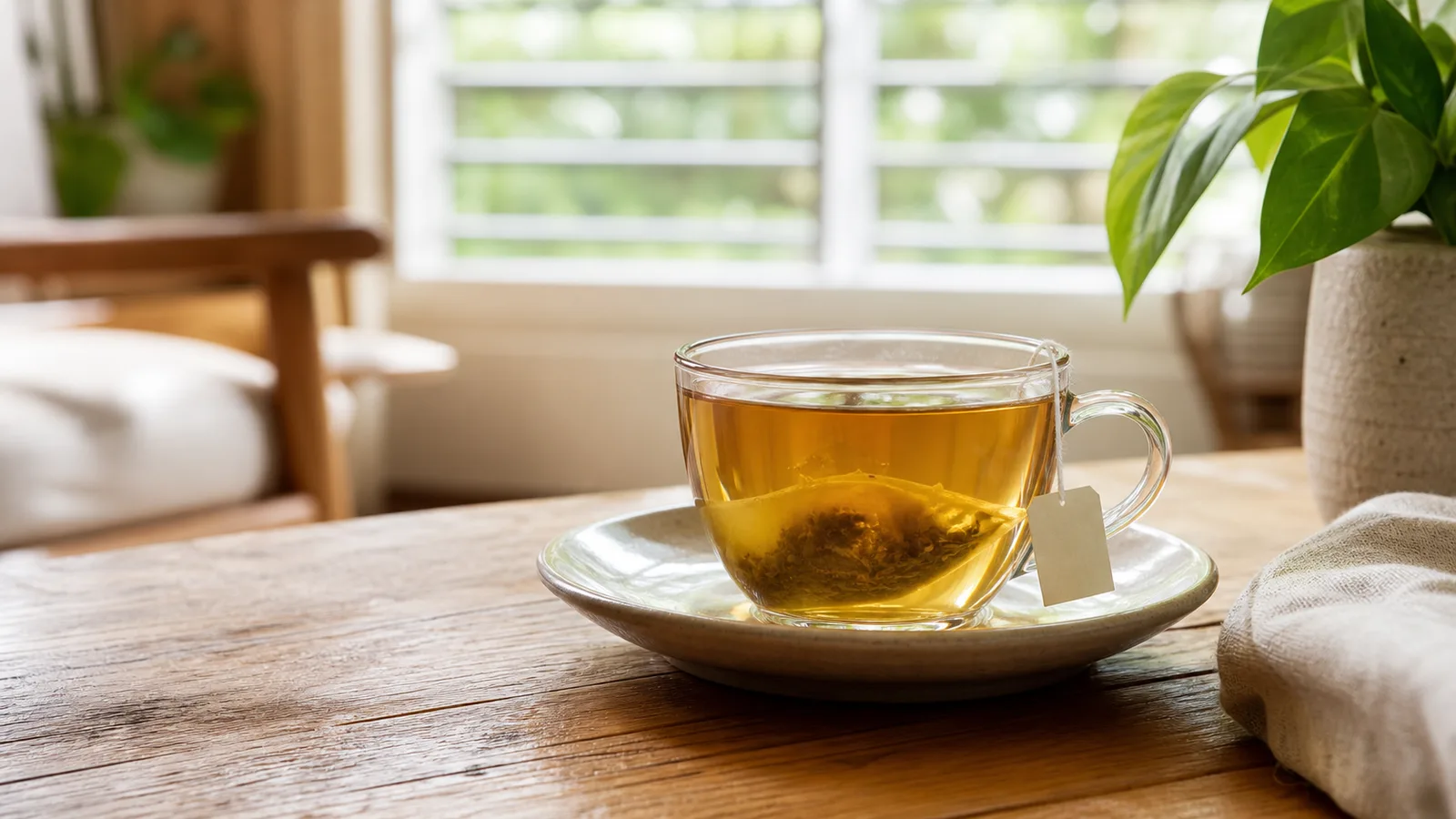
Search for turmeric tea and you will mostly find health claims. Set those aside — most of them will not survive a careful reading, and none of it is something a recipe can settle — and something simpler is left: a warm, earthy, slightly bitter drink that some people take to immediately and others never do.
Whether it earns a place in your day depends on taste and habit, which are the two things almost nobody writes about.
This article is about a drink and how to make it. It is not medical advice, and nothing here claims any health effect. If you take medication or have a health condition, ask your doctor before adding any supplement to your routine.
What it actually is
Strictly, it is a tisane rather than a tea — an infusion of a plant that is not Camellia sinensis, which means no caffeine and no tannin bitterness of the kind black tea has. The bitterness turmeric brings is different: earthier, rounder, closer to the taste of the raw rhizome.
Which variety is in the bag matters here. Spring ukon is markedly more bitter than autumn ukon, the milder culinary variety — a distinction covered in what ukon actually is. The Kangen Ukon Tea is autumn ukon, unflavoured, in 2.5 g bags at one bag per cup, which is the format most likely to survive a daily routine simply because it removes every decision except boiling water.
Brewing it properly
Herbal infusions are treated more roughly than they should be. Three things make a noticeable difference:
If it tastes of almost nothing, the cause is nearly always one of those three rather than the tea.
The water, since it is most of the cup
An infusion is around 99% water, so whatever your water tastes of ends up in the cup, amplified rather than hidden by a mild tisane. Households that change their drinking water usually notice it first in tea and coffee — a taste observation rather than a health one, and the honest reason brewing water is worth caring about at all.
Very hard water in particular flattens infusions and leaves a film on the surface. That is chemistry, not a fault in the tea, and what makes water hard in the first place explains where the film comes from.
Where it fits in a day
Having no caffeine, it is one of the few warm drinks that works in the evening without consequences — which is where most people who stick with it end up putting it. Morning works too, though it competes with coffee and usually loses.
The habit-formation point is the same as for anything else: attach it to something you already do rather than scheduling it. After dinner, while the dishes soak; alongside whatever the last hour before bed already involves. The method is set out in morning routines that actually hold and works identically at the other end of the day.
Practical notes nobody mentions
- It stains. Cups, spoons, light-coloured worktops, cloth. Rinse promptly rather than letting a cup sit overnight.
- Honey or calamansi help if the earthiness is too much at first. There is no purity rule that says a tisane must be drunk unadorned.
- Iced works well in this climate — brew it strong, let it cool, pour over ice. Better than most people expect.
- Store the box sealed and away from heat. Humidity gets into paper tea bags quickly here, and a damp bag makes a dull cup.
An honest close
Turmeric tea is a pleasant, caffeine-free drink with a long history in Okinawan households, and that is the entire case for it made without overreach. If you like it, it is an easy thing to keep. If you do not, no amount of framing will make it a habit — and there is no obligation to persist with a drink you dislike.
Sources
Filed under
- Lifestyle
- turmeric tea
- tisane
- daily routine
- brewing
- ukon