
The internet's morning routine is a twelve-step sequence beginning at 4:45am and involving journalling, cold exposure, meditation, mobility work and a green drink. It is aspirational content, and it collapses on contact with a house that contains other people.
The routines that actually hold are much smaller and much duller, and they share a structure worth understanding.
Why elaborate routines fail
Not through weakness of character. Through arithmetic.
A routine that survives is one that costs almost nothing to perform, cannot really be interrupted, and does not care how you feel about it.
Attach the new thing to an old thing
The most reliable structure is not a schedule but an attachment: pick something you already do without fail, and hang the new habit directly onto it.
Everyone has these anchors already — switching on the kettle, opening the curtains, brushing teeth, unlocking the phone. They happen whether or not you intended them to. A new habit attached to one inherits its reliability instead of needing its own, which is why repetition outlasts intensity in almost every change that survives a year.
| Anchor you already do | Attached habit |
|---|---|
| Switching on the kettle | Drink a glass of water while it boils |
| Opening the curtains | Stand in the light for a minute |
| Sitting down at the desk | Fill a bottle before opening email |
| Putting away last night's dishes | Set out tomorrow's glass |
Each of those takes under a minute, none requires equipment, and all of them survive a bad night's sleep — which is the only real test.
The water one, since it comes up constantly
A glass of water in the morning is the most recommended habit in this entire genre, usually accompanied by claims that do not hold up. It does not flush toxins, it does not fire up your metabolism, and it is not a health intervention.
What it is: an easy first success, attached to an anchor you already have, that starts the day's intake before the day starts making demands. In a hot climate, starting a commute already behind is a genuine and common problem — the reason it is worth a minute is set out in hydration in a tropical climate.
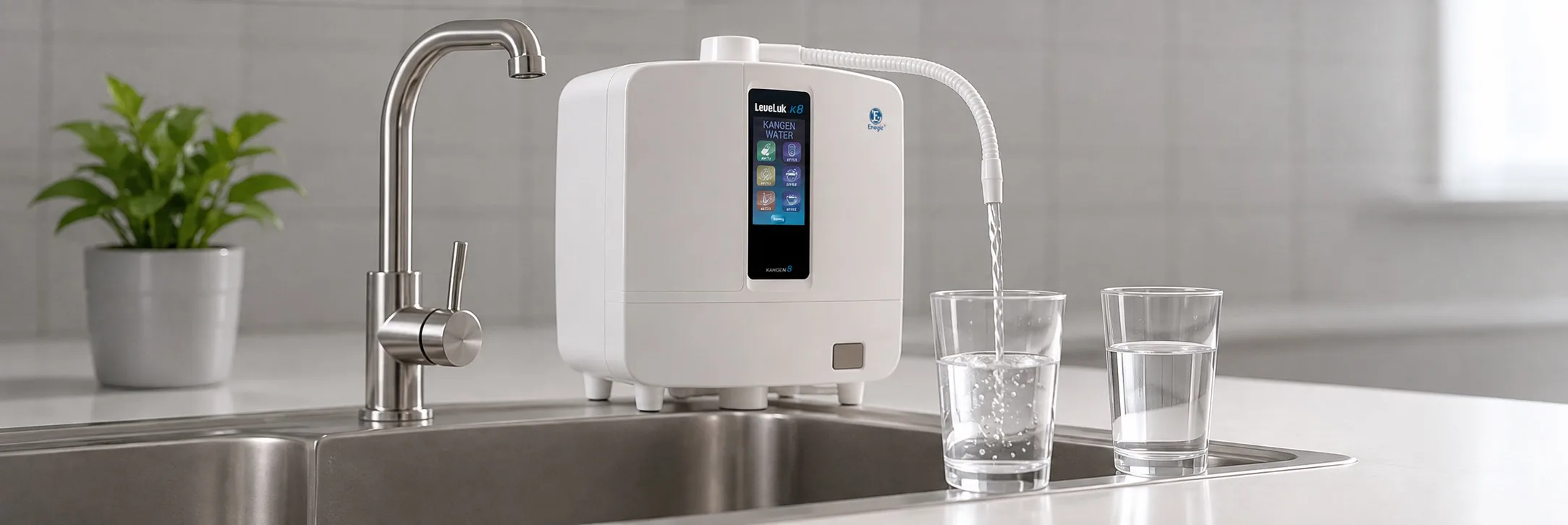
Whether that glass is easy to get is the part nobody frames as a habit question, and it usually is one. A glass within reach gets drunk; one that requires finding a dispenser, lifting a container, or opening a fresh case does not — most forgetting to drink is really the water being in another room.
This article is about habit structure. It is general information rather than medical advice, and no product mentioned treats or prevents any condition.
Light, and the order of things
If you add one more thing, make it daylight. Getting into bright light early is free, requires no purchase, and is one of the more consistent signals for the body's daily rhythm — a point covered alongside the rest of the household environment in the hidden factors that shape wellness at home.
Beyond that, resist adding. The instinct once a routine works is to extend it, which is precisely how it becomes the twelve-step sequence that fails.
How to actually start
- Choose one habit. Not three. One.
- Name its anchor out loud. "After I switch on the kettle, I drink a glass of water." The specificity is the mechanism.
- Make it smaller than feels worthwhile. Two minutes maximum. You are building reliability, not results.
- Run it for a month without adding anything. Boredom is the sign it is working.
- Then, and only then, attach a second.
It is an unglamorous method that produces a routine you still have in a year, which is the only version worth having.
Sources
Filed under
- Wellness
- morning routine
- habits
- daily rhythm
- wellness
- practical