Every January produces the same pattern: an ambitious change, two good weeks, a disruption, and then nothing. It is so reliable that it is worth treating as a property of the method rather than of the person.
Ambitious changes require conditions — time, energy, motivation, an undisrupted week. Real life supplies those irregularly, so anything depending on them fails at the first ordinary obstacle.
General information about everyday habits, not medical or psychological advice.
Why small wins over big
A habit that takes two minutes and requires no equipment can be performed on the worst day of your year. That is the entire advantage, and it compounds in a way a fortnight of intensity never does.
Attach it to something that already happens
The mechanism that makes small habits stick is not willpower and not a reminder — it is attachment to an existing anchor. Everyone already performs a set of reliable daily actions: boiling a kettle, brushing teeth, sitting down at a desk, closing a laptop.
A new habit attached to one of those inherits its reliability. The form is deliberately rigid: after I [existing thing], I [new thing]. The specificity is the point — "drink more water" has no trigger, while "after I switch on the kettle, I drink a glass of water" has one that fires every morning without being remembered.
What to do when you miss one
You will. The habit is not what breaks; the response is.
The rule worth adopting is simply: never miss twice. One missed day is an ordinary interruption. Two becomes the new pattern, and by four the habit has quietly ended without any decision having been made.
Notice also that streak-counting works against this. A broken streak feels like failure and failure ends things, which is why an app that celebrates 47 days can do more damage on day 48 than it did good before.
How long it takes
Longer than the twenty-one days everyone repeats, and it varies enormously by habit and person. Research on how long behaviours take to become automatic finds a wide range rather than a number.
The practical implication is to stop watching for the moment it becomes automatic and simply keep the habit small enough that automaticity is not required. If it takes two minutes, it does not much matter whether it feels effortless yet.
Worked examples, since this is a water publication
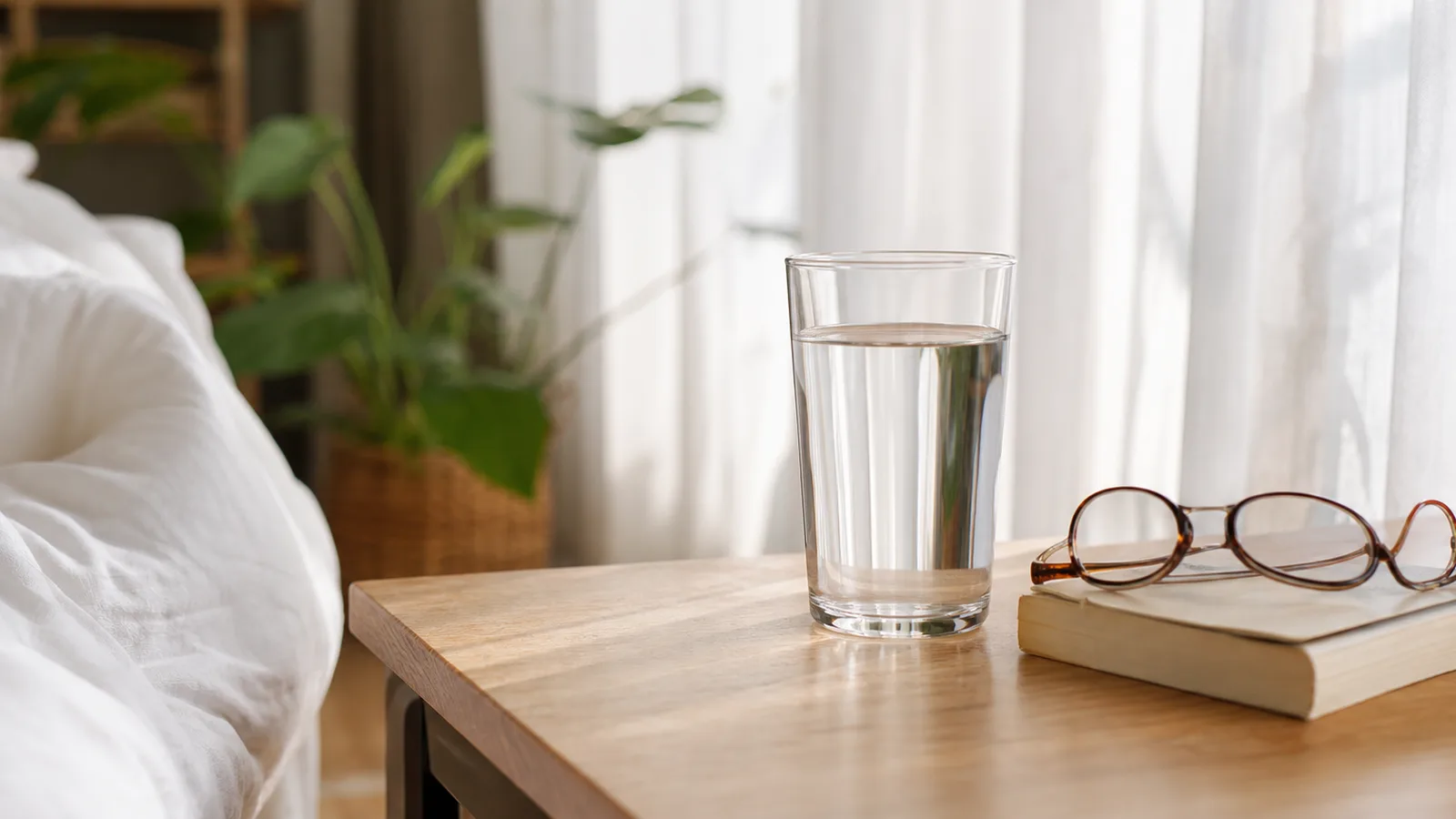
- After I switch on the kettle, I drink a glass of water. Covered at length in morning routines that actually hold.
- After I finish a meeting, I stand up before opening anything else — movement for people who sit all day.
- After the last dish is washed, I turn off the ceiling light — sleep and the hour before bed.
- After I put the shopping away, I fill and chill the pitcher — pitchers, glasses and the way water is served.
Four habits, none longer than a minute, each attached to something that happens anyway. Take one, run it for a month, and only then consider a second.
The honest part
Small habits are not a substitute for circumstances. Someone working two jobs is not short of discipline, and the version of this advice that implies otherwise deserves the eye-roll it gets.
What the method does offer is that its unit of effort is a minute rather than an hour — which is why it remains available when almost nothing else does.
Sources
Filed under
- Wellness
- habits
- behaviour
- routine
- consistency
- wellness