Anyone who installs an ionizer arrives at the same question within a week: should I be cooking with this? It is a good question with two separate answers, and conflating them is where most of the confusion in this corner of the subject comes from.
The hydrogen answer: no, and here is why
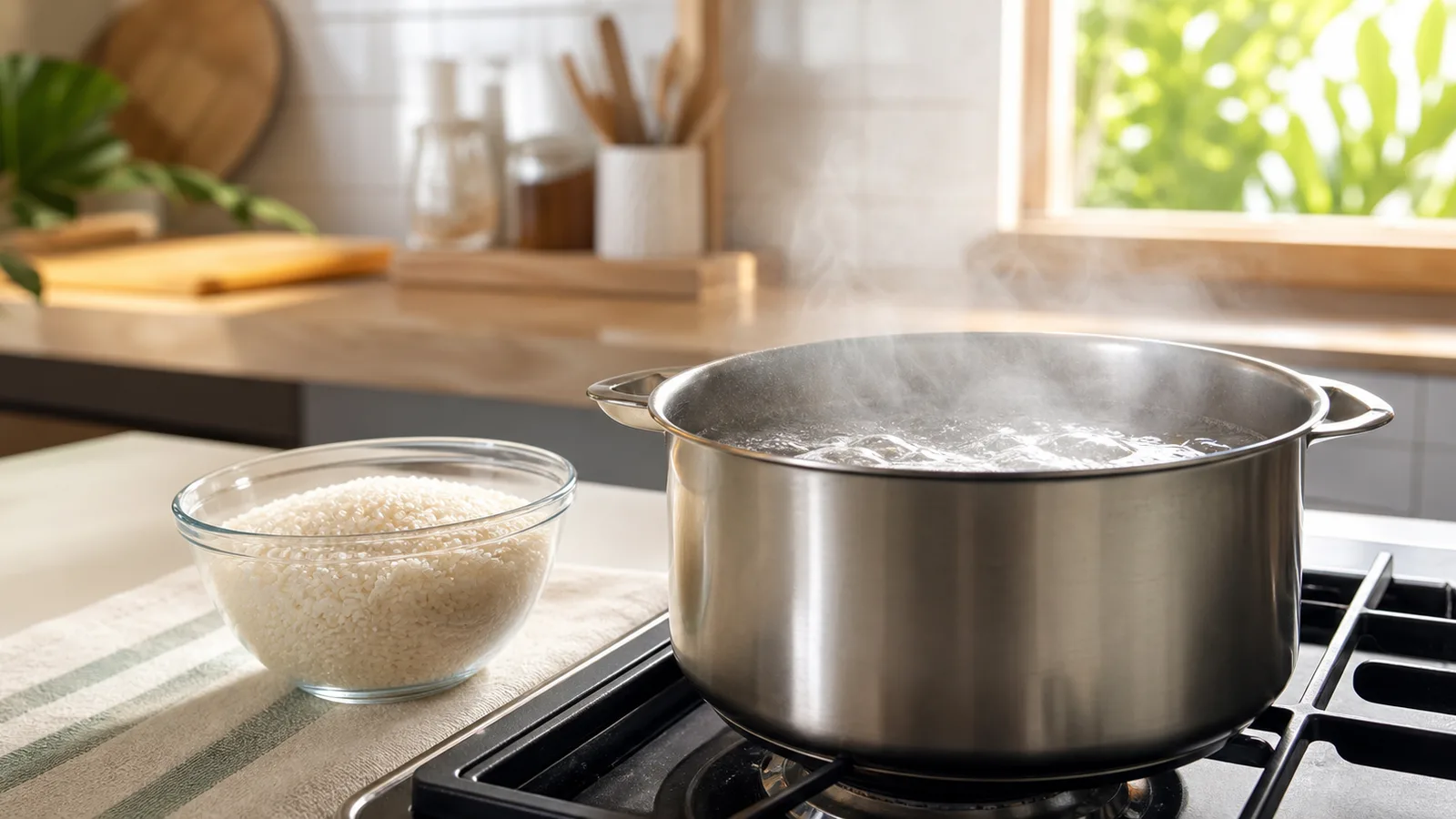
Dissolved gases become less soluble as water warms. Heat a pot and the dissolved hydrogen leaves well before boiling — the same reason small bubbles form on the sides of a pan long before anything is actually boiling.
So if the reason for cooking with hydrogen water is the hydrogen, it does not survive the pot. That is not a controversial claim or a limitation of any particular machine; it is what dissolved gases do when heated, and it follows directly from the behaviour described in why the number fades so fast.
The other answer: filtered water still matters
The hydrogen leaves. The filtration does not. Whatever the system removed from your tap water is still absent from the pot, and that is where cooking with treated water genuinely changes something.
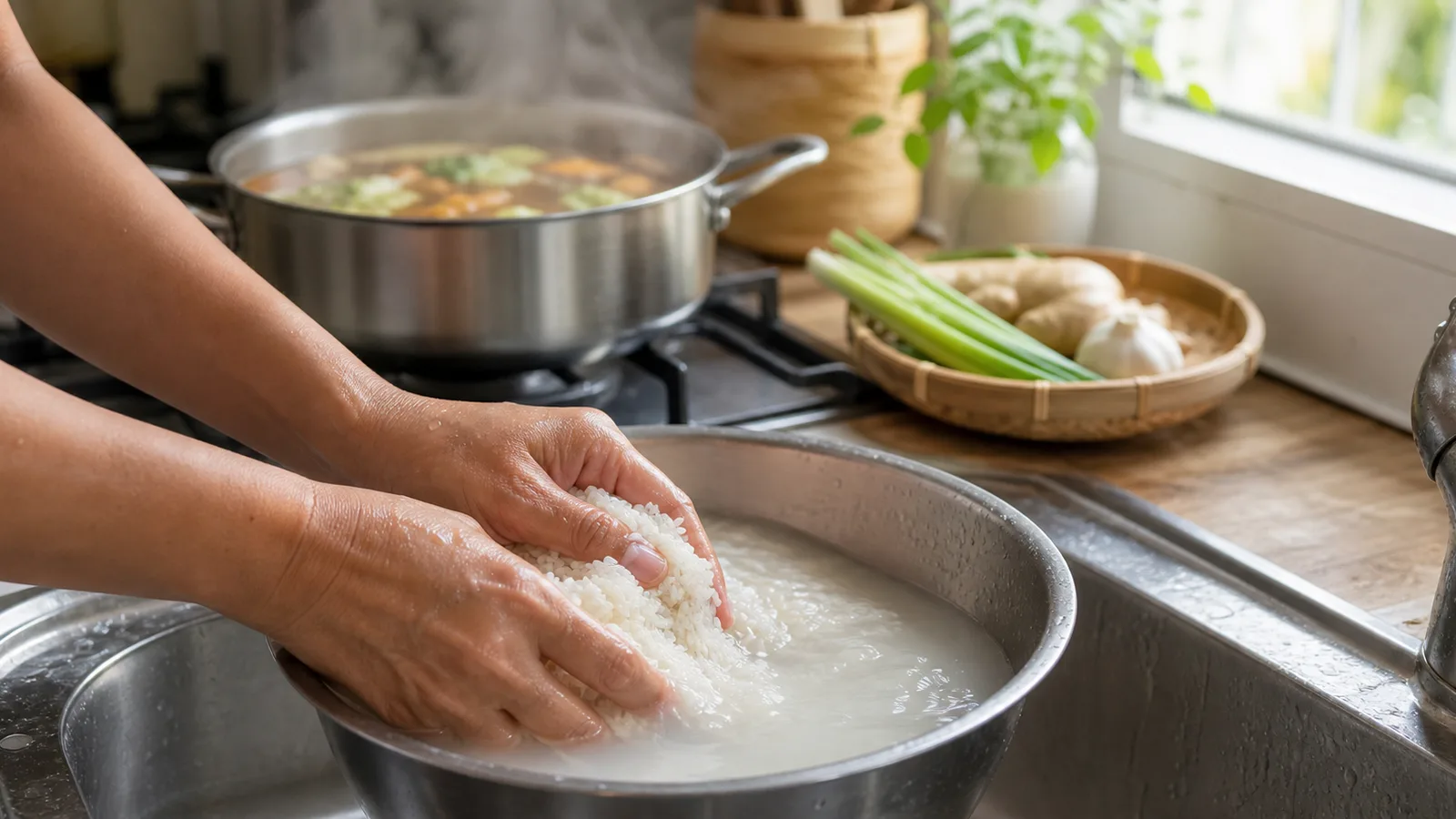
It matters most where water is absorbed or reduced rather than poured away — rice takes up essentially all of its cooking water, a long-simmered broth concentrates whatever it started with, and coffee and tea are almost entirely water. The full breakdown of which dishes show it is in water in the everyday Filipino kitchen.
| Use | Worth it? |
|---|---|
| Drinking straight | Yes — the only place the hydrogen is still present |
| Coffee and tea | Yes, for taste — the drink is nearly all water |
| Rice | Yes — the grain absorbs all of it |
| Soups and long braises | Often — reduction concentrates the water's character |
| Boiling pasta, blanching | Marginal — most is drained away |
| Washing up | No |
The other tap: what the acidic stream is for
An ionizer produces two streams, and households that use only one are sending the other down the drain. The acidic stream has ordinary household uses — rinsing, wiping surfaces, and watering certain plants — which is worth knowing simply because the water has already been produced.
Two honest caveats. Do not drink it — the strongest settings are not intended for consumption and machines label them accordingly. And treat any claim about what it does beyond cleaning with the same scepticism as any other claim on this site: it is a rinse, not a remedy.
Follow the machine's own manual for which settings are intended for drinking, cooking and cleaning. This article makes no health claim; nothing described treats or prevents any condition.
Practical notes for the kitchen
- Do not chase the hydrogen into the pot. Drink it fresh; cook with the filtration.
- Flow rate matters more than you expect when filling a large pot at dinner time — the argument in flow rate and why it matters.
- Fill the kettle from the same tap if the coffee matters to you. That is where you will notice the difference first.
- Do not decant and store hydrogen water for cooking later. It will simply be filtered water by then, which is fine — just be clear that is what it is.
The summary
Cooking with water from an ionizer is worthwhile for the same reason cooking with any good filtered water is worthwhile: taste, and what is not in it. The dissolved hydrogen is not part of that story, and any seller suggesting otherwise has skipped a step that a pan of water on a stove will demonstrate for you in about two minutes.
Sources
Filed under
- Hydrogen Water
- cooking
- kitchen
- hydrogen water
- heat
- practical