There is a question that resolves more arguments about hydrogen water than any research paper: when was this water made? Dissolved hydrogen does not sit still. It begins leaving the moment water meets air, and the rate is fast enough that timing outranks nearly every other variable in the category.
Understanding why takes no chemistry beyond what is in what molecular hydrogen is: the molecule is tiny, neutral, and barely soluble in the first place.
Why it leaves
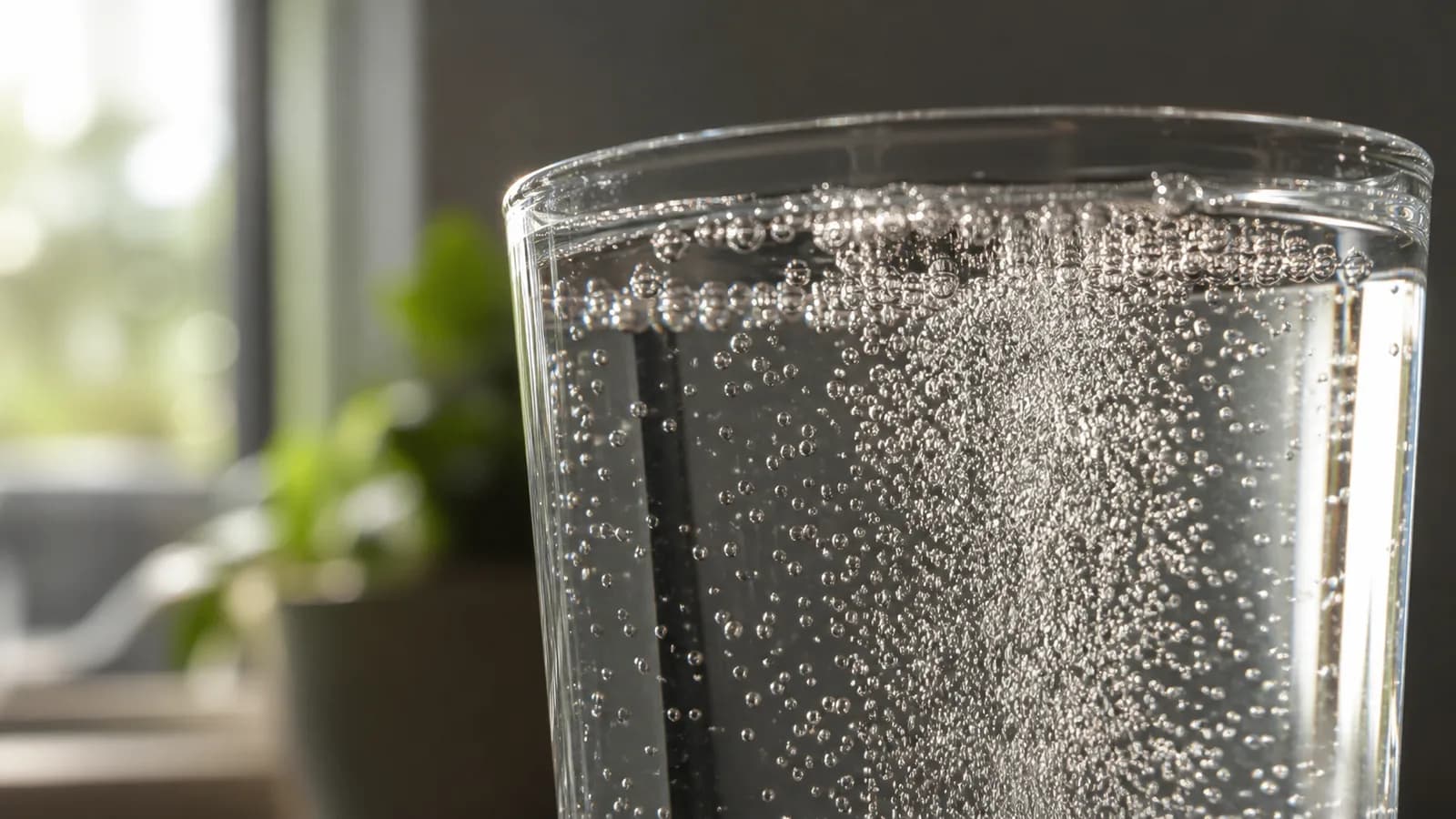
A dissolved gas is in a constant exchange with the air above the liquid. Molecules leave the water; molecules re-enter it. When the air above holds almost none of that gas — and ordinary air holds essentially no hydrogen — the exchange runs overwhelmingly in one direction. Out.
Carbonated drinks behave the same way, which is why an open bottle of soda goes flat. The difference is that hydrogen is smaller and less soluble than carbon dioxide, so it goes flat faster and, unlike soda, gives you no visual or taste cue that it has happened.
What speeds it up
Three things, all of them ordinary household actions.
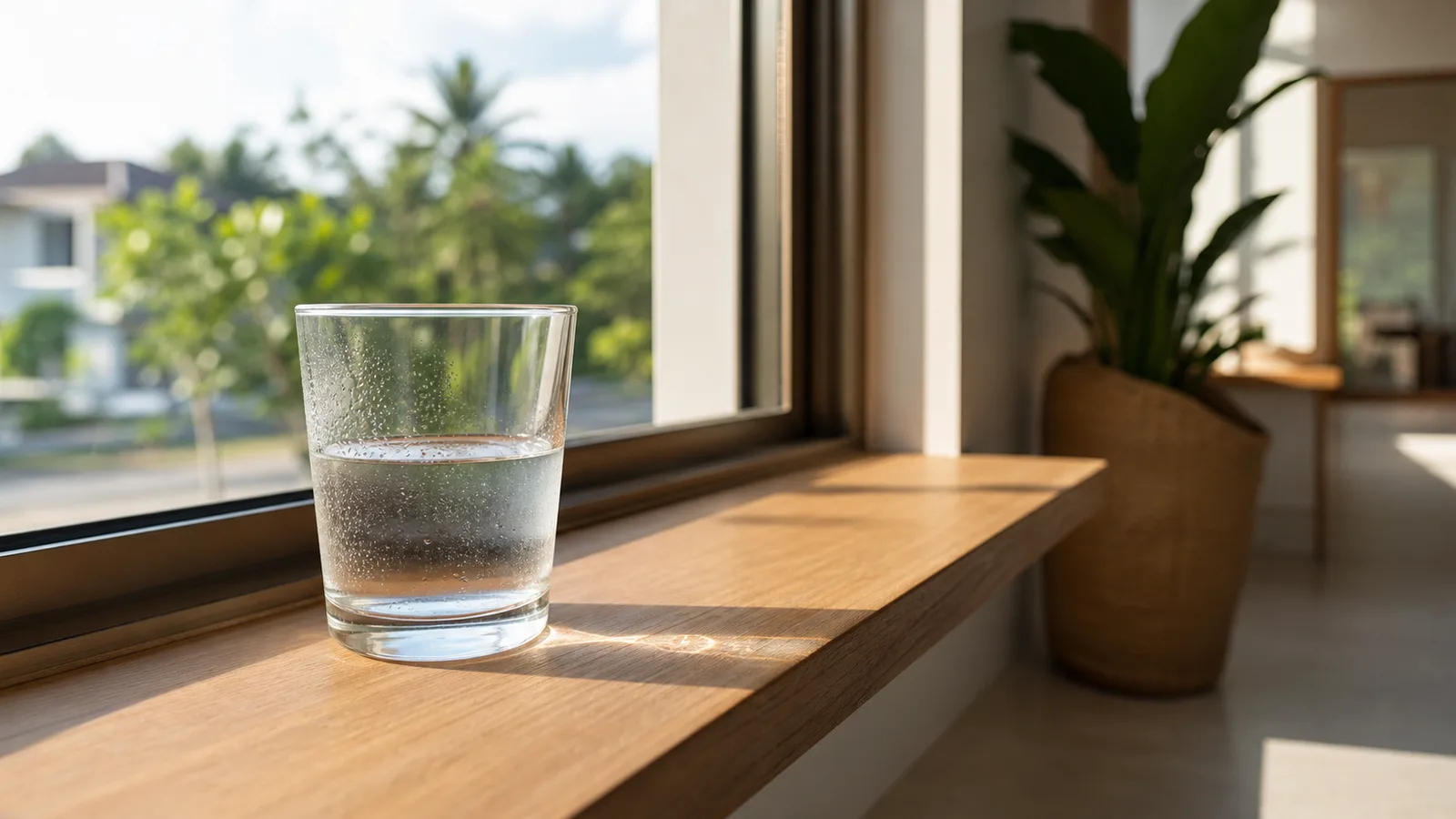
Notice that the list is a fair description of what happens to a glass of water in a normal home: poured, carried, set down somewhere warm, drunk twenty minutes later.
What containers actually change
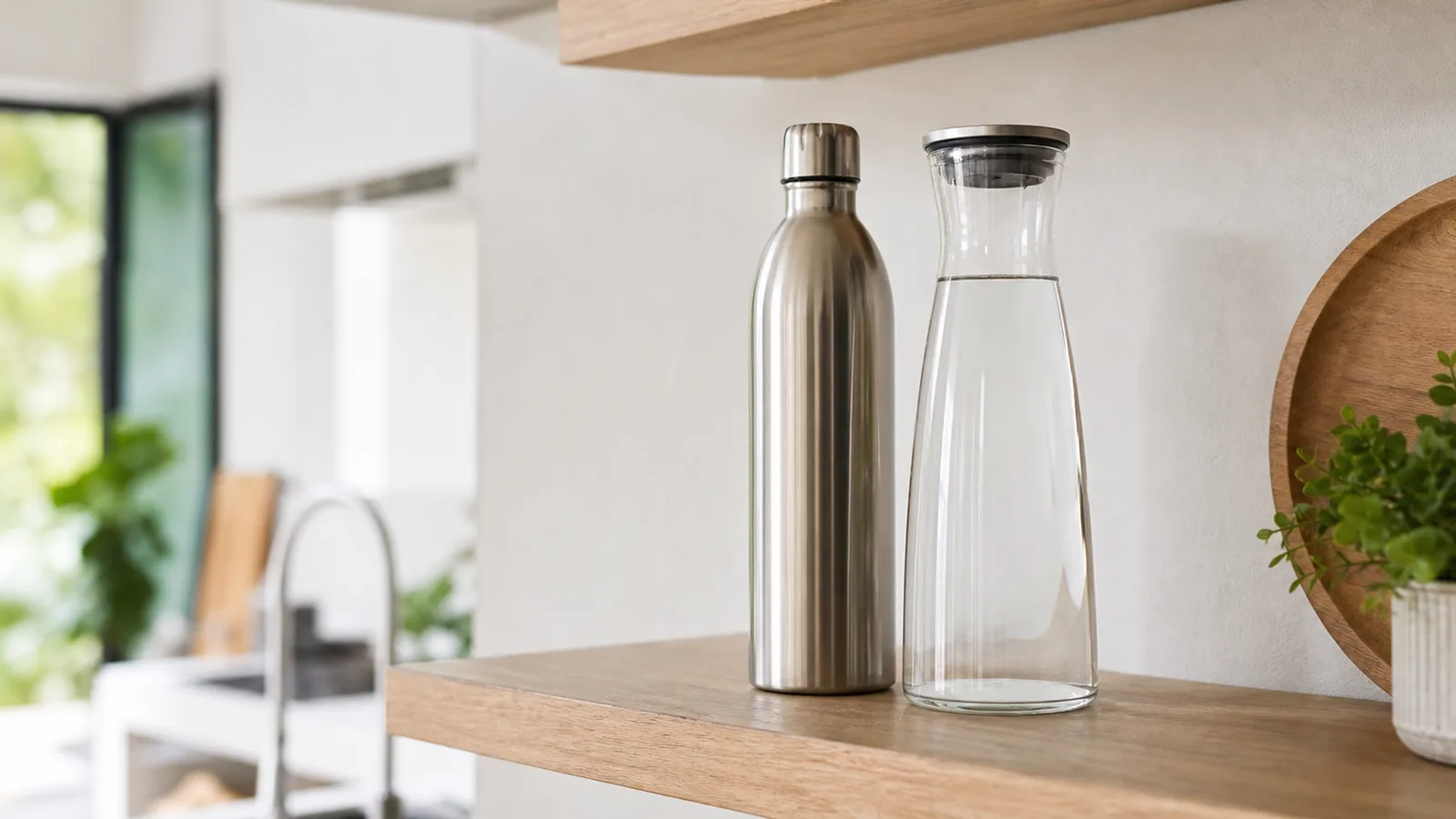
Because H₂ is so small, it does not just leave through the opening — it permeates the container itself. Ordinary PET plastic is comparatively porous to it. Aluminium and glass hold it much better, which is why pre-bottled hydrogen products that take the chemistry seriously come in pouches or cans rather than clear plastic bottles.
This is the honest structural problem with pre-bottled hydrogen water. The product must be manufactured, packed, shipped, warehoused and shelved — and every day of that is a day the concentration falls. What the bottle held at filling and what it holds when you open it are two different figures, and only one of them is on the label.
A home system takes the opposite approach: nothing is stored at all. Water is drawn and drunk within seconds. That does not make it better water in any biological sense — it sidesteps the storage problem rather than solving it, which is a smaller and more honest claim.
What this means in an ordinary kitchen
- Drink it soon after drawing it. If dissolved hydrogen is the reason you are drinking the water, sitting it on the counter for an hour defeats the purpose.
- Fill to the top and cap it if you must carry it. Less air in the container means less exchange.
- Do not pour it back and forth. Every transfer costs you.
- Do not heat it and expect the hydrogen to stay. It will not.
- Cooking with it is fine — just do not imagine the hydrogen survives the pot. The water is still filtered water.
None of that is dramatic. It is the same handling logic anyone applies to a fizzy drink, applied to a gas you cannot see.
This article is about the physical behaviour of a dissolved gas. It makes no claim about health effects; the state of that research is set out in why hydrogen-rich water matters.
The question worth asking any seller
Not "how many ppm" — that number is easy to quote and hard to place. Ask instead: measured where, and how long after it was made?
A figure measured at the point of production tells you what the machine does. A figure measured in a glass that has been sitting out tells you what the household actually drinks. Both are legitimate; conflating them is not, and the difference between them is the subject of this entire article.
For how that plays out against the alternative most Filipino households actually use, see hydrogen water vs bottled water.
Sources
Filed under
- Hydrogen Water
- dissolved hydrogen
- storage
- concentration
- hydrogen water
- practical