Most writing about hydrogen water skips straight to the argument — does it do anything, is the research real, who is selling what. Underneath all of that sits a small, uncontroversial subject that takes ten minutes to understand and makes every later claim easier to judge: the molecule itself.
This article is only about that. Not the research, not the machines — just what H₂ is and how it behaves once it is in a glass.
The molecule
Molecular hydrogen is two hydrogen atoms bonded together: H₂. It is the smallest and lightest molecule in existence. It carries no charge, has no taste, no colour and no smell. At room temperature it is a gas.
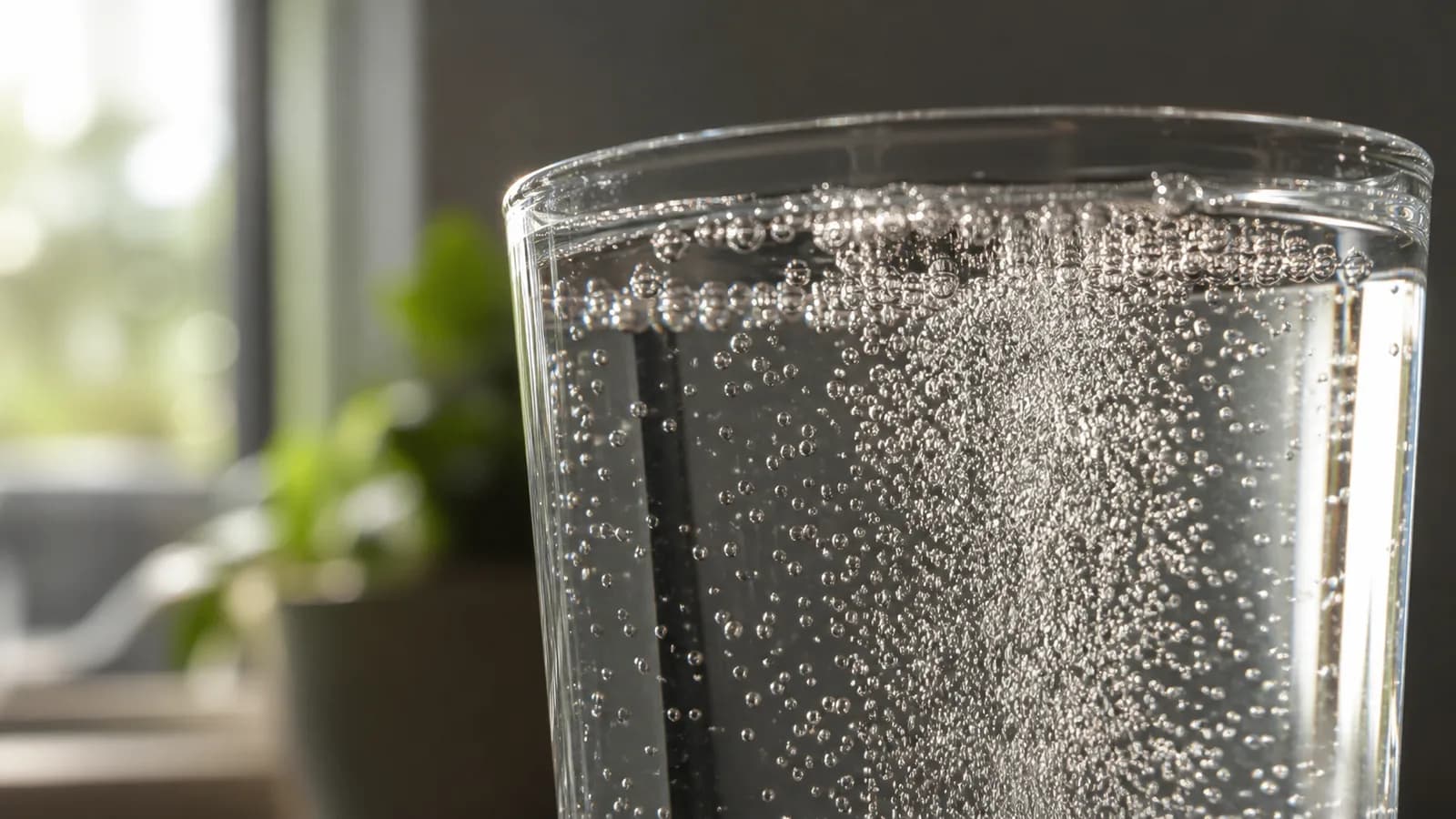
That is worth stating plainly because the name causes endless confusion. Water is H₂O — it already contains hydrogen atoms, chemically bonded to oxygen and not available as gas. Hydrogen water is water with additional H₂ gas dissolved into it, the way sparkling water has dissolved carbon dioxide. The hydrogen in H₂O and the hydrogen in hydrogen water are not the same thing in any useful sense.
Why so little of it will dissolve
Hydrogen is barely soluble in water. At room temperature and normal atmospheric pressure, water saturates at roughly 1.6 milligrams of H₂ per litre — about 1.6 parts per million.
That figure is the single most useful number in this whole subject, because it is a ceiling. It does not matter what technology is used or what a brochure says: at ordinary pressure, water cannot hold meaningfully more than that. Any product claiming a concentration far above it is either operating under pressure, measuring something else, or wrong.
For scale: a litre of hydrogen water at full saturation contains about the same mass of hydrogen as a grain of table salt. That is not an argument against it — it is simply the size of the thing being discussed, and it explains why the delivery method matters so much.
How concentration is measured
Two units appear on packaging and in sales conversations, and they are not interchangeable.
- ppm (parts per million) or mg/L — the direct measure of dissolved H₂. This is the number that matters, and it lives under the ~1.6 ceiling.
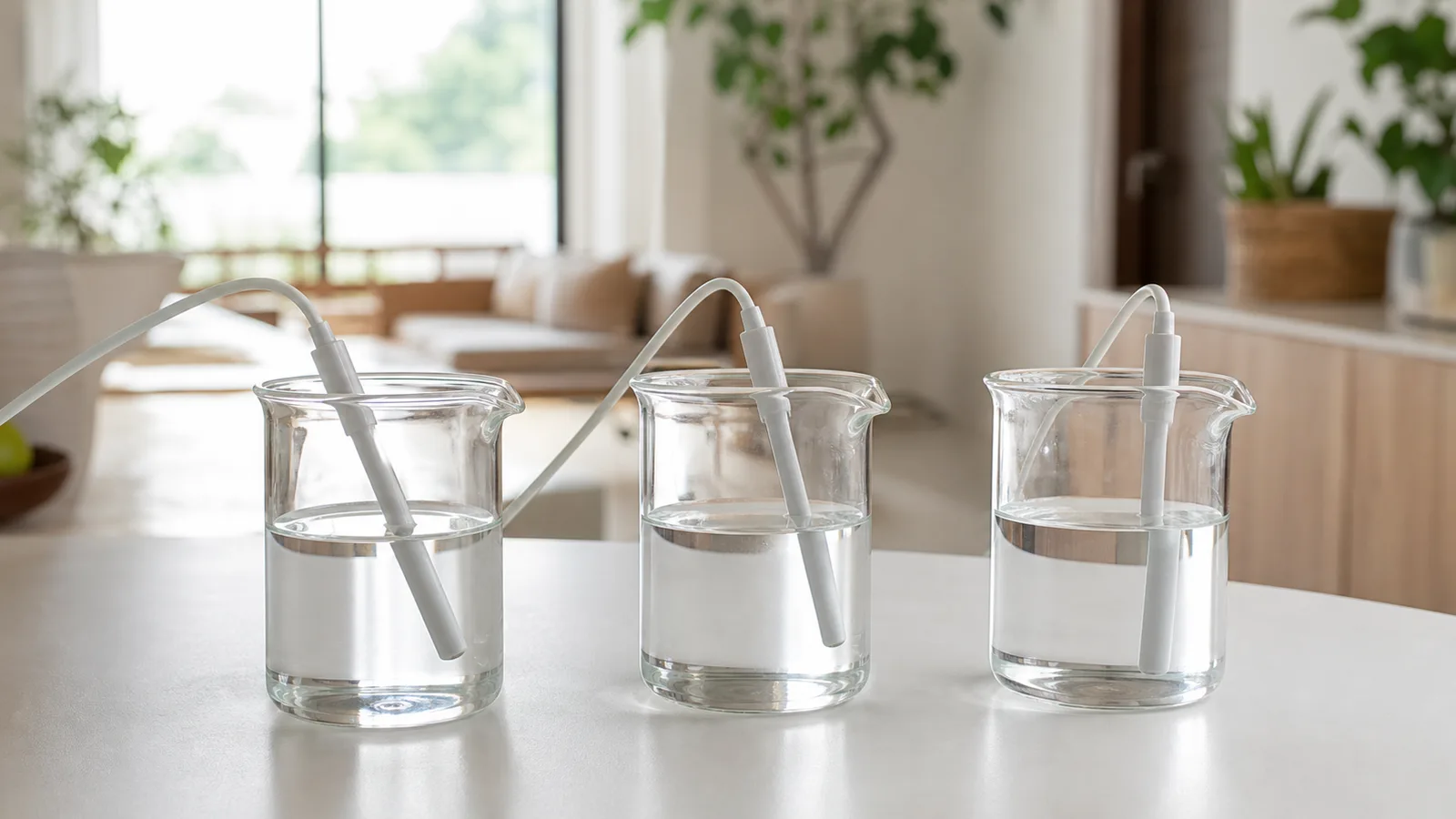
- ORP (oxidation-reduction potential), in millivolts — an indirect indicator. A strongly negative ORP is consistent with dissolved hydrogen being present, but it is not a hydrogen measurement, and other things affect it.
Sellers reach for ORP more often than ppm, partly because ionizers display it and partly because a figure like −700 mV sounds more impressive than 1.2 ppm. Both can be true of the same glass. If concentration is what you want to know, the honest number is the ppm one — and how it is measured, and when.
The timing caveat is not a technicality. A measurement taken at the tap and a measurement taken twenty minutes later describe different water, for reasons covered in why the number fades so fast.
What the molecule's size actually causes
Being the smallest molecule has practical consequences that show up everywhere in this category.
None of that says anything about what hydrogen does in a body. It says what the molecule does in a kitchen, which is the part you can actually verify.
This article describes a molecule and its physical behaviour. It is not medical advice, and nothing here claims a health effect. The state of that research is set out separately in why hydrogen-rich water matters.
Where the hydrogen in your glass comes from
Three routes, covered in detail elsewhere on this site: a reaction with magnesium (tablets), infusion under pressure at a factory (pre-bottled), or electrolysis at the point of use (a home ionizer). The chemistry of the third is in electrolysis, explained without the jargon.
What unites all three is the ceiling. They differ not in how much hydrogen they can theoretically put in a litre — physics settles that — but in how much of it survives to reach you.
The useful summary
H₂ is a tiny, neutral, tasteless gas that dissolves poorly in water, tops out near 1.6 mg/L at normal pressure, is measured properly in ppm rather than millivolts, and leaves as soon as it can.
Hold those five facts and most of the confusing claims in this category sort themselves out without any help.
Sources
Filed under
- Hydrogen Water
- molecular hydrogen
- H2
- solubility
- ppm
- water chemistry