Anyone who has read that dissolved hydrogen fades reaches the same practical question immediately: so what do I put it in, and how long have I got?
The answer follows from the physics rather than from any product. Hydrogen is the smallest molecule there is, it is only slightly soluble in water, and it moves from the water into any air it can reach until the two are in balance. Nothing you own reverses that. Storage is about slowing it down.
This is practical information about handling water. It is not a health claim, and nothing sold on this site treats, prevents or cures any condition. The reasoning behind the fade itself is in dissolved hydrogen fades.
The three things that drive the loss
Note what is not on that list: the material of the container is a minor factor next to how much air is in it.
Containers, ranked honestly
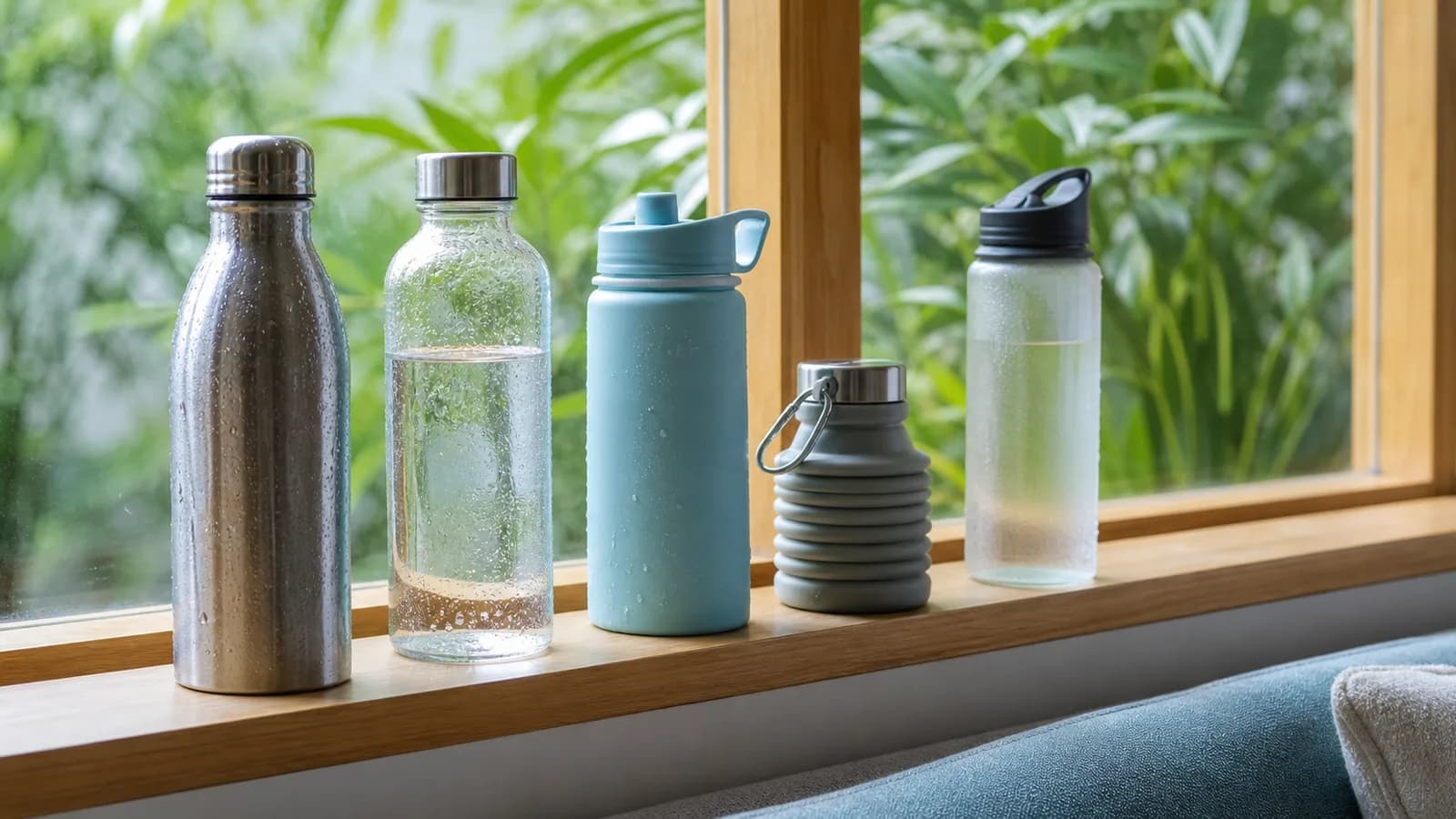
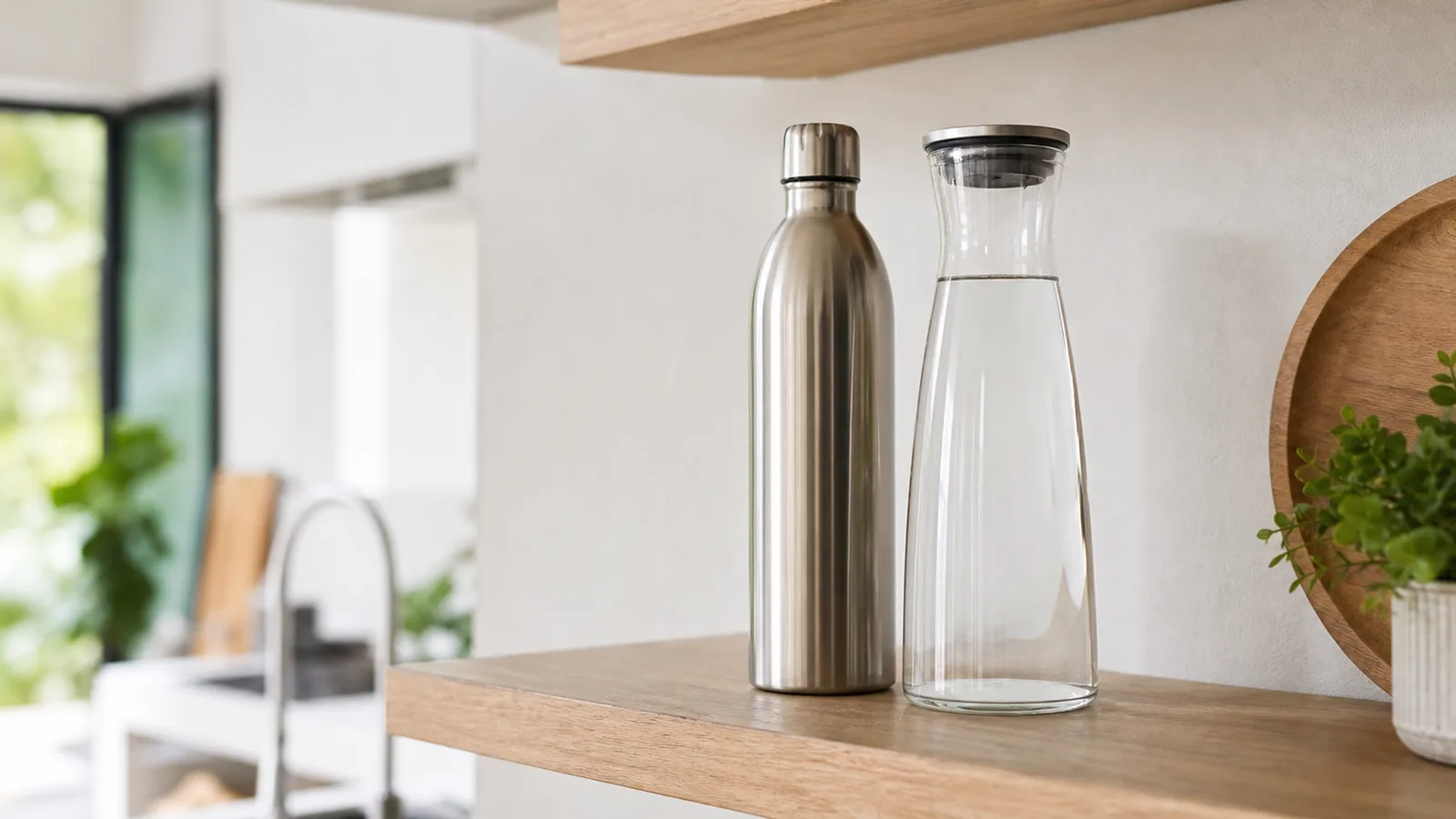
- A sealed metal or glass bottle filled to the brim — the best practical option, because it removes the air gap and does not flex.
- A sealed bottle half full — noticeably worse than the same bottle full. The empty space is the problem, not the bottle.
- A covered pitcher or carafe — fine for a few hours on a table, and better than an open one.
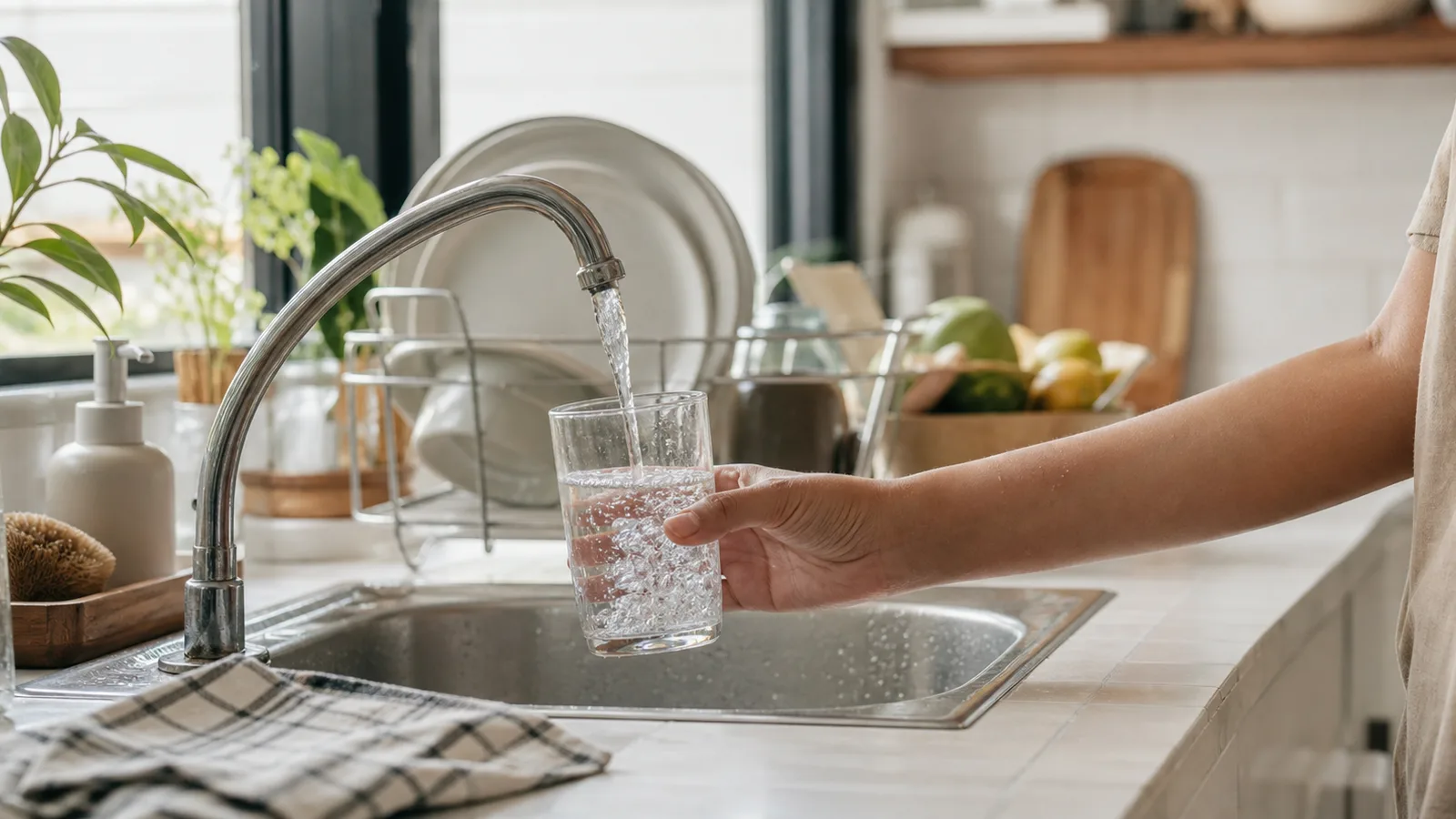
- An open glass — minutes, which is fine, because a glass is meant to be drunk now.
- A soft plastic bottle you squeeze and carry — the worst of the everyday options, on both agitation and permeability.
How long, realistically
Nobody should quote you an exact figure, because the honest answer depends on the starting concentration, the container, the temperature and how much it gets carried around. What can be said is the shape of the curve: the loss is fastest at the start and slows as the water and the air approach balance.
Practically, that means a glass poured and drunk within a few minutes retains most of what was dispensed; a sealed full bottle carried through a working day retains meaningfully less by the afternoon; and a bottle left open overnight has effectively returned to ordinary water.
If a seller offers you a precise number of hours without naming the container and the temperature, they are quoting a marketing figure rather than a measurement — which is exactly the kind of claim the six questions in reading a hydrogen water study teach you to take apart.
When storage stops mattering
Two situations, and both are common.
The first is cooking. Water used for rice, soup or blanching is heated, and heating drives dissolved gas out immediately — so there is nothing to preserve and no reason to plan around it, as set out in hydrogen water and cooking.
The second is the one worth ending on. If what your household actually gained from the system is that everyone drinks more water from the kitchen instead of buying bottles, then a stored bottle that has lost most of its dissolved hydrogen is still doing the job — it is still water, and it is still being drunk. That benefit does not fade on a shelf.
Sources
Filed under
- Hydrogen Water
- storage
- containers
- bottles
- dissolved hydrogen
- practical