Offices are full of people who drink too little water and a pantry that technically provides it. The gap between those two facts is not about willpower. It is about a series of small frictions that nobody owns, and that everybody works around.
Fixing them is cheap, mostly logistical, and pays back in a week.
The frictions, named
Notice that not one of these is about the water. They are about the surrounding arrangement, which is why buying better water rarely changes anything on its own.
The glass problem, which is most of it
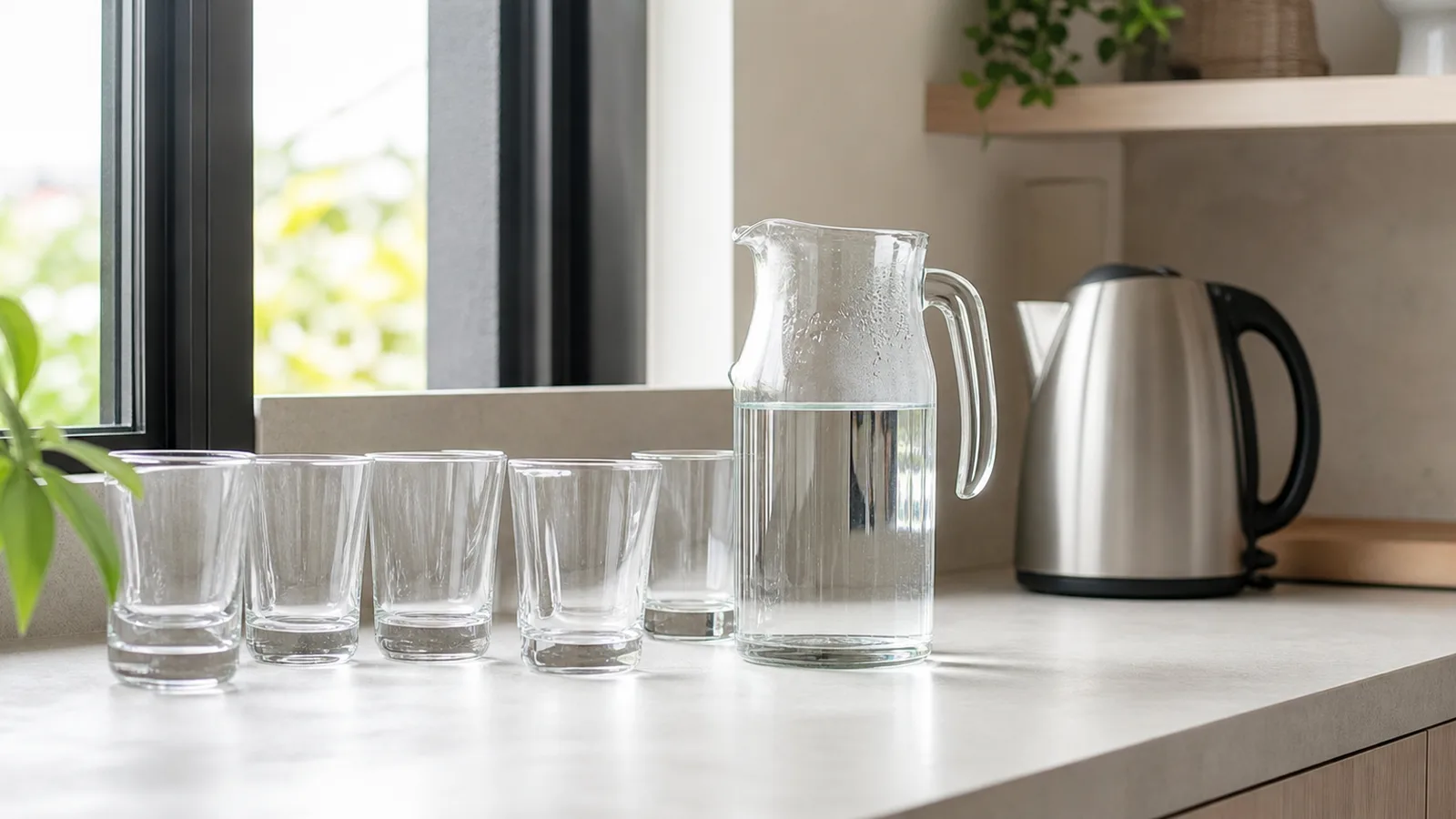
An office needs more glasses than it thinks, and it needs them clean and visible. Not a cupboard of assorted mugs — a rack of identical glasses, out where people can see them, in a quantity that survives a day.
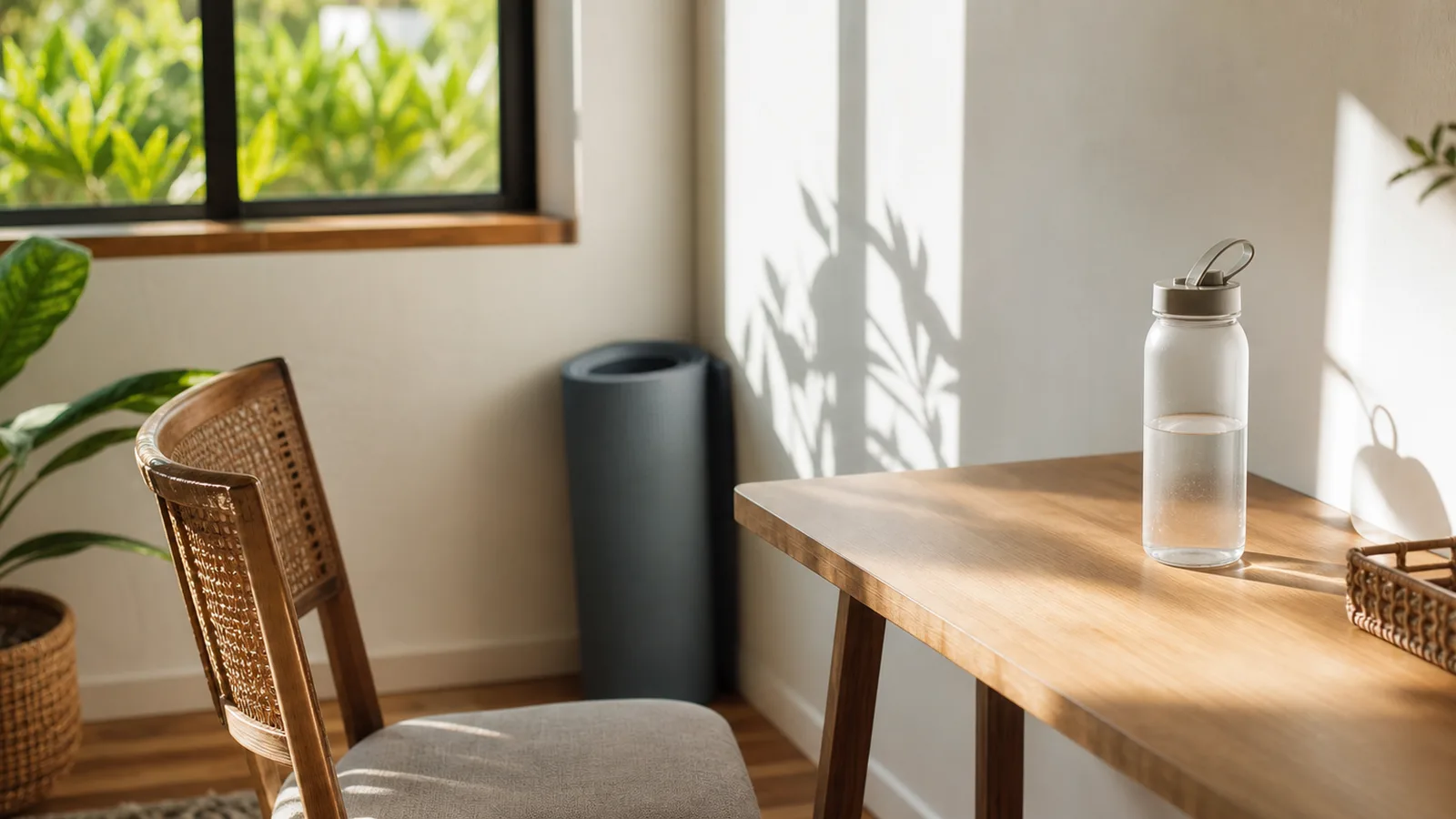
Where dishwashing is the bottleneck, the workable version is personal: each person keeps a marked glass or bottle, and there is somewhere obvious to put it. The failure mode of shared glassware is always the same — nobody wants to be the one who washes it, so nobody uses it, and disposable cups reappear. The desk-side half of the same problem is the trade this creates: a bottle within reach gets drunk, and it also removes a reason to stand up.
Cold water is not a luxury here
In a tropical office, temperature decides consumption. A dispenser with a working cold tap gets used; a room-temperature pitcher does not, however good the water in it is.
If the budget is small, this is where it should go first — before any upgrade to the water itself.
Somebody has to own it
Almost every failed pantry has the same root cause: refilling, cleaning and restocking are everyone's job, which means they are nobody's.
The fix is unglamorous — name a person, or a rota, and make the container order somebody's actual responsibility. This is administration rather than wellness, and it is the difference between a pantry that works and one that is a source of low-grade irritation. Most offices are buying from the same refilling stations that supply the majority of Filipino households, with the same delivery gaps to plan around.
Meetings and visitors
The same principle that applies to hosting at home applies in a meeting room: put water where the people are, in pitchers with enough glasses, and nobody reaches for a bottle. The full version of that argument is in hosting without single-use plastic.
For an office, the volume question is worth taking seriously — a floor of thirty people gets through a great deal of drinking water in a day, and any arrangement that cannot keep up will be supplemented with bottles by the people it fails. Capacity and flow rate are what separate one system from another at that scale.
What a small office can change this week
- Buy more glasses than you need, and put them where they are visible.
- Name who refills the dispenser and who runs the dishwasher.
- Make sure the cold tap works, and fix it the day it stops.
- Put a pitcher and glasses in the meeting room instead of bottles.
- Count the disposable cups used in a week before and after. That number is the whole report.
Five changes, none of which requires a purchasing decision larger than glassware — and between them they usually settle both the hydration problem and the plastic one.
Sources
Filed under
- Lifestyle
- office
- workplace
- drinking water
- pantry
- plastic