Refilling in the Philippines is not a sustainability trend. It is infrastructure — a water refilling station within walking distance of most neighbourhoods, a returnable container, and a household habit that predates anybody's campaign about it.
That it exists for economic reasons rather than environmental ones is a feature, not an embarrassment. Habits built on cost survive; habits built on virtue mostly do not.
How the system actually works
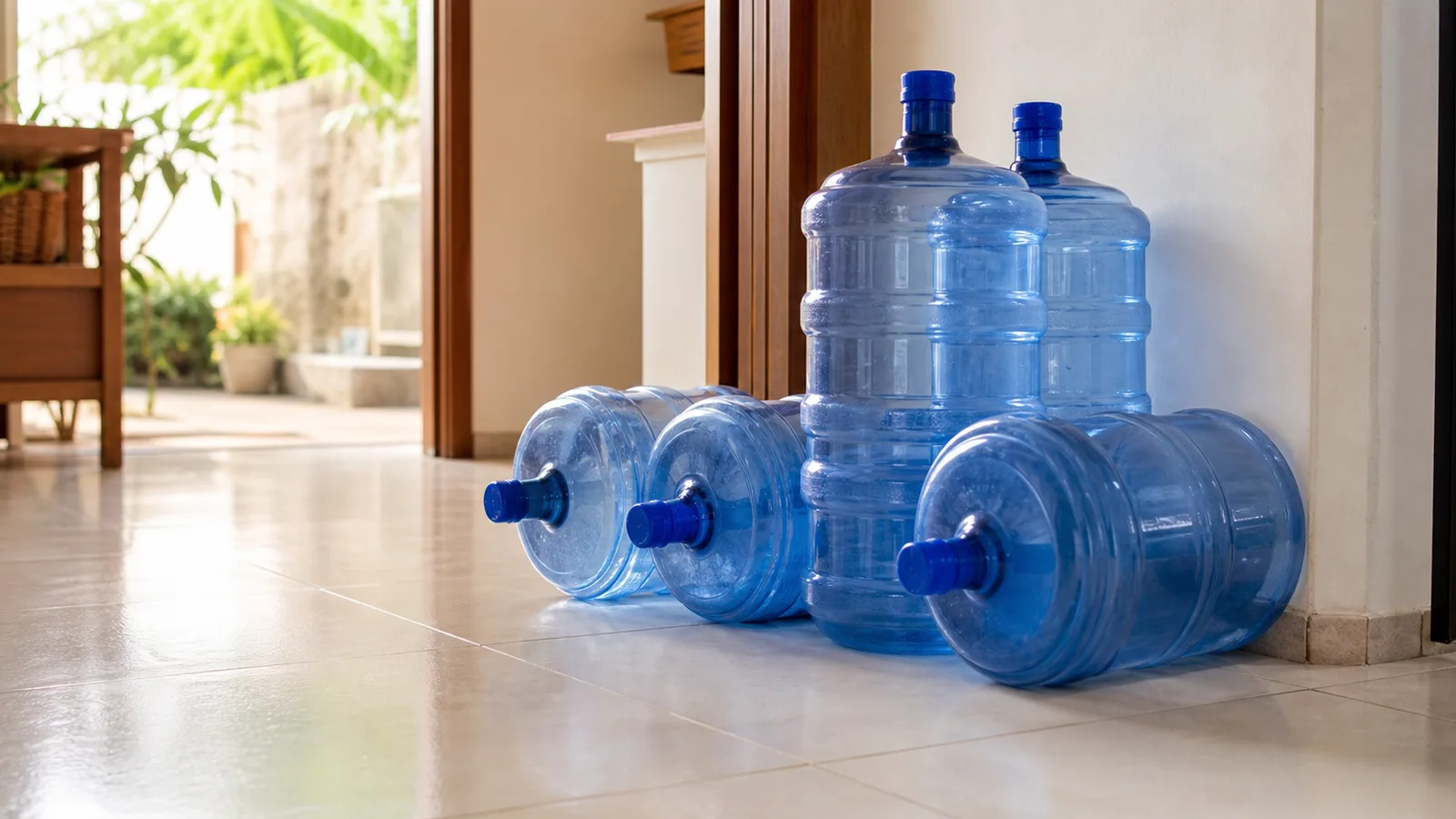
A household buys or deposits on a reusable container, and refills it at a station or by delivery. The container circulates for years. Compared with buying the equivalent volume in single-use bottles, the packaging reduction is enormous and it is achieved without anybody deciding to be sustainable.
The same logic operates across Philippine retail more broadly. Buying cooking oil, vinegar or soap into your own container at a sari-sari store is a refill system too — one that exists because buying small is what a budget allows.
What the environmental gain actually is
Real, and worth stating in the right units. The benefit is packaging avoided, not water saved and not emissions eliminated — the containers still get trucked, and the station still runs pumps and filters.
Against a household buying bottled water, refilling avoids a large and continuous stream of PET. That matters because the global recycling picture is far worse than most people assume, which is the subject of the nine per cent problem.
Where the system falls short
The third one is the most commonly felt. Running out on a Sunday, waiting in for a delivery, and finding floor space for containers in a condo are ordinary frustrations rather than environmental ones — the constraint described in living well in a small space.
How a home setup compares
This is where a publication like ours has to be careful, because the comparison is genuinely mixed rather than a win.
A home filter or system removes the container logistics entirely and, over years, can cost less per litre. It also has an upfront cost, a filter cost, an installation requirement and a dependence on power and pressure — and it produces its own smaller waste stream in cartridges. The full comparison, without a thumb on the scale, is in refilling stations, delivery and a home system and is hydrogen water worth it?.
For many households the refilling station is the right answer and will remain so. For a household already spending steadily on delivery over years, the arithmetic sometimes points the other way. Both of those are true at once.
What the rest of the world keeps rediscovering
Refill schemes elsewhere are launched as innovations and struggle for adoption, because they are asking people to change a habit for a reason that is not money.
Here the habit already exists, which means the useful work is not persuasion — it is making the existing system better: consistent station quality, containers that last, and household routines for keeping them clean. That is a less exciting programme than a campaign, and considerably more likely to hold.
General information. Water refilling stations in the Philippines are subject to Department of Health sanitary permit requirements; if you have concerns about a station's water, raise them with your local health office.
Sources
Filed under
- Sustainable Living
- refill
- philippines
- packaging
- water stations
- waste