Most small-space advice is storage advice: vertical shelving, things under the bed, furniture that folds. Useful, and it answers a question about where objects go rather than the harder question of whether the place is good to live in.
Four things decide that in a Philippine studio or one-bedroom, and only one of them is storage.
Air, which is the one nobody plans for
A small unit with sealed windows, an aircon running most of the day, and cooking happening three metres from the bed is a genuinely different air problem from a house with cross-ventilation. There is no second room to escape into.
The counter is the real currency
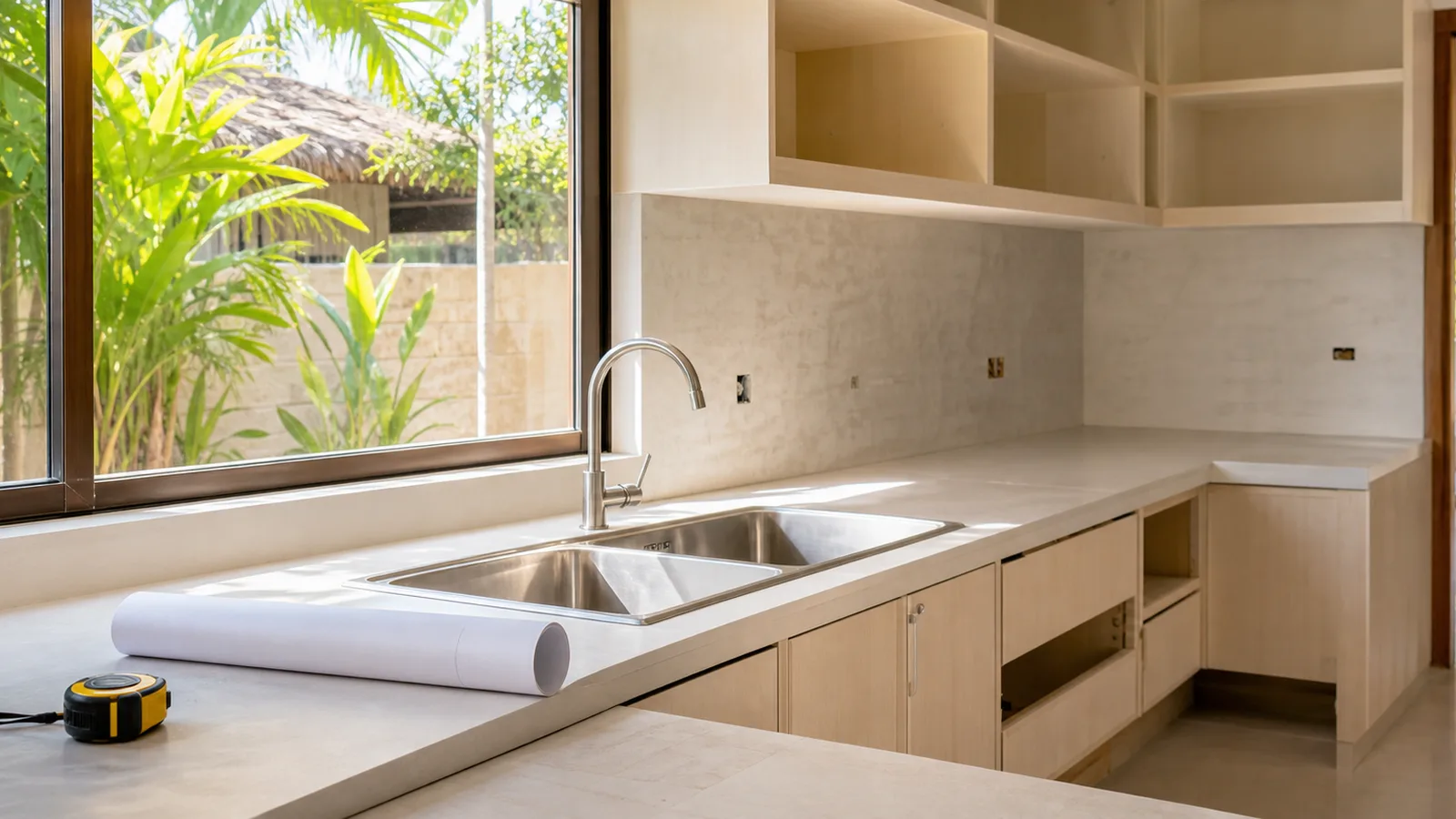
In a small kitchen, usable counter space is the constraint that decides whether you cook. Every appliance bought is counter space spent, and the ones that get used daily earn it while the ones bought for a specific dish do not.
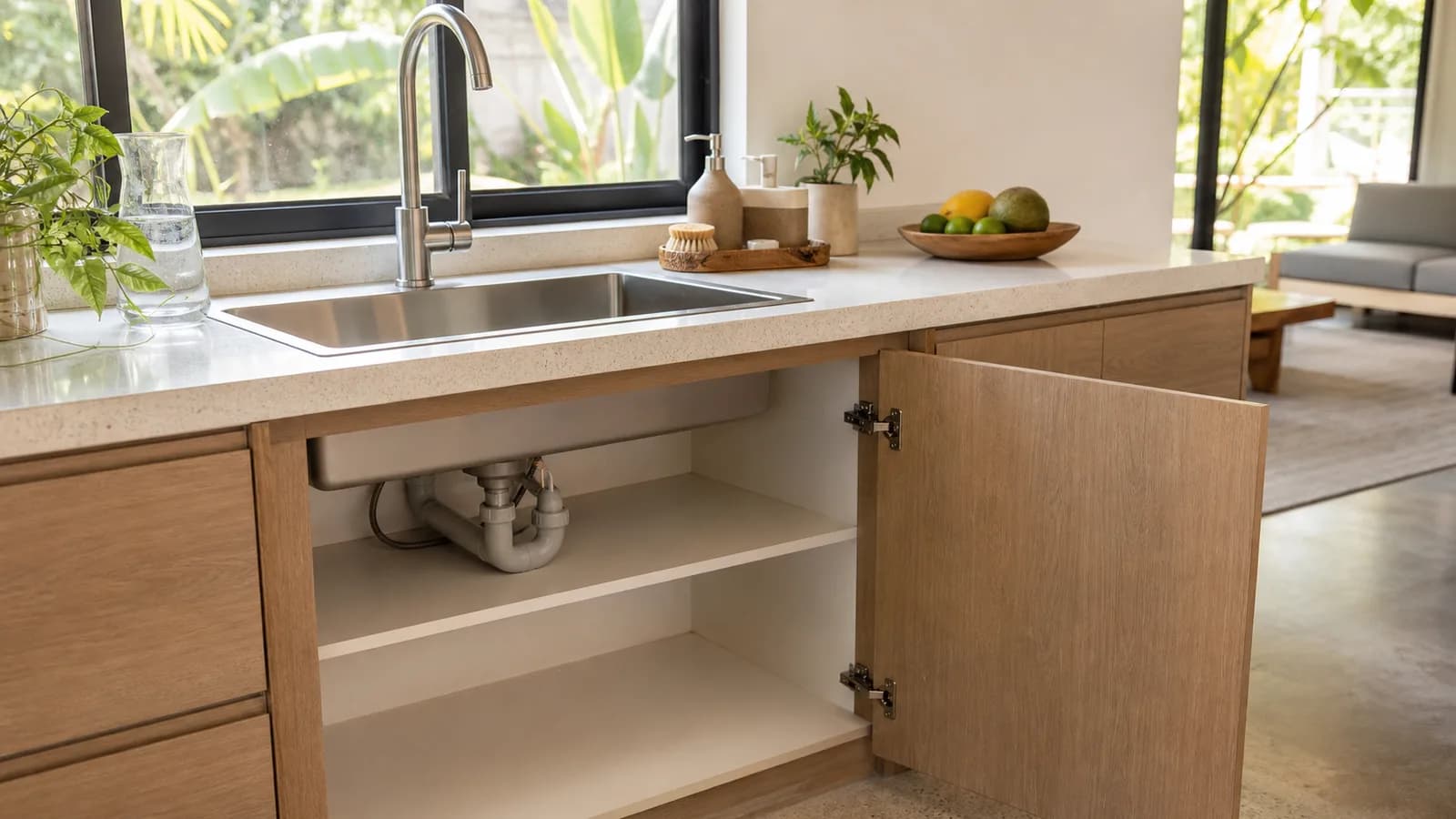
That is also the honest frame for a water system in a condo: it is a daily-use item, which makes it one of the few appliances that justifies permanent counter space — but the footprint and the plumbing are real constraints, set out in under-counter or countertop and designing a kitchen around a water system.
Water, and the delivery habit
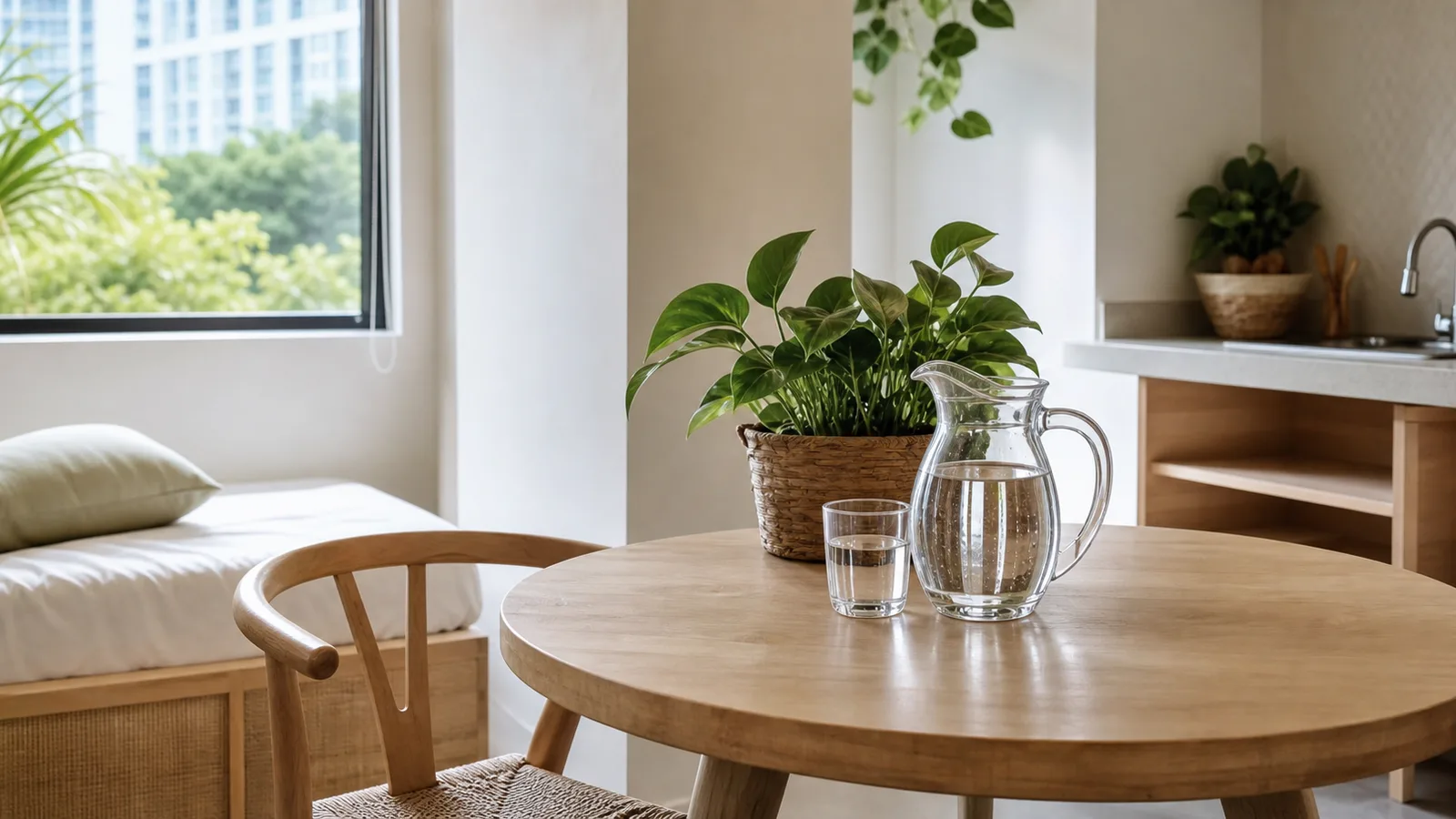
Small households usually default to delivered five-gallon containers, which works and takes up floor space, requires someone to be home, and runs out at inconvenient times.
The alternative is not automatically better — it depends on the plumbing, the lease and the cost, which is exactly the comparison in refilling stations, delivery and a home system and, for anyone not owning the unit, water filters for renters.
Light, and the edges of the room
A small unit usually has one source of daylight, which makes what sits in front of the window a significant decision. Nothing tall, and nothing that lives there permanently.
In a studio the same lamp serves the working evening and the winding-down evening, which is the argument for a warm lamp at table height rather than a bright ceiling fixture — light and darkness in a bedroom applies even when the bedroom is also the living room.
Tidy is not the same as livable
A small home can be immaculate and still be unpleasant — stuffy, dark, and organised around storing things rather than doing them. The question worth asking is not whether everything has a place but whether the things you do daily are easy: cooking, sleeping, drinking water, opening a window.
That is also why the hour-long reset works better in a small space than a full weekend project does — a weekend reset routine.
General information about home living, not medical advice. Check your building's rules and your lease before making plumbing or electrical changes.
Sources
Filed under
- Lifestyle
- small space
- condo
- studio
- home
- philippines