Sleep advice tends to arrive as a long list, and the light half of it is the part that can be dealt with in an afternoon for very little money. It is also the part most bedrooms get backwards.
The pattern the body reads is not brightness in isolation but contrast: bright day, dark night. A typical urban bedroom flattens that contrast at both ends — a phone and a ceiling light at eleven, blackout curtains until nine.
General information about the home environment, not medical advice. Persistent insomnia is worth raising with a doctor rather than solving with curtains.
The evening half: less light, lower down
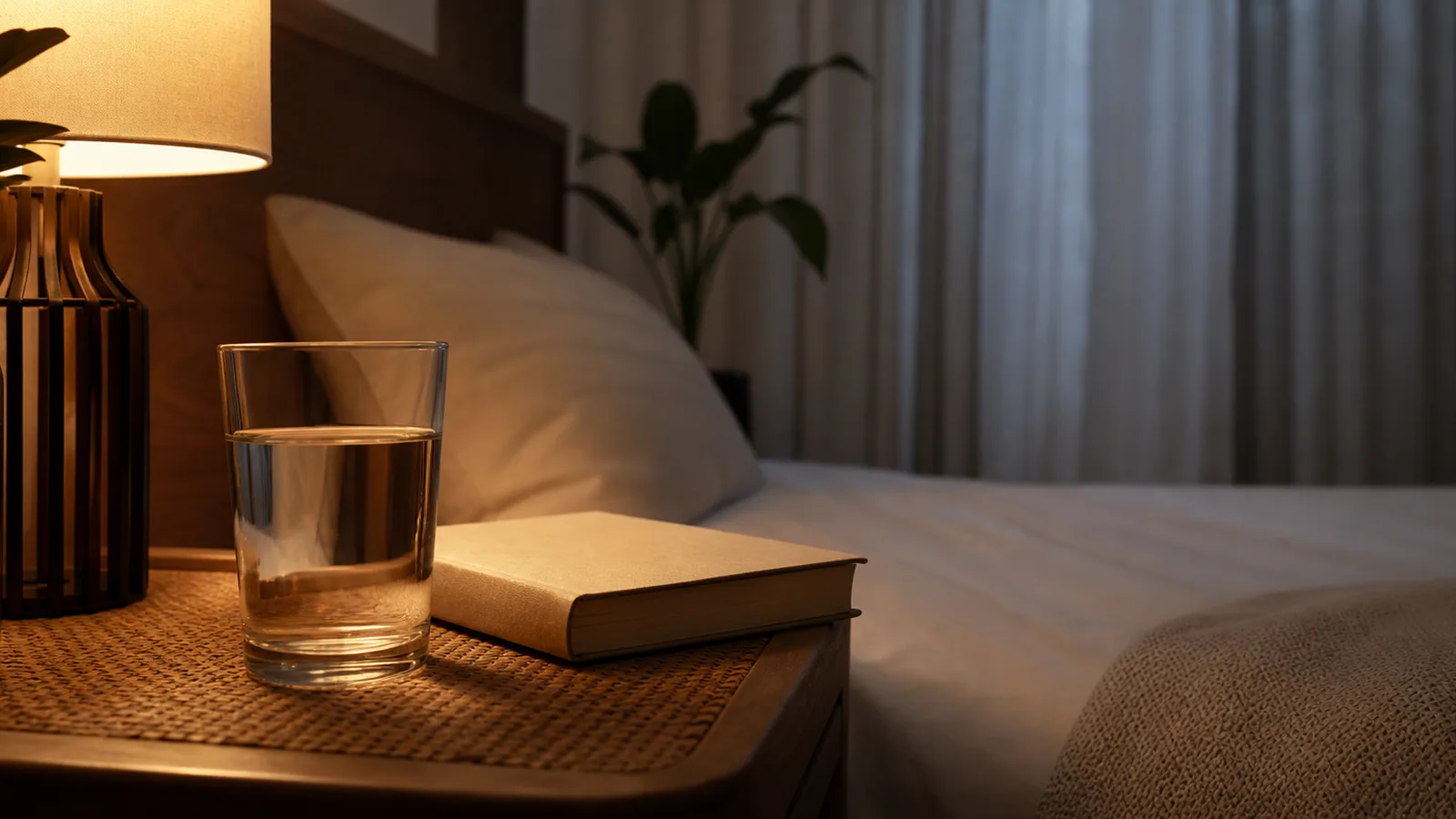
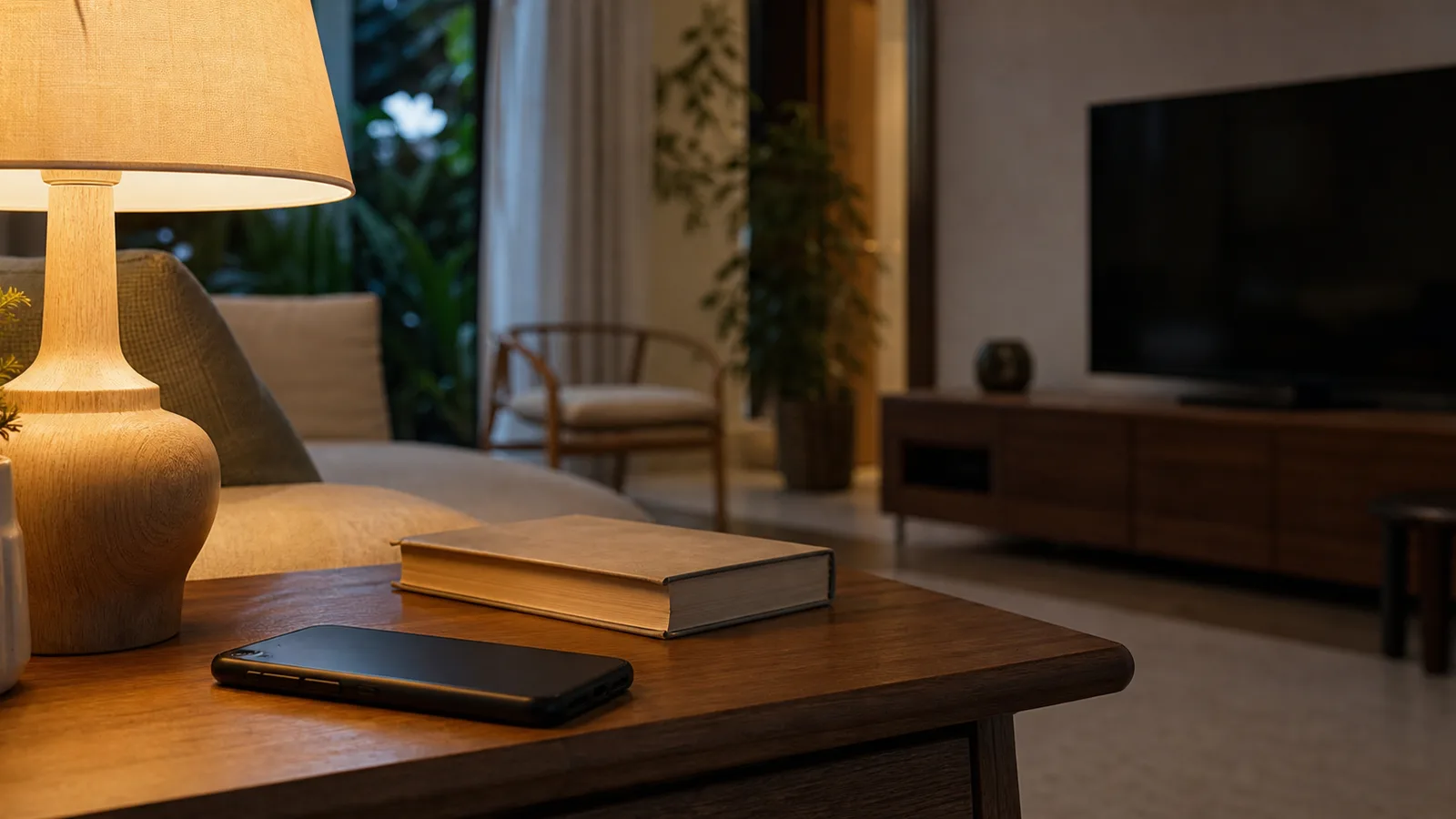
The useful change is not eliminating light but moving it. A ceiling light fills the room from above, which is the arrangement daylight uses. A lamp at table height, warm rather than white, does not.
The screens question sits alongside this and is more about what you are doing than what the screen emits — the argument is in screens and the evening wind-down.
The morning half, which is the one people skip
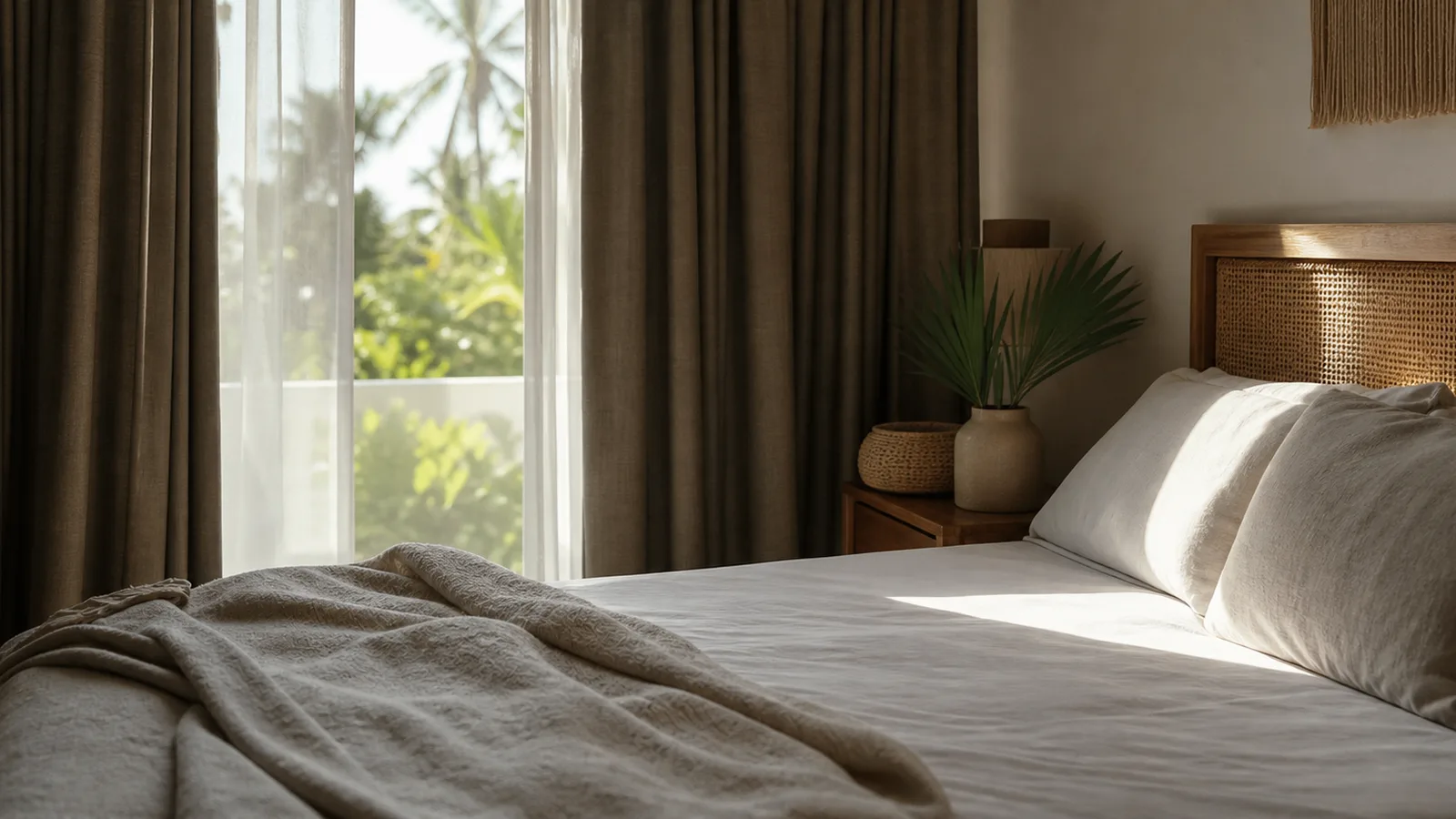
Morning light is the stronger signal of the two and the more neglected. Someone who blacks out their bedroom completely, sleeps until the alarm, and then goes straight into an air-conditioned office with no window may go most of the day without a strong daylight cue.
If blackout curtains are necessary because of noise, shift work or a west-facing window, open them immediately on waking rather than after breakfast. The point is the contrast, not the duration.
Shift work, where this gets harder
For anyone sleeping during the day the priorities invert, and the equipment matters more because you are working against the environment rather than with it.
- Genuine blackout, including the gap at the top of the curtain rail where most of the light actually enters.
- Consistency of timing over consistency of duration, so the body has something to lock onto.
- Bright light at the start of the shift, deliberately, rather than easing into it.
- The rest of the household briefed, which is usually the hardest part and the one that decides whether any of it works.
The broader version of this — eating, hydration and recovery on an inverted schedule — is in stress and everyday recovery.
While you are in there
Two things worth checking at the same time, because a bedroom is usually the most closed room in a Philippine house: how often it actually gets aired, and whether the aircon is running with the door shut every night. Both are covered in indoor air in an air-conditioned home.
And keep a glass of water within reach, which is less about hydration than about not turning on a bright light at 3am to go and find one — the trade discussed in sleep and the hour before bed.
Sources
Filed under
- Healthy Home
- sleep
- lighting
- bedroom
- home
- routine