Two separate complaints get bundled together whenever screens and sleep are discussed. One is about light: bright displays late in the evening signalling daytime to the body's clock. The other is about attention: a device that is engaging enough to keep you awake regardless of how dim it is.
Almost all the popular advice — night modes, blue-light filters, amber glasses — addresses the first. Most of the practical problem is the second.
General information about everyday habits, not medical advice. Persistent insomnia is worth taking to a doctor rather than solving with a phone setting.
The light part, in proportion
Light late in the evening does affect the daily clock — that much is well established, and it is why sleep and the hour before bed puts light first among the things worth changing.
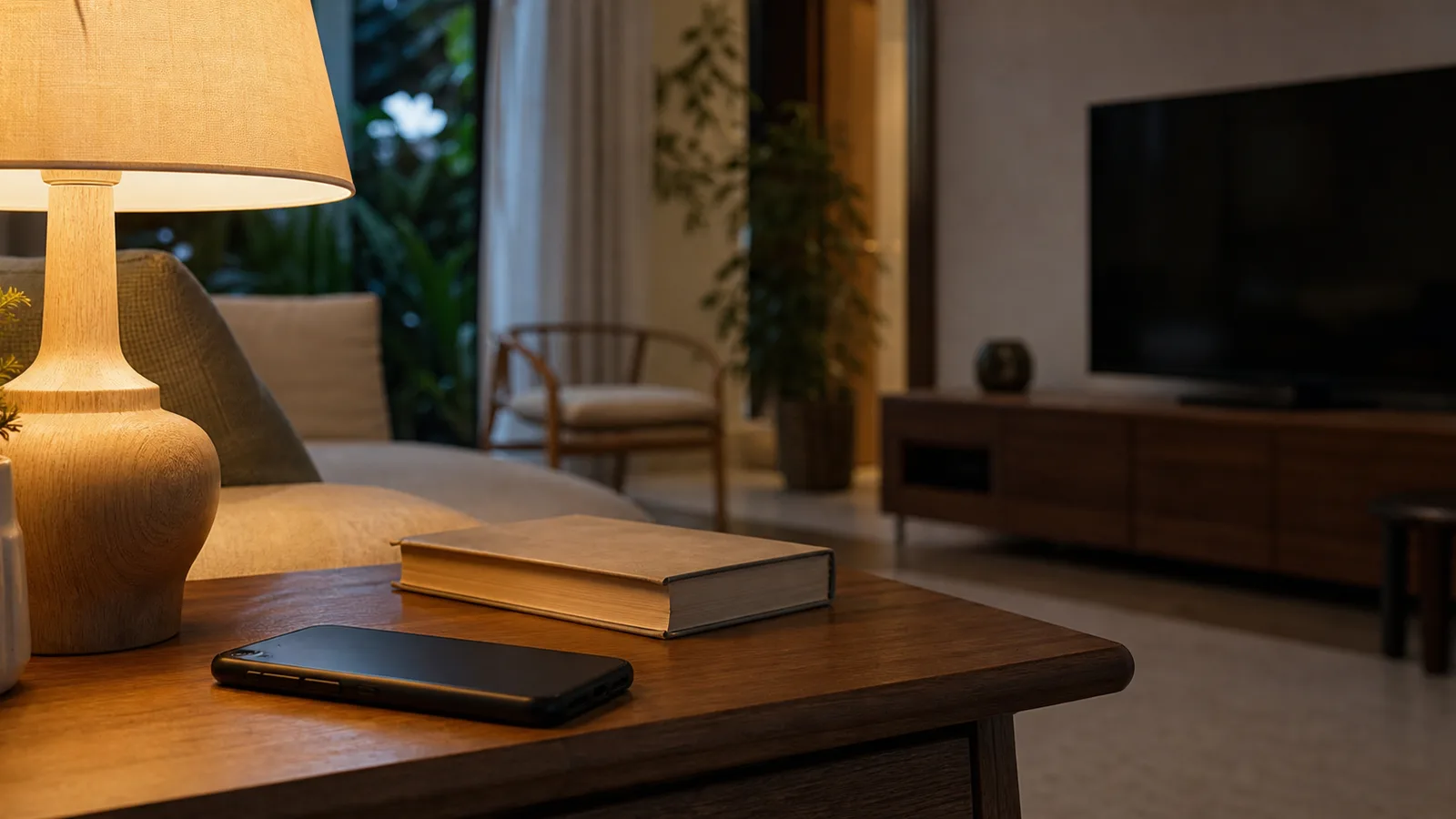
But the light from a phone held at arm's length is small compared with a room lit by ceiling lights, and that comparison rarely gets made. A household that switches to lamps in the evening has done more about evening light than one that enabled night mode and left the ceiling light on.
The attention part, which is the real one
A dimmed phone is still a phone. Feeds are designed not to end, messages invite replies, and each of those keeps the mind in a state that has nothing to do with wavelengths.
The useful distinction is between content that ends and content that continues. A chapter, an episode, an article — these have a finish line. A feed, a group chat and a marketplace do not, and the absence of an ending is what turns ten minutes into fifty.
Boundaries that are actually achievable
"No screens after 8pm" is the standard advice and it is ignored by nearly everyone, which makes it useless advice. Households talk to relatives in the evening, people work late, and shows are how families relax together.
Children and shared households
In a household with several generations under one roof, evening screen use is rarely an individual decision — the television is on, the room is shared, and one person's wind-down is another person's programme.
That is worth naming rather than pretending away. The achievable version is household-level: a slightly earlier point at which the main light goes off and the volume comes down, which benefits everyone in the room without anyone being told to put a phone away.
What else is competing for the same hour
Screens get the blame partly because they are visible. Heat, noise, a late heavy meal, an afternoon coffee and a bedroom that never gets properly dark are all in the same hour, and several of them are doing more.
The full list, in the order worth addressing it, is in sleep and the hour before bed — and the broader question of whether the day contained any real gaps at all is in stress and everyday recovery.
Sources
Filed under
- Wellness
- screens
- sleep
- evening
- attention
- habits