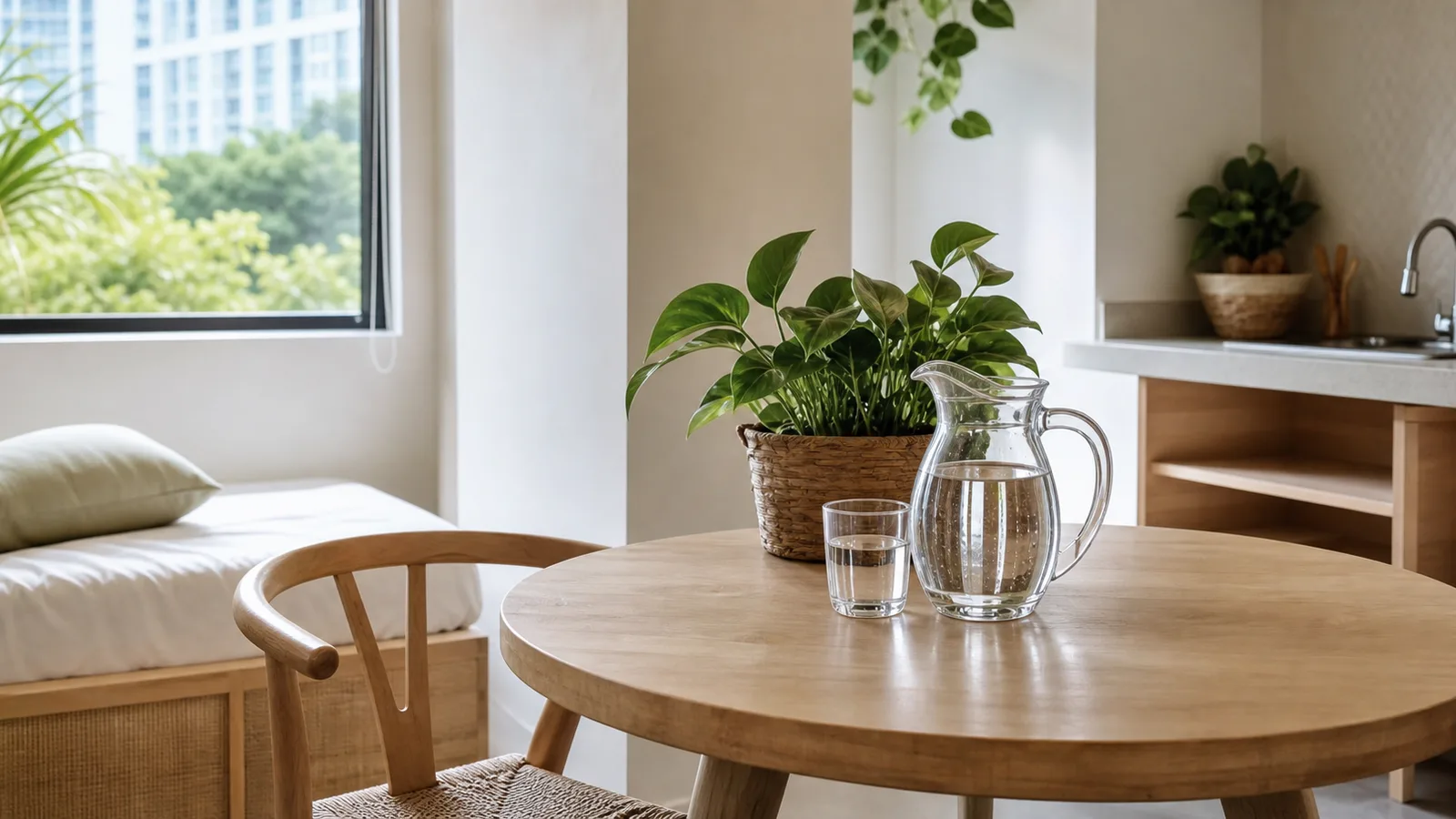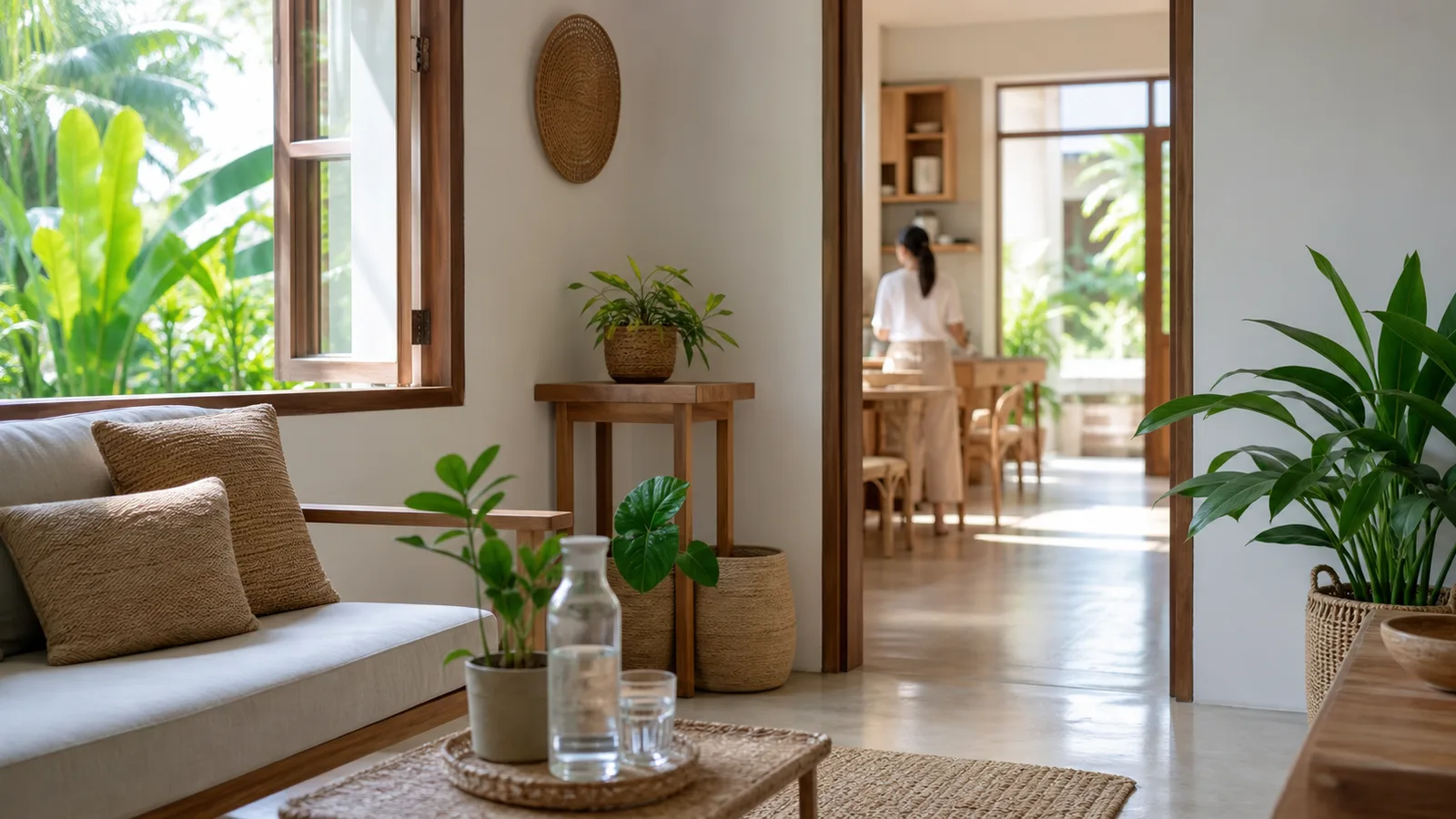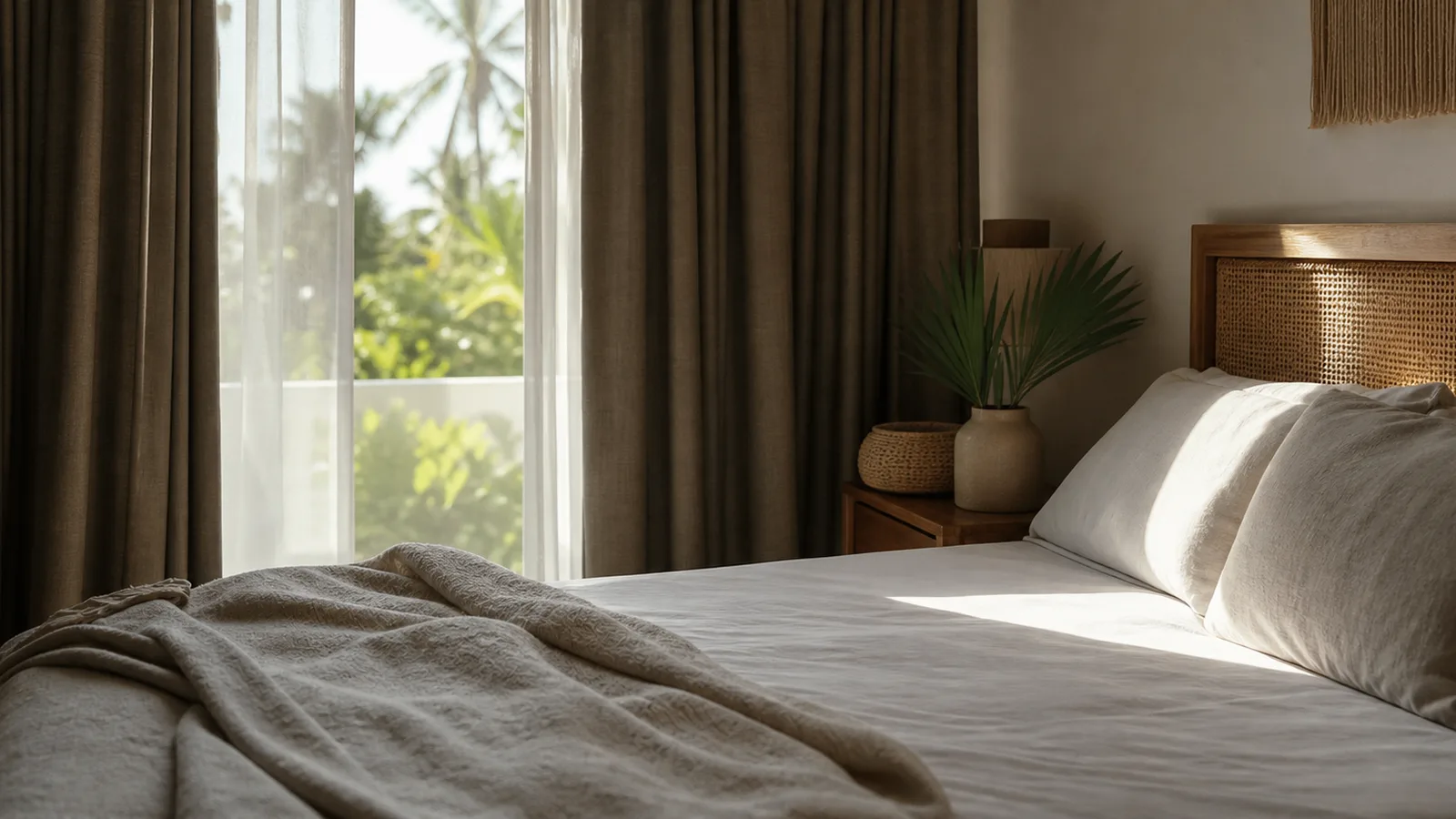
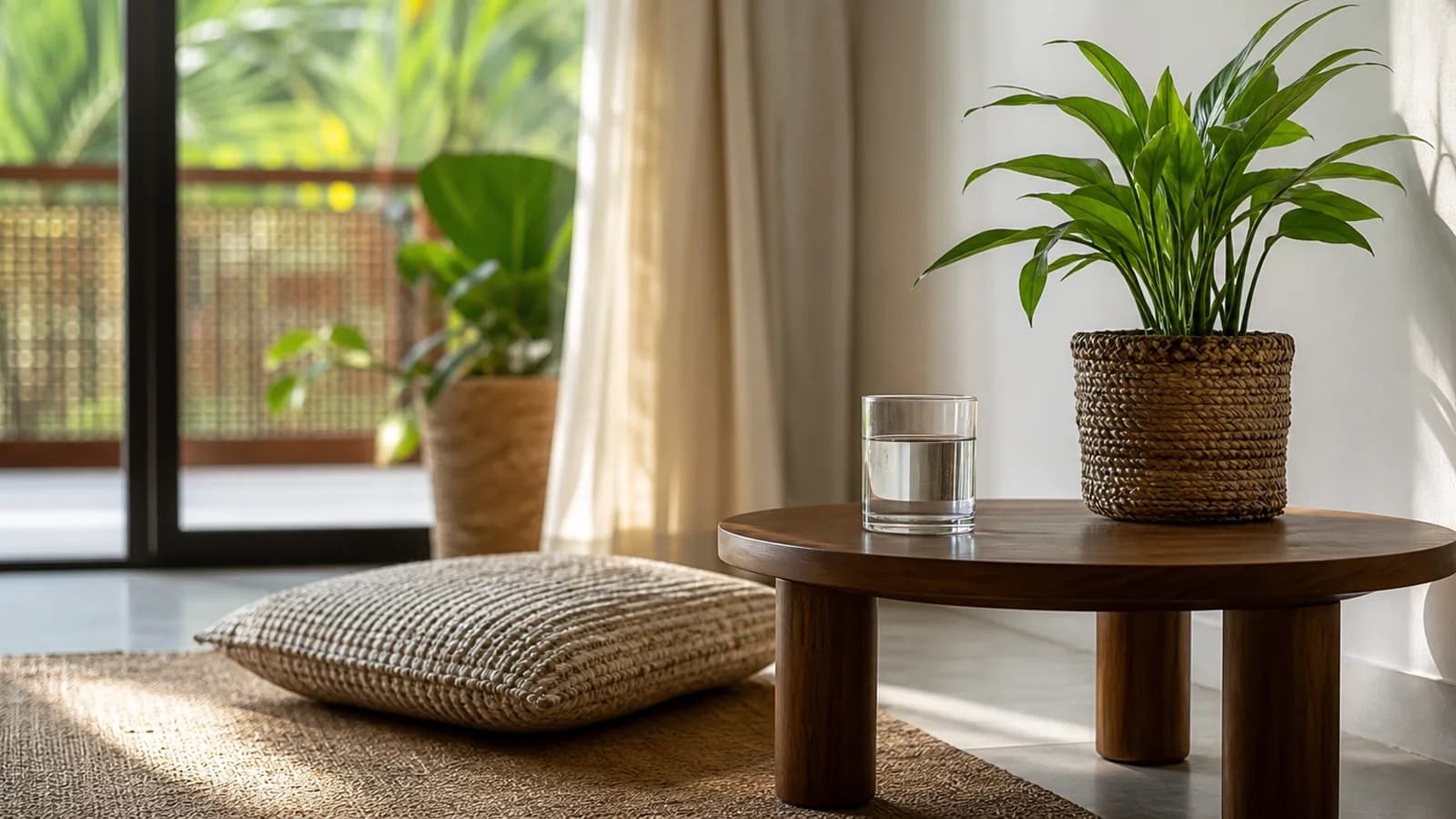
Search for a home wellness space and you get a spare room with a wooden floor, north light and nothing else in it. Very few households have a room to spare, and the ones that do rarely have a spare room facing the right way.
The useful question is not how to build that. It is what the room is actually providing, and whether a corner can provide the same thing.
What the space is actually for
Three things, and none of them require square metres.
A corner does all three. A spare room does them slightly better and costs a room.
The four things that matter
- Floor you can use. Two square metres of clear floor is the entire physical requirement for most of what people want a wellness space for.
- Light you can control. Daylight for the morning, one warm lamp for the evening. Not the ceiling light — light and darkness in a bedroom.
- Air. A corner beside a window that opens is worth more than a corner beside a decorative plant — ventilation habits for a tropical house.
- Water within reach, because getting up to fetch a glass is how a ten-minute routine becomes a five-minute one.
That is the list. A mat, a cushion, a lamp and a glass, in a corner near a window.
What to skip
Most of the equipment associated with this, and it is worth being specific because the category is heavily marketed.
An air purifier addresses airborne particles and does nothing about ventilation, humidity or damp — which are the actual air problems in most Philippine homes. If your corner is stuffy, opening a window is the fix, and the honest scope of a purifier is in what air purifiers can and cannot do.
Diffusers, candles and sprays add to indoor air rather than cleaning it, which is a trade worth making knowingly — cleaning products: quantity, timing and air. And nothing on this site or any other is required to sit quietly in a corner for ten minutes, which is the point made at length in wellness on a budget.
Keeping it from becoming storage
This is what actually happens to wellness corners. Within six weeks it is holding laundry, and within three months it is a shelf.
Two things prevent it. The corner needs to be somewhere the household does not naturally put things down — not beside the door, not next to the dining table. And it needs to be used, because an unused clear space is the most attractive surface in any home.
If it does silt up, that is information rather than failure: the routine was not happening, and the corner is reporting it. Clearing it is a ten-minute job that belongs in a weekend reset routine.
The honest version
In a studio or a shared room there may be no corner available, and the answer is then that the space is temporary — the floor beside the bed, cleared for ten minutes. That works, and it is what most people are actually doing.
The permanent corner is a convenience, not a requirement, and treating it as a prerequisite is how a free habit gets turned into a purchase.
General information about home setup, not medical advice.
Sources
Filed under
- Healthy Home
- home
- small space
- budget
- setup
- routine