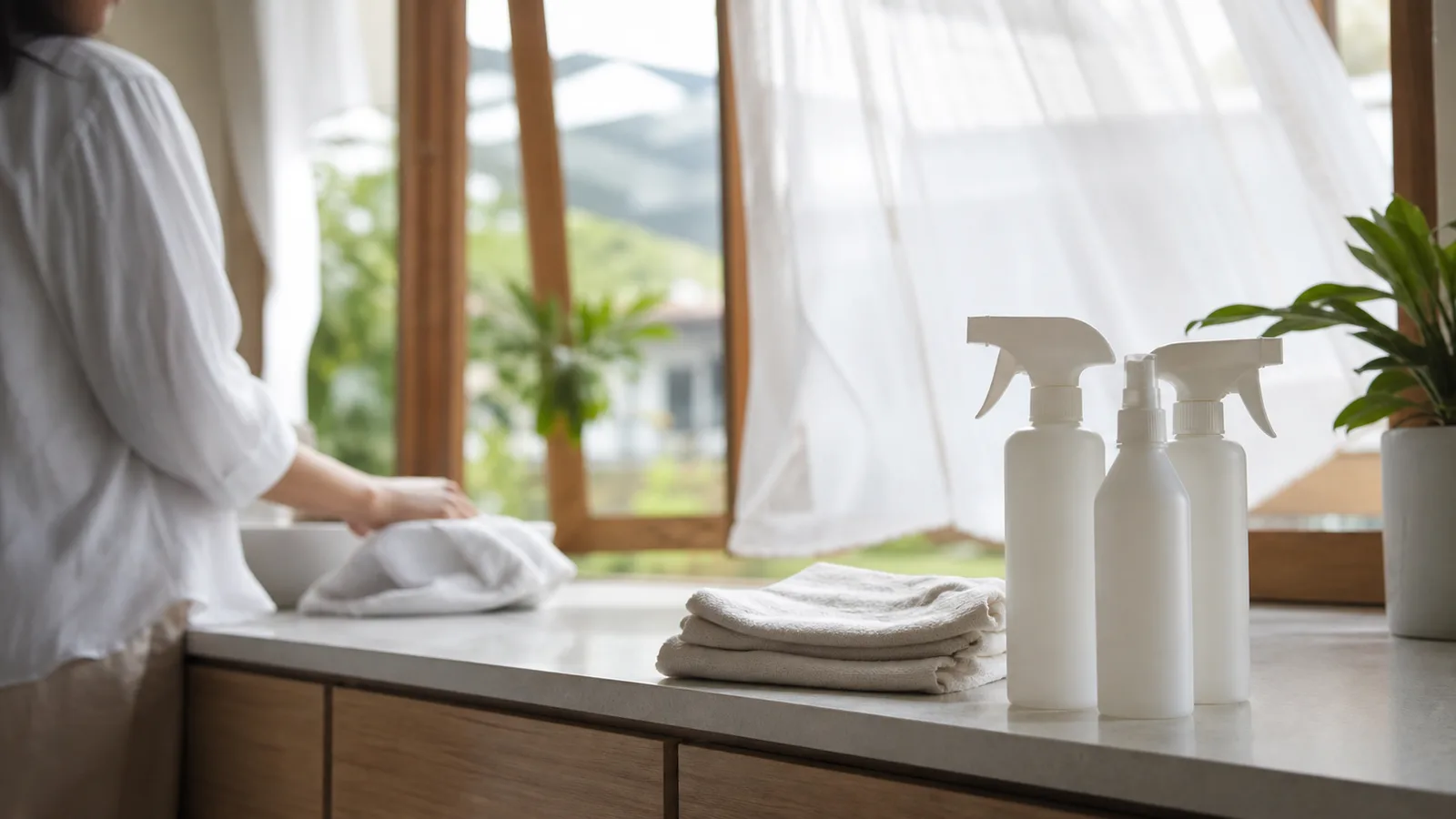
Household cleaning is one of the few things people do that reliably and immediately changes the air in a room. It is also one of the few where the fix costs nothing and requires no different products.
The EPA lists cleaning and maintenance products among the ordinary indoor sources that raise pollutant levels in poorly ventilated spaces. Note the second half of that sentence: the ventilation is doing at least as much work in the outcome as the product is.
General household information, not medical advice. Anyone with asthma or a respiratory condition, and any household with an infant, should follow their doctor's guidance — and see the safety section below on combinations that are genuinely dangerous.
The three variables that matter
Switching to a different brand — including a natural one — changes far less than any of the three above. That is worth saying plainly, because product substitution is what most articles on this subject recommend.
The part that is genuinely dangerous
Most of this article is about comfort and air quality. This section is not.
Never mix bleach with ammonia-based cleaners, and never mix bleach with acidic cleaners such as toilet or tile products containing acid. Those combinations produce toxic gases — chloramines and chlorine — that cause real harm in an enclosed bathroom.
A routine that leaves the air better than it found it
- Open windows before you start, not after. Cross-ventilation, meaning two openings — see ventilation habits for a tropical house.
- Use the amount the label specifies. Not the amount that feels thorough.
- One product per room, per session.
- Run extraction in bathrooms and kitchens during and after.
- Leave the room airing for an hour afterwards, particularly a bathroom.
- Store products closed and away from living areas, not open under a sink in a warm cupboard.
Air fresheners, plug-ins and the fragrance question
An air freshener does not clean air. It adds compounds to it in order to change how it smells, which is close to the opposite of the goal — and it frequently masks a signal worth noticing.
A room that smells persistently is telling you something: damp somewhere, a bin that needs emptying, a bathroom that never dries, or air that has not been exchanged in days. Covering that up with fragrance leaves the cause in place. The damp version of this is worked through in damp, mould and the bathroom that never dries.
Where a purifier fits
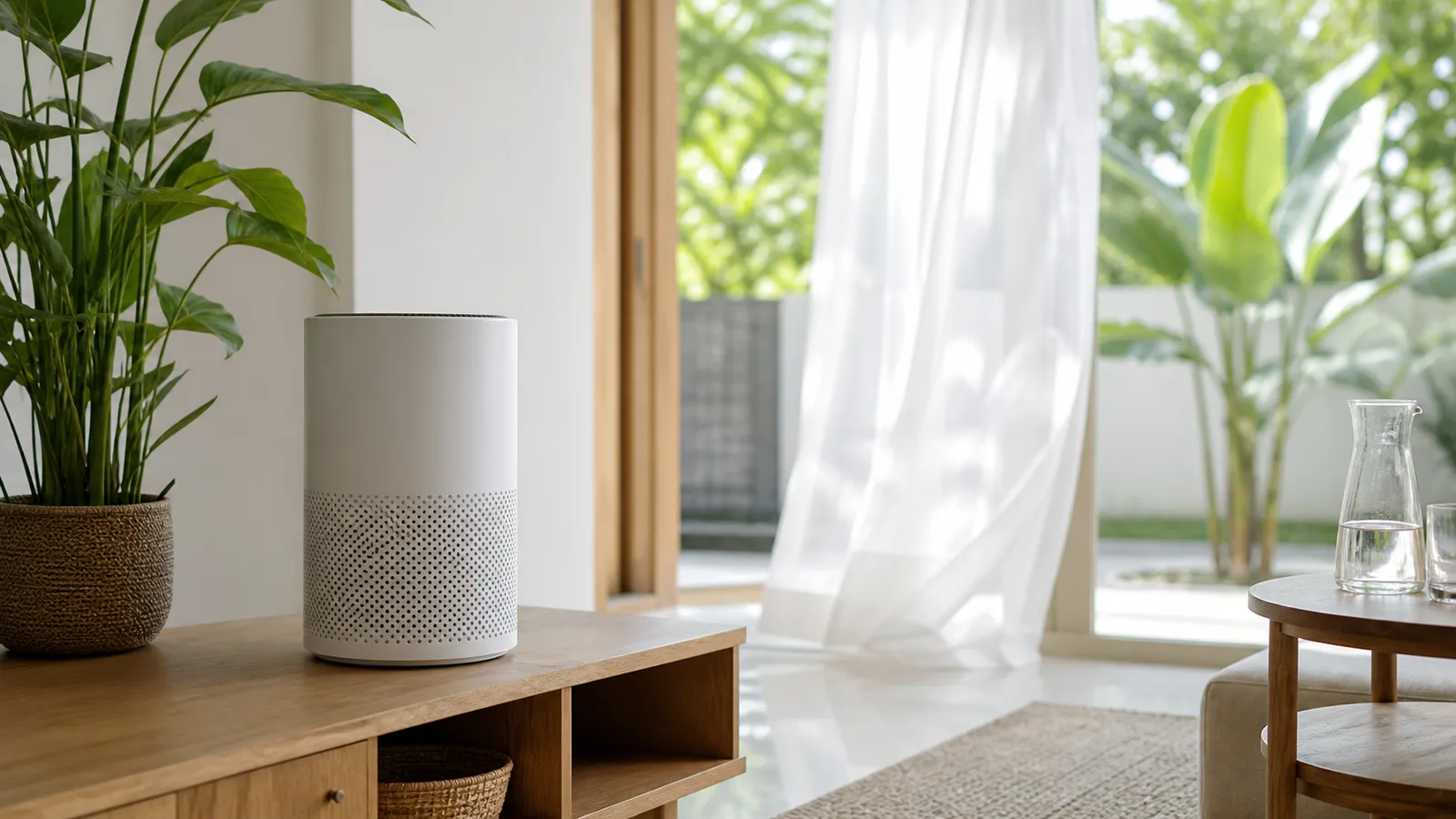
After ventilation, not instead of it, and knowing which problem it addresses. Gases and odours from cleaning products are a different job from particulate, and not every technology handles both — the comparison is in what a home air purifier can and cannot do.
No device will keep pace with three products used simultaneously in a sealed room. Nothing in this category can outrun a source that is still running.
Sources
Filed under
- Healthy Home
- cleaning
- indoor air
- ventilation
- household safety
- home environment