Do a waste audit on an ordinary week and the plastic bottle count is usually modest. Do it on a week with a birthday, a baptism or a family visit and the figure changes completely — because hosting is the moment when careful households buy a case without thinking about it.
It is not carelessness. It is hospitality. Nobody wants to be the host who makes guests ask for a glass of water, and a case of bottles is the socially safe option. There are better ones, and they are not harder.
Why the case of bottles is the default
Three reasons, all of them about the guest rather than the water.
- Visibility. A stack of bottles announces that drinks are available. A pitcher in the kitchen does not.
- Permission. Guests take a sealed bottle without asking. Pouring from a shared pitcher feels like an imposition to some people.
- Portability. People move around at gatherings. A bottle travels; a glass on a table gets abandoned and lost.
Any replacement has to solve those three, not just remove the plastic. That is the whole design problem, and once it is stated the solutions are fairly obvious.
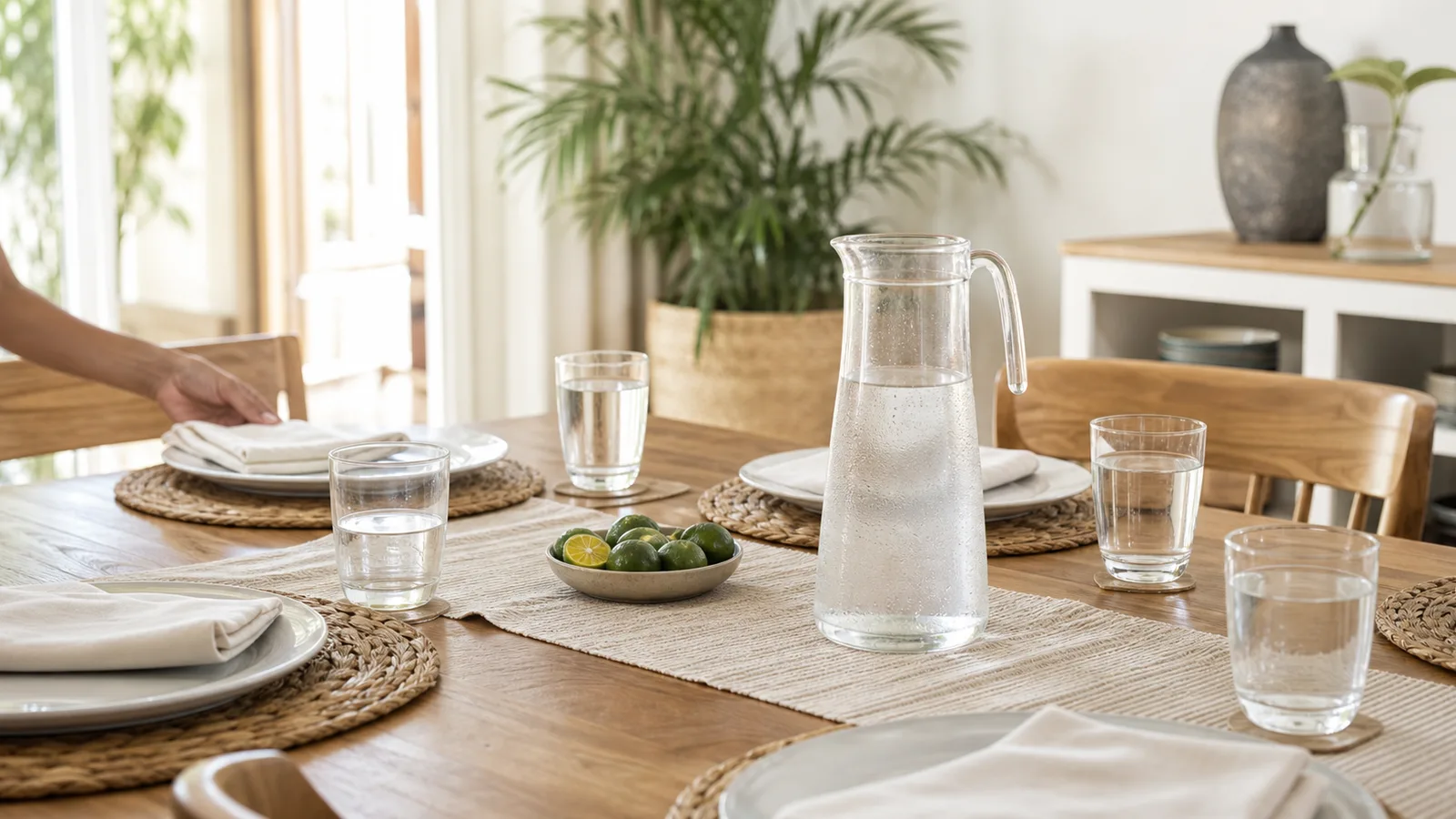
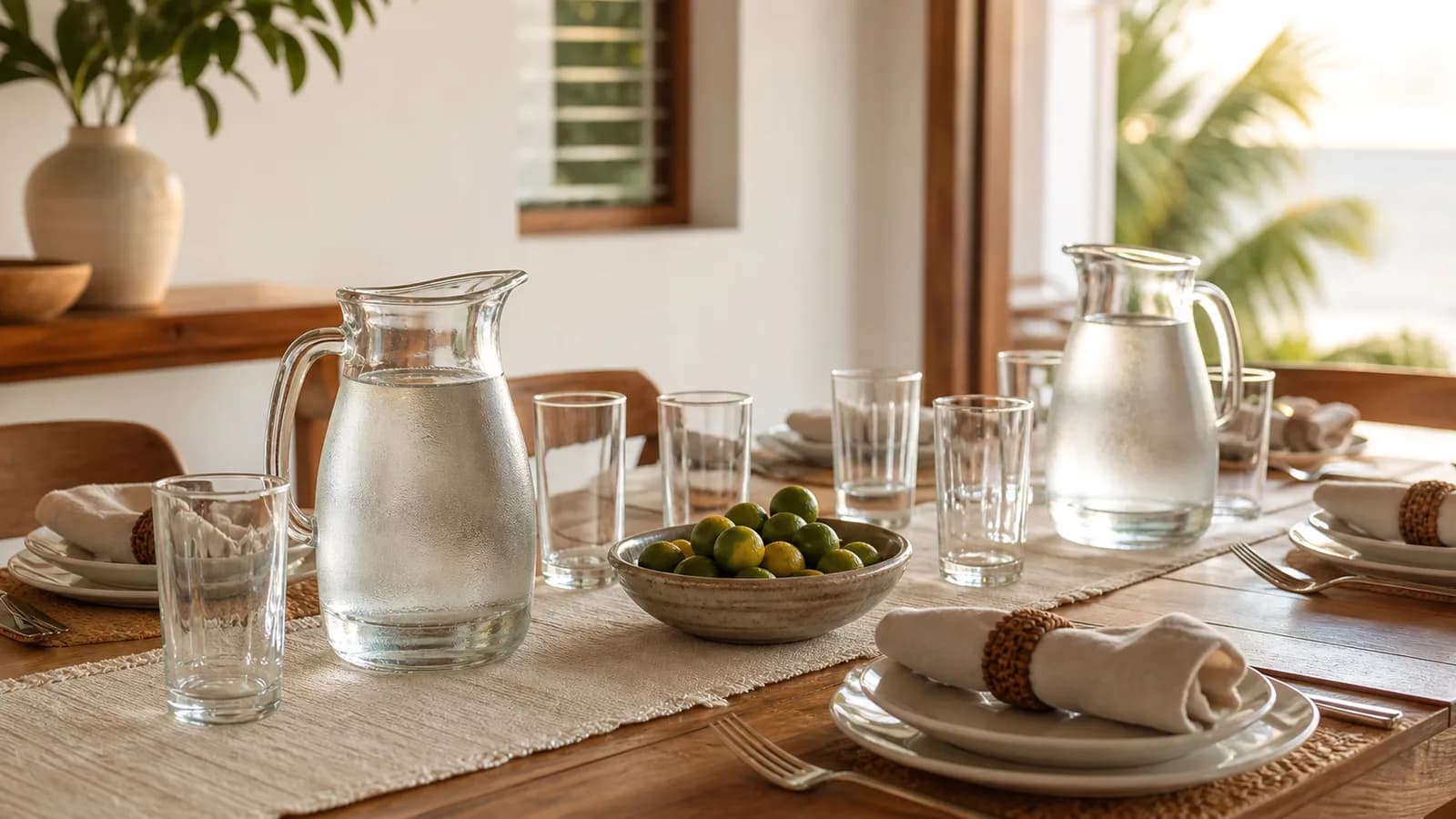
What to set up instead
That is the entire method. It costs nothing beyond glasses you probably own, and it removes the largest single-event source of household plastic most families produce. None of it is special to parties: the way water reaches the table decides how much of it gets drunk on an ordinary evening too.
The glass problem, honestly
The common objection is real: at a large gathering, people lose track of their glass and take a new one, and you end up washing forty glasses for fifteen guests.
Two fixes that work. Glass markers or a simple ribbon around the stem — inexpensive and slightly festive rather than fussy. Or, for larger and more chaotic gatherings, keep a set of sturdy reusable tumblers for parties specifically, which take the abuse that good glassware should not.
For outdoor gatherings, where breakage genuinely matters, the same reusable tumblers solve it — the goal is durable and washable, not glass specifically. The things that make a reusable vessel survive years rather than months apply to party tumblers as much as to the bottle you carry to work.
When it really is a hundred people
There is a point where the honest answer changes. At a large fiesta, a wedding reception or a gathering catered outdoors, individual bottles may genuinely be the practical option, and pretending otherwise is the kind of advice that gets ignored.
Two things still help at that scale: a refilling water station for the people who stay a while, so the bottles serve the crowd that comes and goes rather than everybody; and collecting the empties in one place, which at least gives them a chance of being recycled — a chance that, as the 9% problem sets out, is smaller than most people assume.
The version that changes the most
The households that stop buying cases for guests are usually the ones that can produce cold drinking water at volume at home — which is a kitchen arrangement question rather than a hospitality one. When there is no run to the store before visitors arrive, the case never enters the house in the first place.
If you want to know how much of your own plastic is actually hosting rather than everyday use, count a month rather than guessing: the method is in a one-week household waste audit, and it works just as well across an occasion.
Sources
Filed under
- Lifestyle
- hosting
- entertaining
- plastic reduction
- family gatherings
- everyday habits