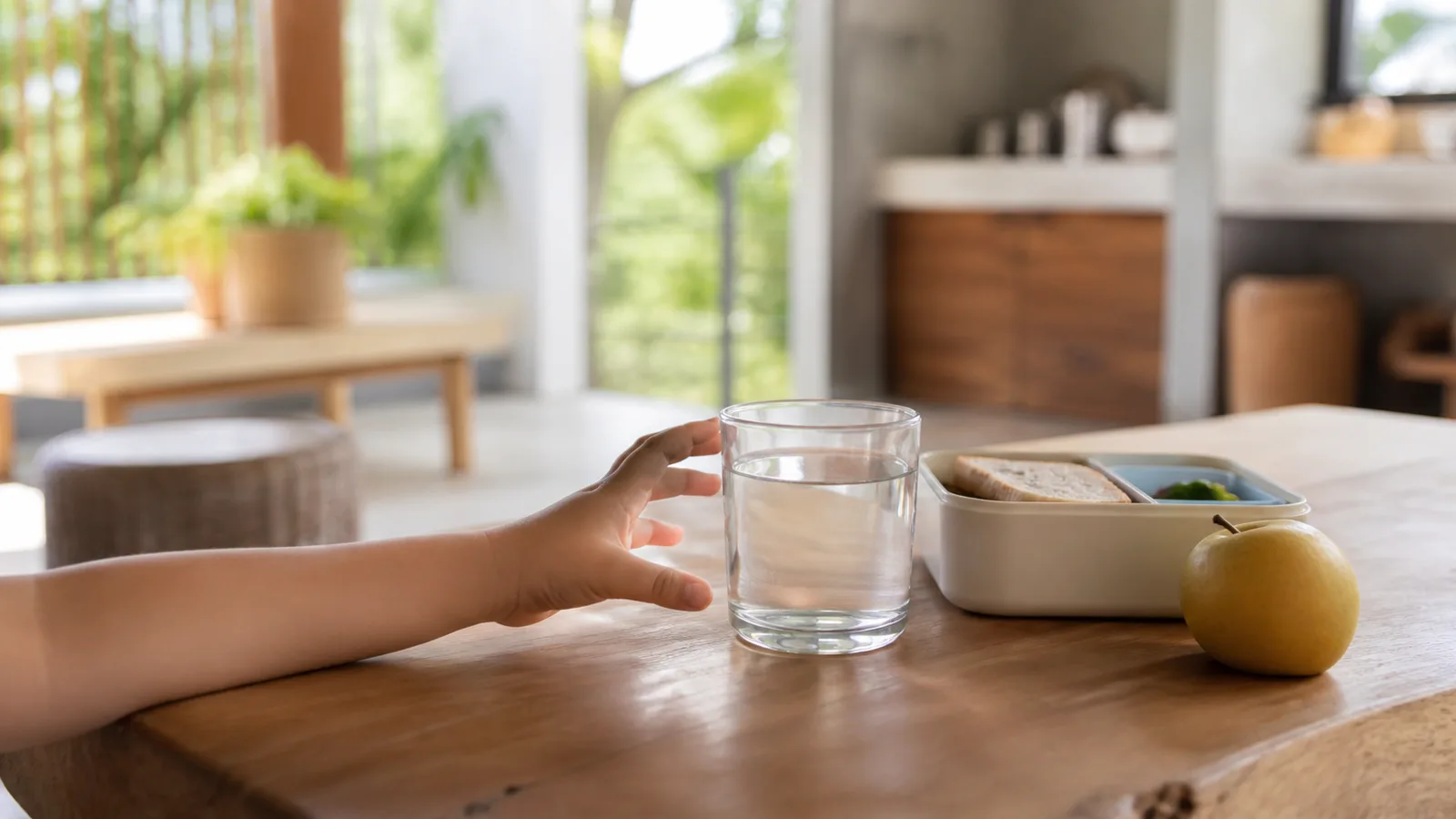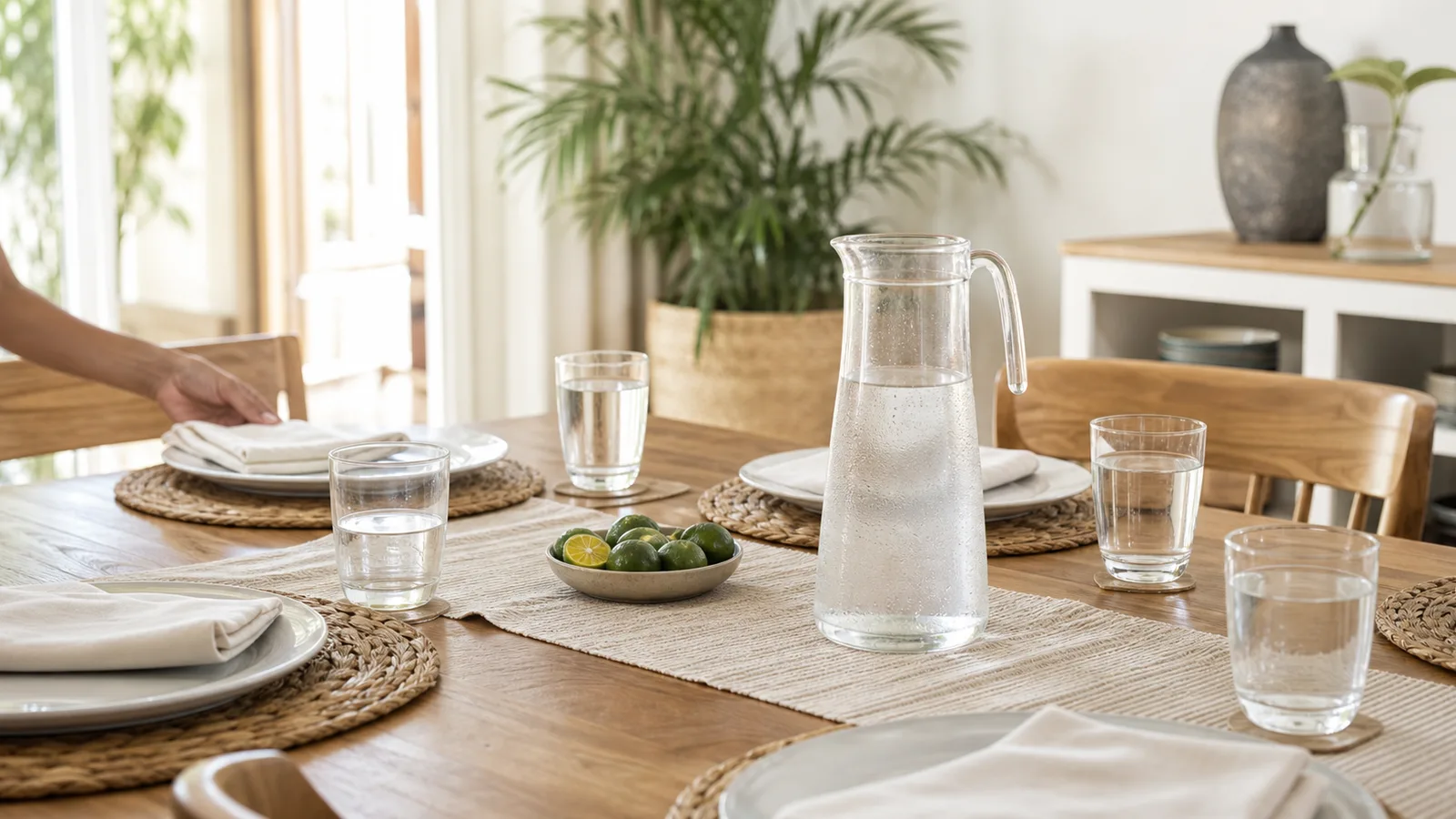
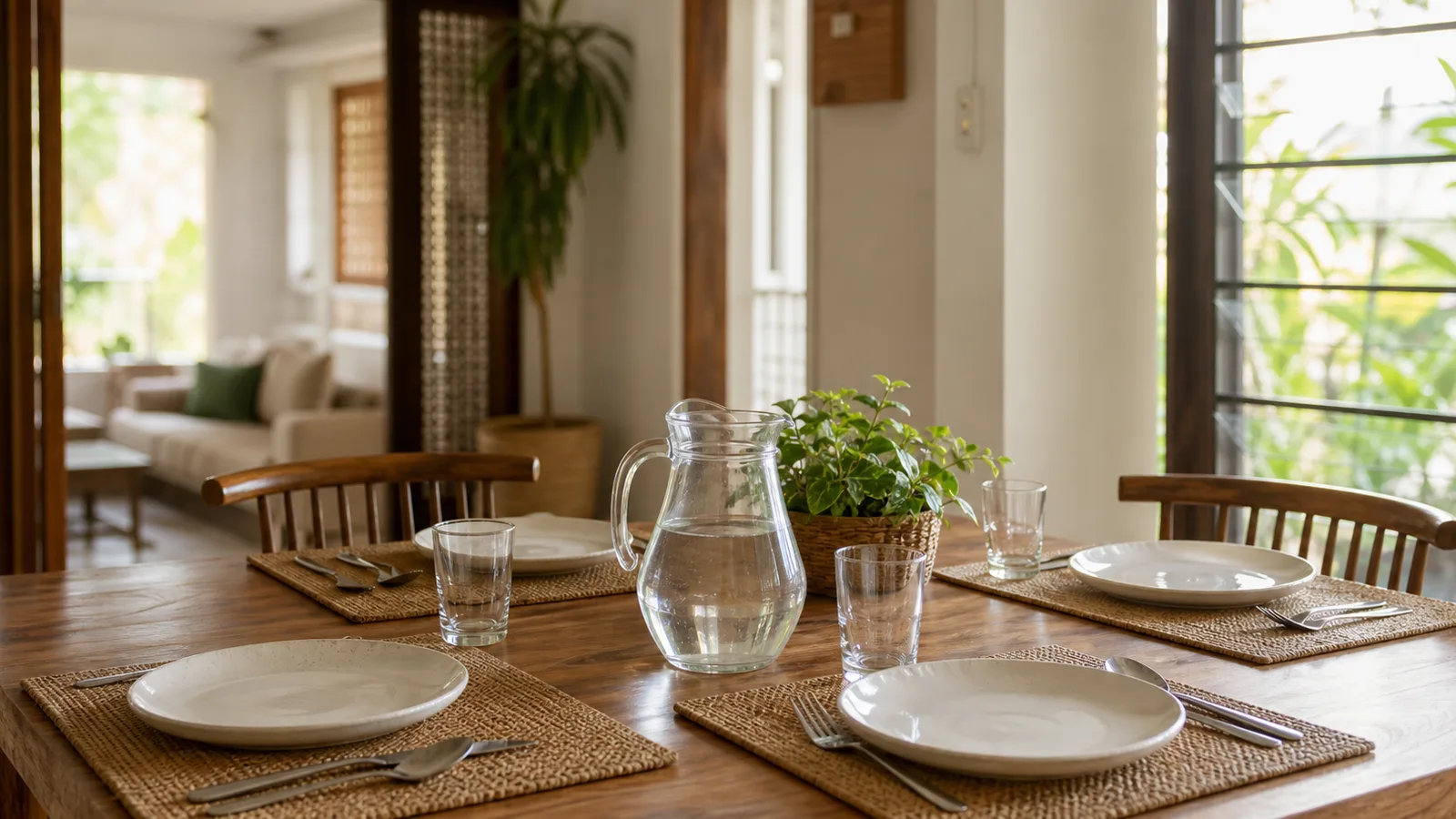
Filipino households pay a great deal of attention to food at the table and almost none to what is poured alongside it. Somebody thought about the ulam. Nobody thought about the glass.
Which matters, because drinks are the easiest place for sugar to accumulate without anyone making a decision. A soft drink with lunch and a sweetened juice with merienda is a daily pattern that nobody ever chose — it simply became what is in the fridge.
General information about family routines, not medical or dietary advice. Children with specific dietary needs should follow their doctor's guidance.
The default is the whole decision
Nobody at a table chooses between water and a soft drink on the merits. They take what is in front of them.
So the intervention that works is not persuasion but placement: what is on the table when everyone sits down. A jug of cold water already poured out is drunk. A jug in the fridge that someone has to get up for is not.
Children, without the argument
Children drink what is normal in their house, and normal is set by what is available rather than by what they are told. A household where water is the table drink and sweetened drinks are an occasion produces very different habits from one where the reverse is true — with no lecture involved in either case.
The specifics of how much and when for younger children are covered in hydration for children.
The rest of the table
Older family members often drink noticeably less than everyone else, and for reasons that have nothing to do with preference — a blunter thirst signal, and a deliberate calculation about how far the bathroom is. A glass poured for them without asking is a small thing that works, and the fuller picture is in hydration for older adults.
Coffee and tea at the table count toward the day's fluid, whatever the folklore says — the arithmetic is in does coffee count toward your daily water?.
Two things that come free with it
The first is cost. Sweetened drinks for a household of five, every day, is a line in the budget that most families have never actually added up. Replacing it with water from the kitchen is one of the few changes that saves money immediately rather than eventually.
The second is packaging. A family's soft drinks and juice boxes are usually a larger share of household waste than the bottled water everyone worries about — worth a look during a household waste audit.
Neither of those is the reason to do it. But they are real, and unlike most claims in this area, nobody has to hedge them.
Sources
Filed under
- Lifestyle
- family
- mealtimes
- drinks
- children
- habits