Most family health advice is addressed to one parent and asks them to enforce something on everyone else. That arrangement is exhausting, and it fails for the ordinary reason that enforcement requires attention nobody has by Wednesday.
The routines that hold are the ones nobody is enforcing, because they are built into how the house works rather than into what anyone has been told.
General information about family routines, not medical advice. Follow your paediatrician's guidance for anything specific to your child.
Environment beats instruction, particularly with children
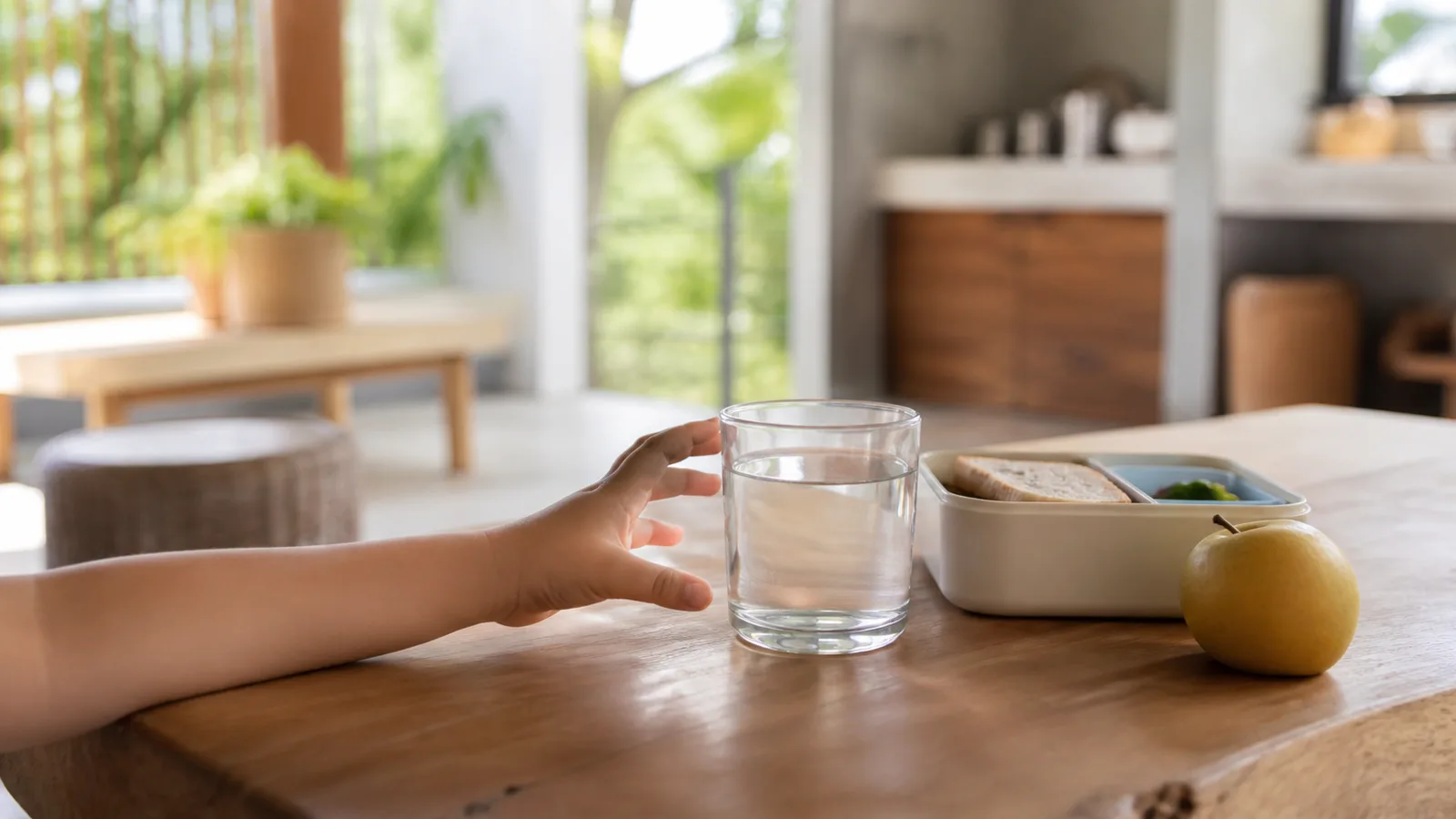
Children do not adopt habits because they were explained. They adopt what is normal in the house — what is in the fridge, what is on the table, what the adults do without commenting.
The uncomfortable part: what the adults do
Every one of those depends on the adults doing the same thing, and this is where most family routines quietly fail. A parent drinking soft drinks while handing a child water is running an experiment whose result is already known.
There is no way around this and it is worth naming plainly rather than dressing up. The routine you can sustain for yourself is the ceiling on what the household will adopt.
What is worth including
Keep the list short. Four things a household can genuinely hold, in rough order of return:
- A consistent bedtime for the children, and a dimmer house for the hour before it.
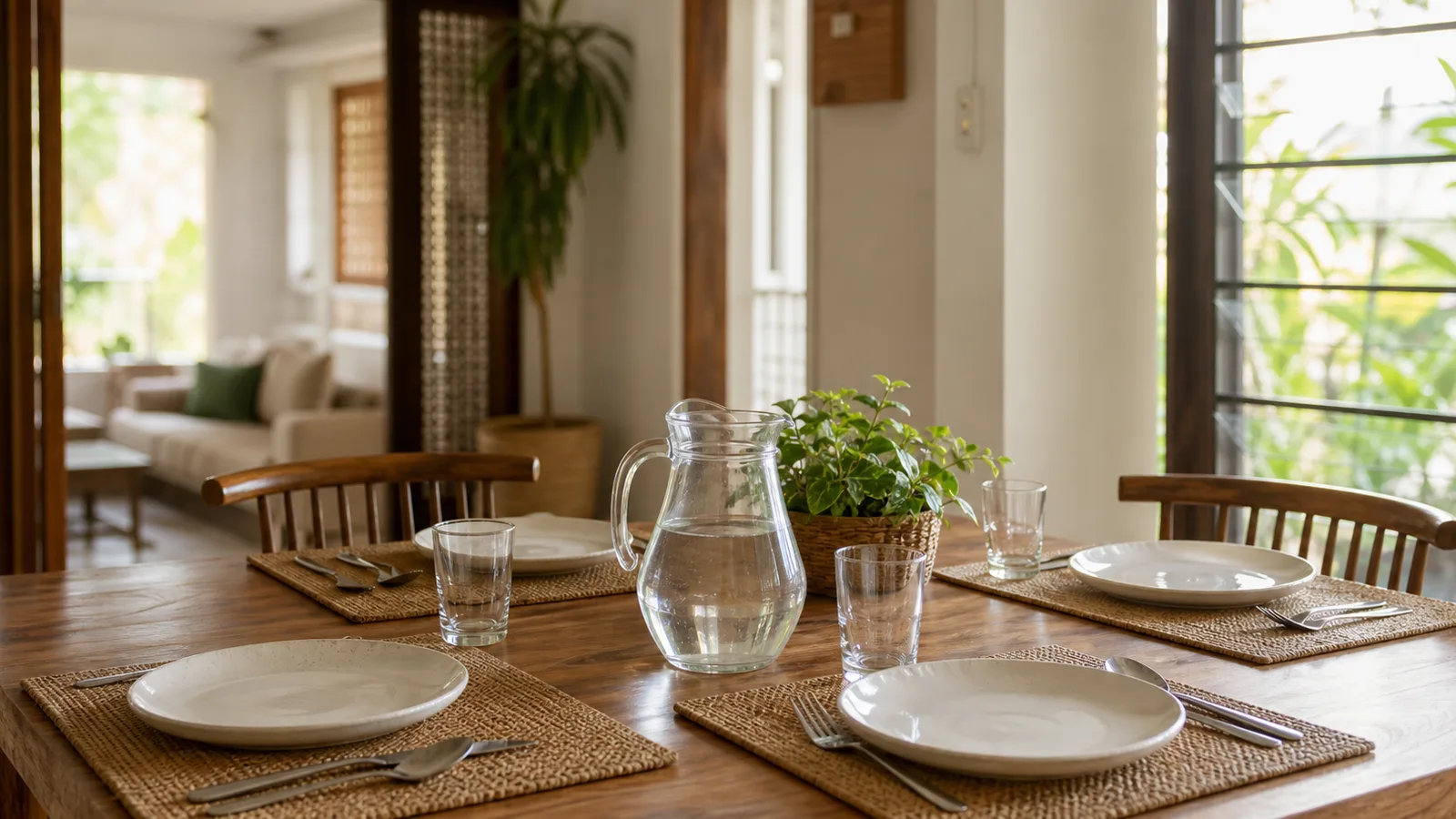
- Meals at the table, most days, with water on it.
- Something outdoors daily — the walk to school, the errand, the half hour at the playground. Free, and the strongest daylight cue anyone gets.
- Cooking most of what the family eats, which is more about cost and control than about any diet — eating well without a diet.
Anything beyond four becomes a system to maintain, and a system to maintain is the thing that gets abandoned during exam week.
The household is more than the children
In many Filipino homes a grandparent is part of the daily routine and is usually the person drinking least — the thirst signal is blunter with age, and the calculation about how far the bathroom is is a real one. A glass poured without asking is a small, effective habit, and the fuller picture is in hydration for older adults.
And someone in the house may be on a night shift, in which case most of the above inverts for them and should — the household routine has to accommodate that rather than treat it as non-compliance.
What to leave alone
Weight, appearance and food morality. Framing family routines around any of those is a durable way to cause harm, and none of it is necessary to get the benefit — the habits above stand on their own without ever being justified that way.
Nor is any of this a reason to buy something. What genuinely helps a household is mostly free, which is the argument in wellness on a budget.
Sources
Filed under
- Wellness
- family
- children
- routines
- household
- habits