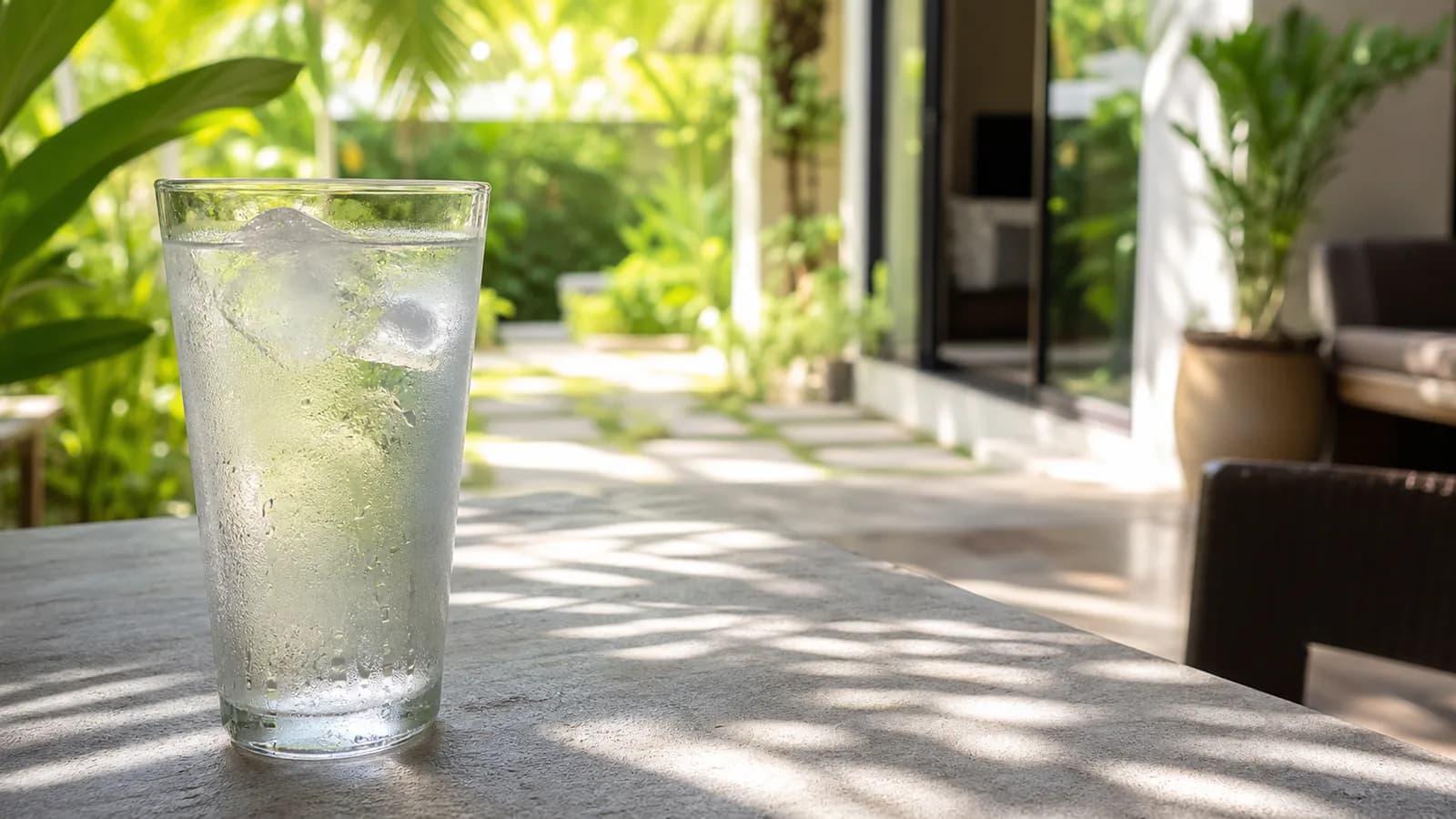
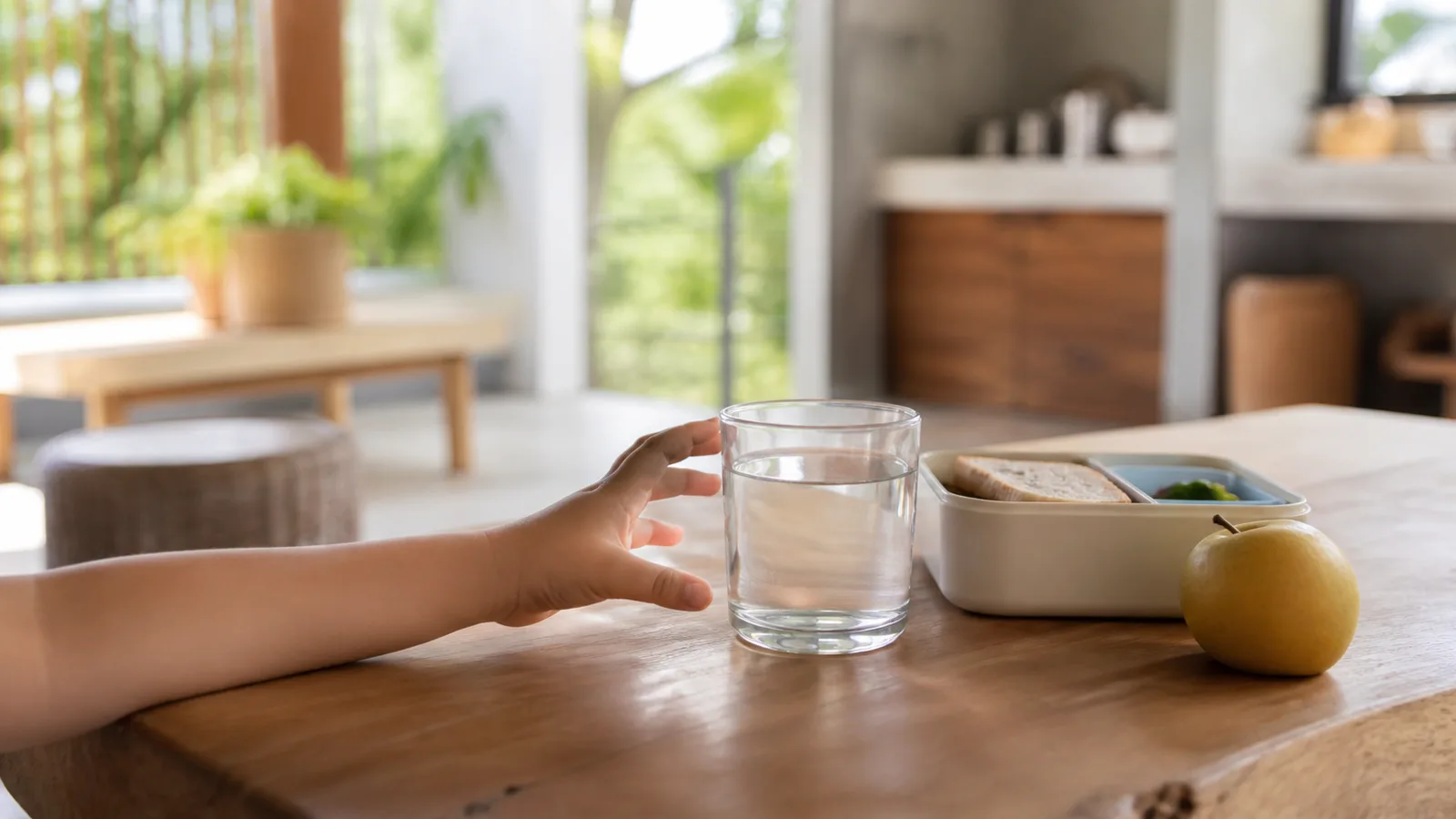
Children do not decide to drink too little. They get absorbed in something, they do not register thirst as urgently as adults do, and the water is in another room. Then they come off a court in the heat having drunk nothing since breakfast.
Which means telling a child to drink more water is close to useless as a strategy, and rearranging the household so that drinking is the easy default works reliably. This is one of the few areas where the environmental fix genuinely outperforms the instruction.
General household information, not medical advice. Fluid needs for infants, for children who are unwell, and for any child with a medical condition are matters for a paediatrician. Infants under six months should not be given water in place of milk feeds except on medical advice, and a child with vomiting or diarrhoea needs proper oral rehydration guidance rather than a general article.
What the guidance actually says
Reference values for children rise with age and are given as total water — everything drunk plus the water in food. The European Food Safety Authority's figures step upward through childhood, and they assume a moderate climate and moderate activity, neither of which describes a Philippine school day.
The practical consequence is the same as for adults: treat published figures as a floor rather than a target, and adjust upward for heat, activity and time spent outdoors — the reasoning set out in hydration in a tropical climate.
What makes any of it happen is the household rather than the child. A jug already on the table settles the drinks question without a conversation — family mealtimes and what everyone drinks — and the wider version of that argument, where the environment does the work and the adults set the ceiling, is in family wellness routines. For school-age children the constraints shift to bathroom rules, fixed breaks and the commute: water habits for students.
The school day, which is the hard part
Most under-drinking happens between the morning meal and getting home. Bottles get left in bags, refills need permission, and breaks are short.
At home: make water the path of least resistance
The single most effective change is height. Water a child can reach and pour without asking gets drunk; water that requires an adult does not. A low shelf, a small pitcher a child can lift, and unbreakable glasses within reach do more than any amount of encouragement.
Second is what else is available. A fridge with sweetened drinks in it is a fridge where water loses. This is not an argument for banning anything — it is an observation that the default option wins most of the time, in households as in offices.
Sugary drinks, briefly and without a lecture
The World Health Organization's guidance on free sugars is the relevant reference, and sweetened drinks are among the largest contributors for children in most countries.
The version of this advice that actually works in a Filipino household is not prohibition — juice at a birthday is not the problem. It is making sure the everyday default is water, and keeping the sweet things occasional rather than ambient.
Signals worth noticing
For an ordinary healthy child: regular bathroom visits, pale rather than dark urine, and a child who is their usual self. Thirst is a reasonable everyday guide, with the caveat that in children it lags further behind exertion than it does in adults.
Persistent tiredness, unusual thirst that does not settle, a child who is off in a way you cannot explain, or any illness with fluid loss — those are for a doctor, not for an article. That line is worth keeping firm.
The summary
Put water where a child can reach it. Send a bottle they like and can open. Make water the default and the sweet things the exception. Adjust upward on hot days and days with sport, because the published numbers were not written for this climate.
None of that requires a conversation about hydration, which is precisely why it works.
Sources
Filed under
- Hydration
- children
- family
- school
- hydration habits
- sugary drinks