Most hydration advice assumes an adult with a desk, a bottle and the freedom to stand up. A student has fixed break times, a bathroom policy set by somebody else, a commute at both ends of the day and, frequently, a classroom with an electric fan rather than aircon.
Under those constraints the useful advice is narrow, and it is mostly about what happens before and after school rather than during it.
General information about everyday habits, not medical advice. Heat exhaustion is a medical emergency — a student who stops sweating, becomes confused or collapses in the heat needs immediate help.
The constraints that actually shape the day
What actually works
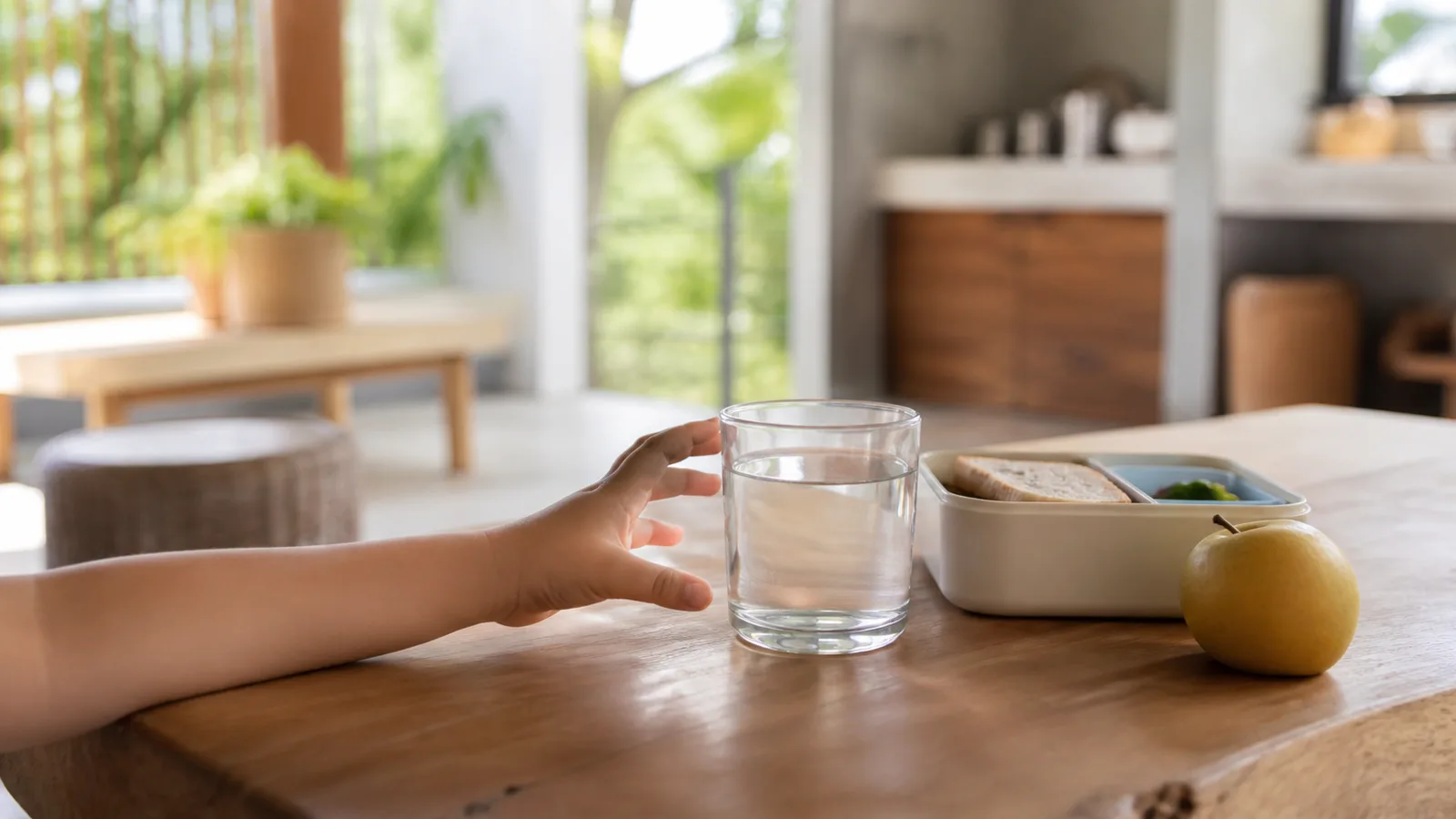
- A glass at home before leaving. The single most reliable one, because it is the only moment fully under the household's control.
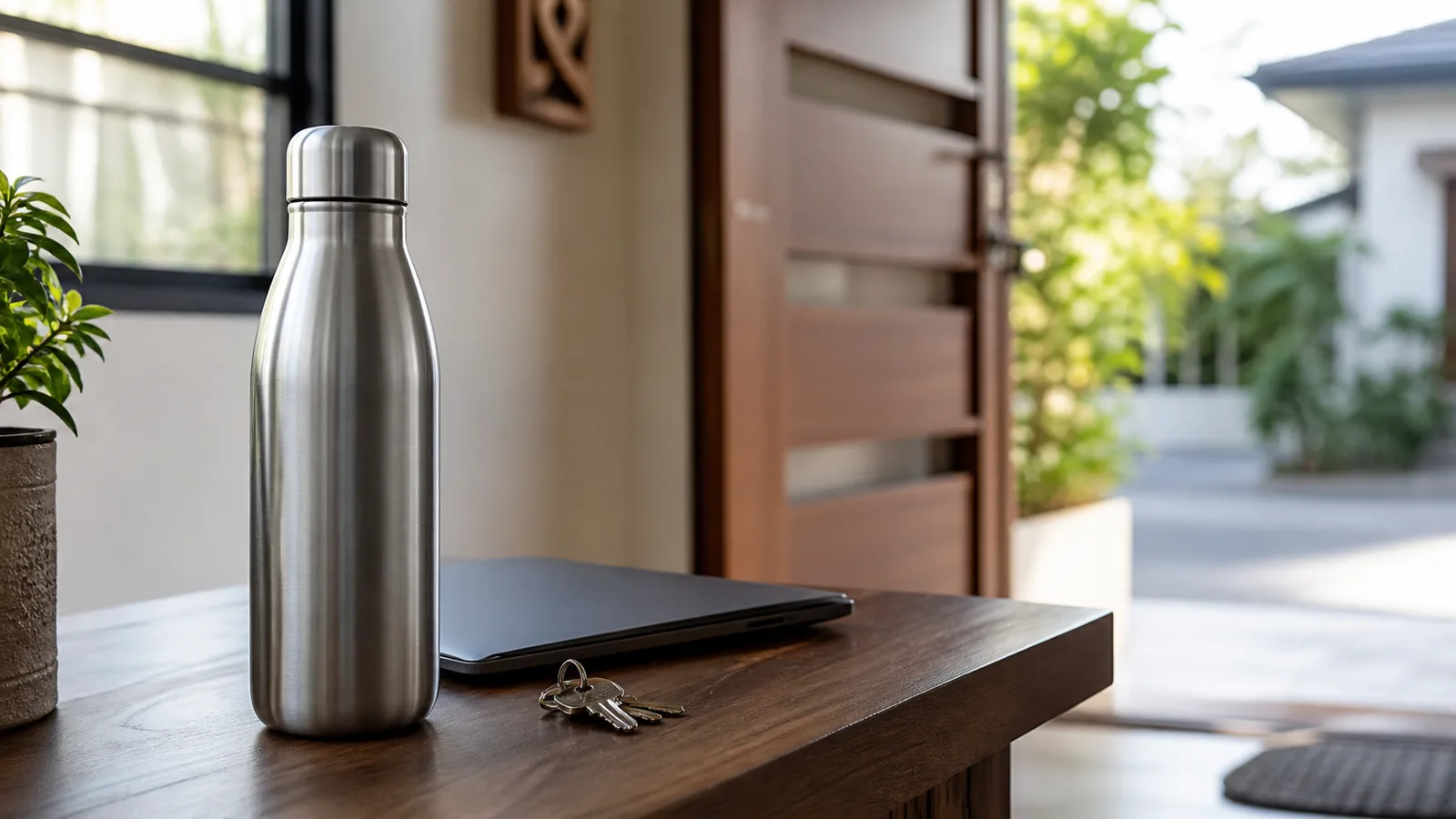
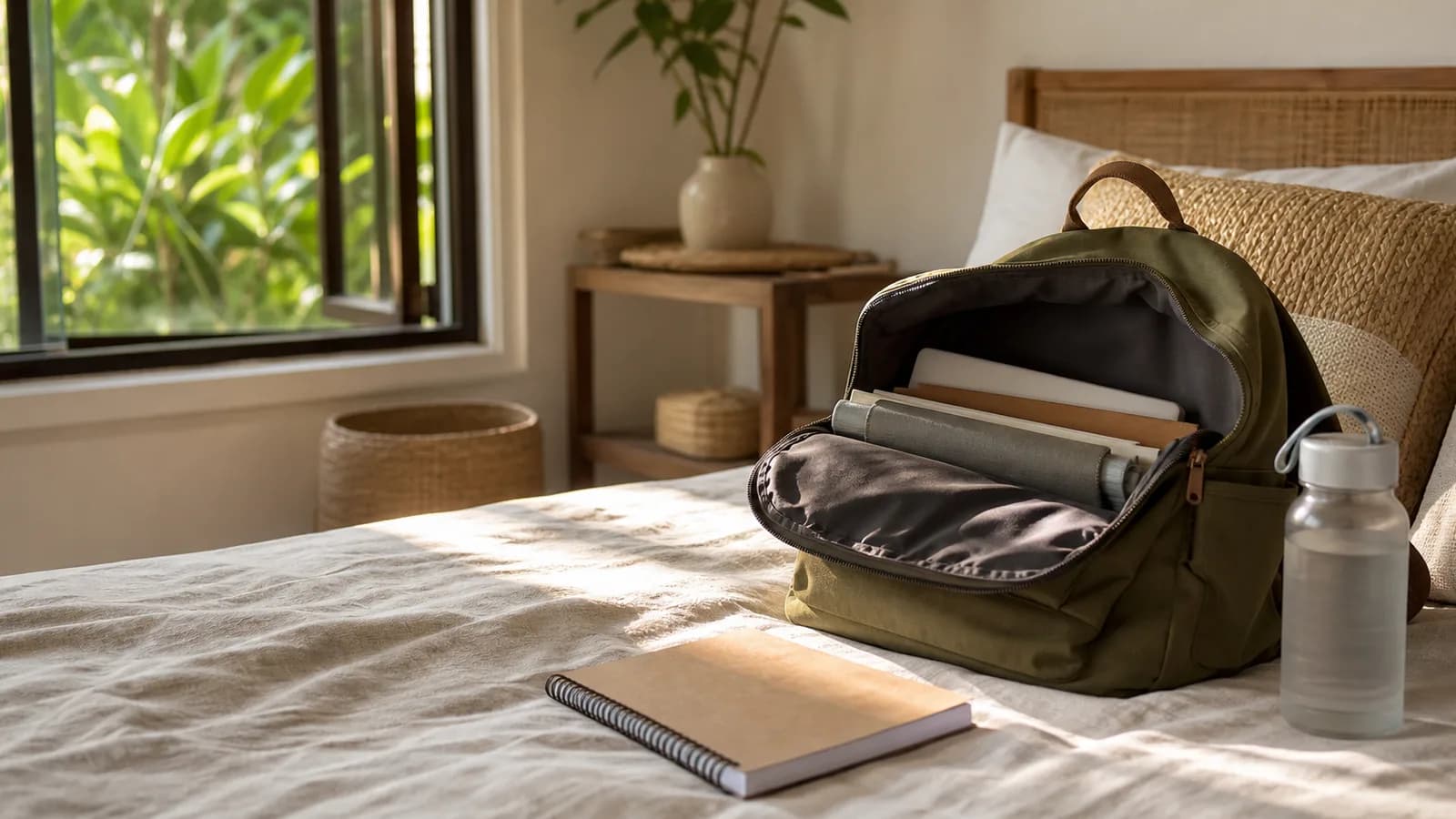
- A bottle filled cold the night before, put with the bag rather than in the kitchen — the placement principle from building a hydration habit.
- Deliberate drinking at recess and lunch, rather than sipping whenever, which does not happen in a classroom.
- Refill immediately on arrival home, before the bag is even put down — the afternoon is when the deficit is largest.
- An insulated bottle if the budget allows, because warm water at 10am does not get drunk in this climate.
The canteen problem
For most students the alternative to a bottle is whatever is sold at school, which is usually sweetened. This is a cost question as much as anything else — a daily bought drink over a school year is a figure most families have never added up — and it is the same argument as family mealtimes and what everyone drinks.
A filled bottle from home removes the decision entirely, which is more effective than any conversation about sugar.
Exam periods, where this all falls apart
Long study sessions, late nights, coffee and energy drinks, and skipped meals. Three things worth knowing rather than a lecture:
- Coffee counts as fluid. It does not dehydrate you in any way that matters at ordinary intake — does coffee count toward your daily water?.
- Water is a small lever on concentration, not a large one. Sleep is the large one, and no amount of hydration substitutes for it — hydration and focus at work.
- Drinking heavily late at night to catch up mostly costs you sleep — sleep and the hour before bed.
One thing worth taking seriously
PE, drills, practices and long queues under the sun during the hottest months are a different order of problem from a stuffy classroom. Fluid before and after, shade where available, and knowing the warning signs matter here in a way they do not during an ordinary school day.
The mechanism — why humid heat is harder on the body than dry heat at the same temperature — is set out in hydration in a tropical climate, and the exercise-specific version in hydration and exercise.
Sources
Filed under
- Lifestyle
- students
- school
- commute
- hydration
- philippines