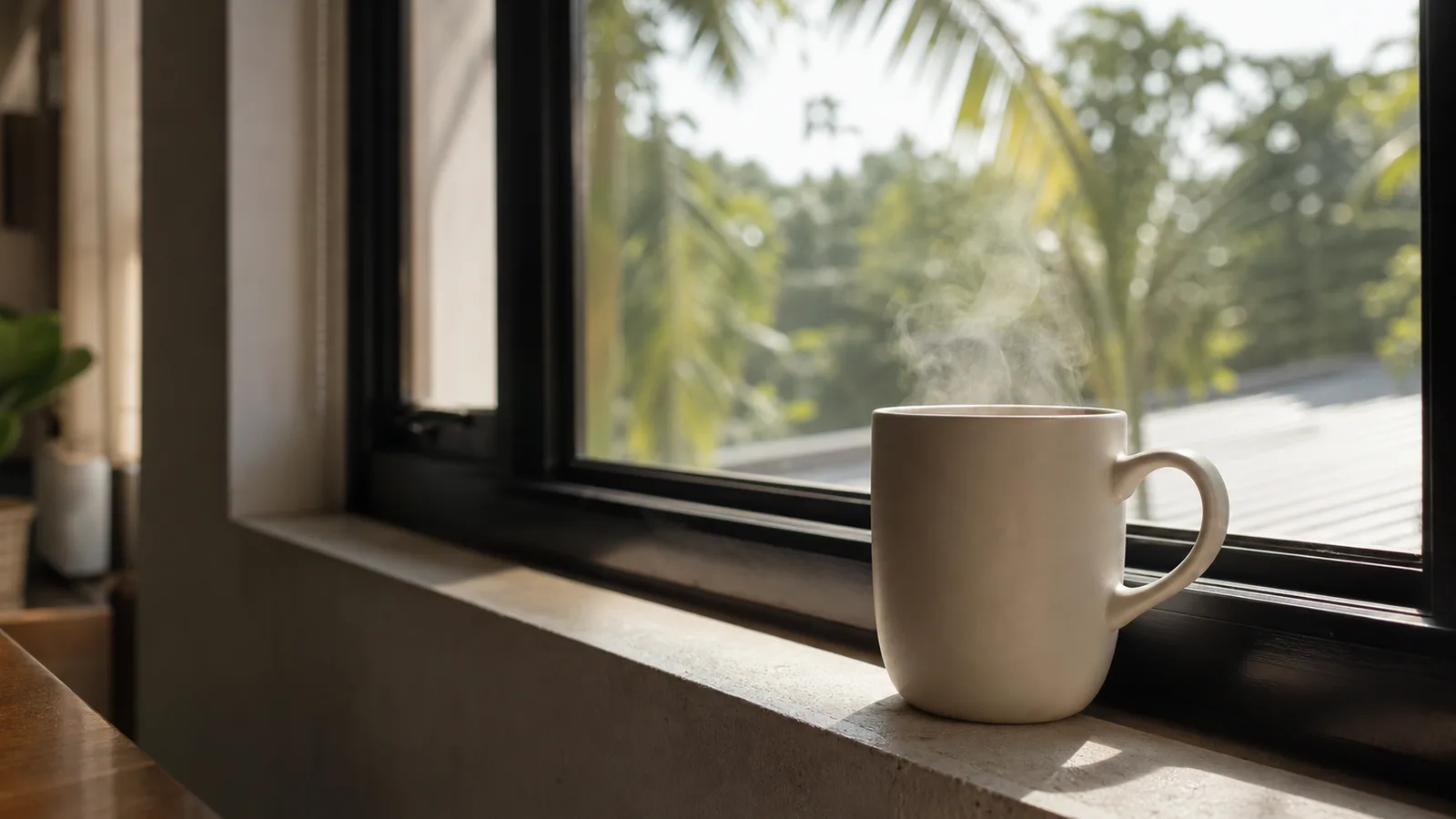
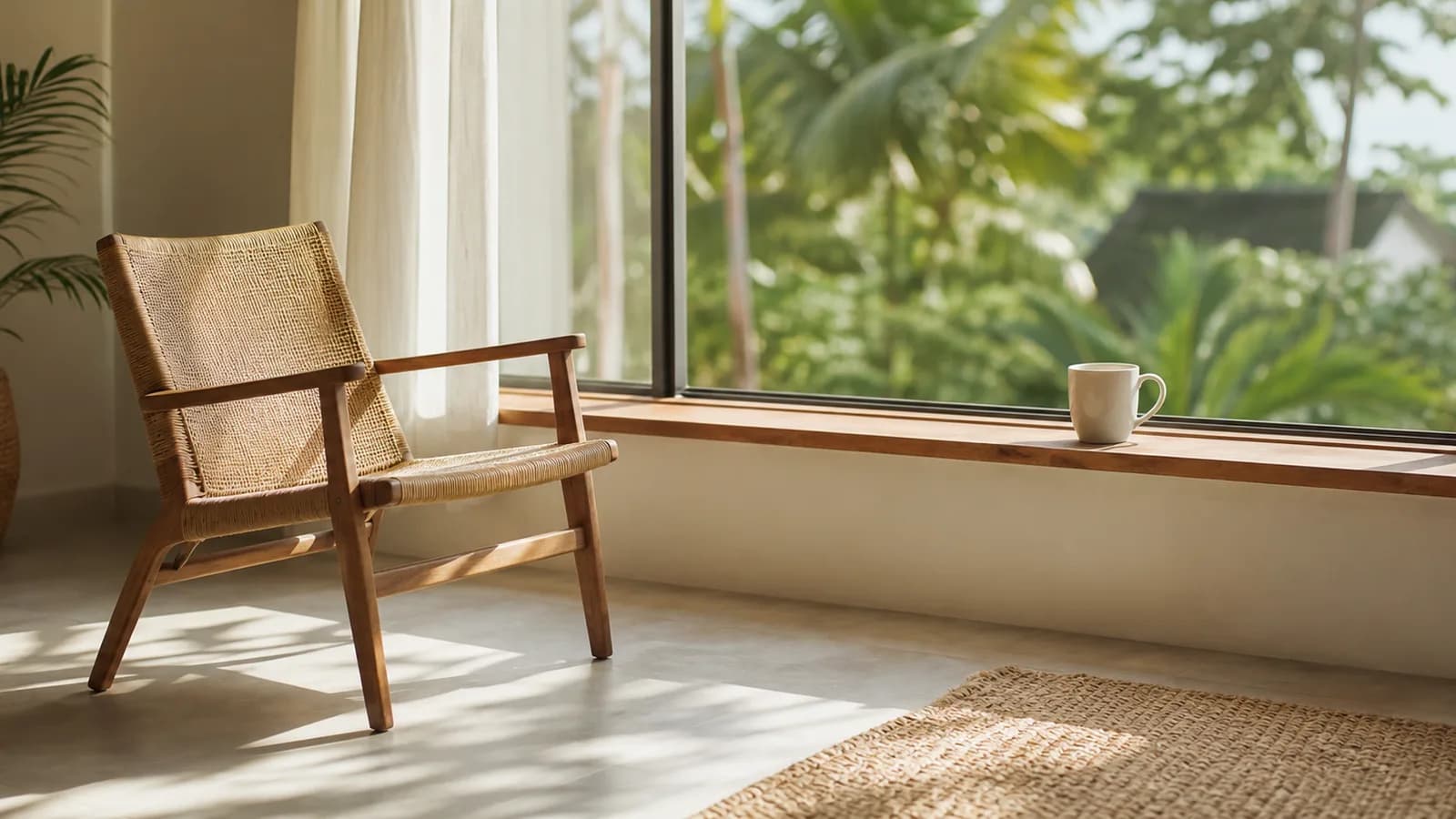
The slow morning has become a genre with a fixed set of props: the light through linen, the unhurried coffee, the journal. It is pleasant to look at and it quietly assumes two hours, an empty house and no commute.
Someone leaving at half past five to beat traffic has none of those. Which does not mean the idea is useless — it means the idea has to be separated from its staging.
What "slow" is actually doing
Not duration. A slow morning is not a long one; plenty of long mornings are frantic and plenty of short ones are calm.
What it means in practice is the absence of decisions and the absence of surprises. A morning feels rushed when you are solving problems in it — where is the charger, what am I wearing, is there anything for lunch — and it feels calm when the answers were already there.
The night before, in ten minutes
None of it takes ten minutes and all of it is subtracted from a part of the day where minutes are scarce and expensive.
What is left for the morning
Less than the aesthetic suggests, which is the point.
- A glass of water while the kettle goes on. Two minutes, and it attaches to something that already happens — morning routines that actually hold.
- Daylight, briefly. Step outside, or open the curtains and stand there. The strongest signal available and it costs nothing.
- One thing done sitting down, even if it is only the first coffee. The difference between a calm morning and a rushed one is often a single stationary five minutes.
- No screen for the first stretch, if you can hold it — not for any grand reason, but because it is where the morning's first decisions come from.
That is a slow morning at fifteen minutes. It fits before a 5:30 departure and it does not require anybody's linen.
The household version
A morning with children in it is a different problem, and the same solution scales: the decisions move to the night before, and the bottles get filled then too. What makes it work is that everyone's things live in one place by the door rather than being assembled at speed — the same environment-over-instruction argument as family wellness routines.
And the honest part
Some mornings cannot be slow. A night shift, a sick child, a four-hour commute, two jobs — these are circumstances rather than habits, and advice that treats them as a discipline problem deserves to be ignored.
What the fifteen-minute version offers is that it is still available on most of those mornings, which the two-hour version is not. That is its only advantage, and it is the one that matters.
General information about everyday routines, not medical advice.
Sources
Filed under
- Lifestyle
- mornings
- routine
- commute
- pace
- philippines