Hydration advice usually assumes thirst works. For older adults it becomes a less reliable guide — the sensation weakens with age, which means someone can be low on fluid without feeling any particular urge to do something about it.
In a country where households are frequently multigenerational and the weather does most of the work against you, this turns a private habit into a family arrangement. That framing is more useful than any target figure.
General household information, not medical advice. Fluid intake is genuinely medical territory for some conditions — heart failure and kidney disease among them — where a doctor may specifically restrict it. Some medicines, including diuretics, change the picture entirely. Always follow the doctor's instruction over any general guidance, including this article.
What actually changes with age
The third of those is the one families most often misread as forgetfulness. It is usually a rational response to a real problem — a dark hallway, a slippery bathroom, or not wanting to wake someone. Fix the underlying problem and the drinking often corrects itself.
Making it easy rather than making it a topic
Nobody enjoys being reminded to drink water, and repeated prompting tends to produce resistance rather than fluid. The alternative is to change the arrangement so that drinking requires no decision.
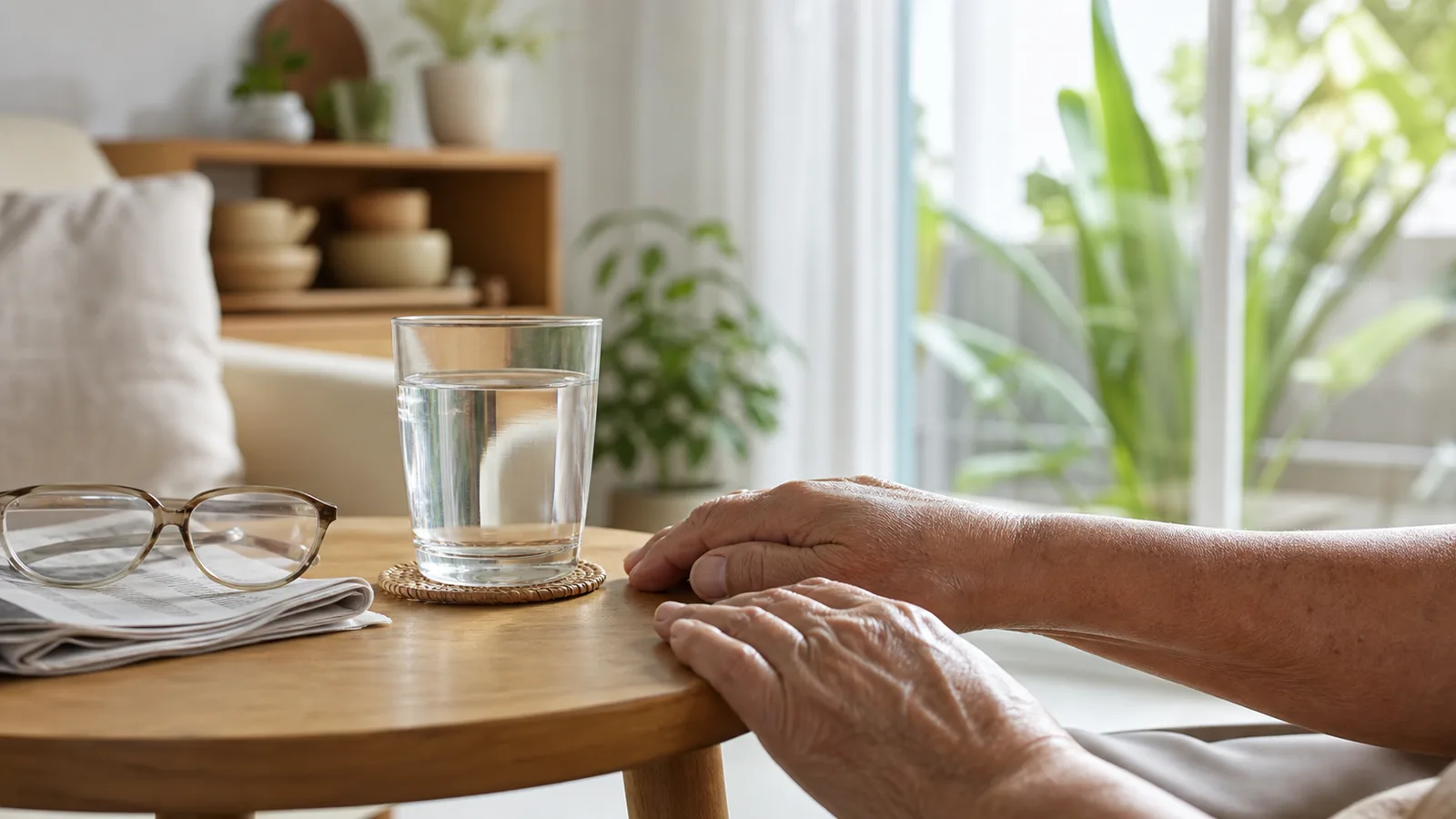
- A glass within reach of where they actually sit, refilled as a matter of course rather than on request.
- A lighter glass or a lidded cup if grip or tremor is an issue. Heavy glassware quietly reduces intake.
- Water with every meal and every medicine, which anchors intake to things that already happen. What the rest of the household drinks at meals usually decides what lands in their glass as well.
- Drinks they like. Tea, calamansi water, broth-based food — all of it counts toward total water, as water from food explains.
- Sort out the night-time route. A night light, a clear path, a rail. This does more for daytime drinking than any encouragement.
Heat, which is the local risk
Older adults are more vulnerable to heat, and a hot Philippine afternoon in a house without air conditioning is a genuine risk rather than a discomfort. Fluid is only part of the answer — shade, moving air, cooler rooms and avoiding the hottest hours matter as much.
During heat waves the sensible household approach is more frequent small drinks rather than large ones, and someone checking in rather than assuming. The climate side of this is covered in hydration in a tropical climate.
What to watch for
Confusion or unusual drowsiness, dizziness on standing, a marked drop in bathroom visits, or a general "not themselves" impression from someone who knows them well.
In older adults these deserve prompt medical attention rather than a jug of water — dehydration can present as confusion, and confusion has other causes that also need attention. This is the point where a general article stops being the right source, and a doctor becomes one.
The household version
In practice the most effective changes are physical and boring: put drinking water where the older members of the household actually spend their day, make the container easy to lift, keep it cold enough to be appealing, and make the route to the bathroom safe at night.
None of that requires a conversation about hydration — which, as with children, is precisely why it works.
Sources
Filed under
- Hydration
- older adults
- family
- thirst
- hydration
- caregiving