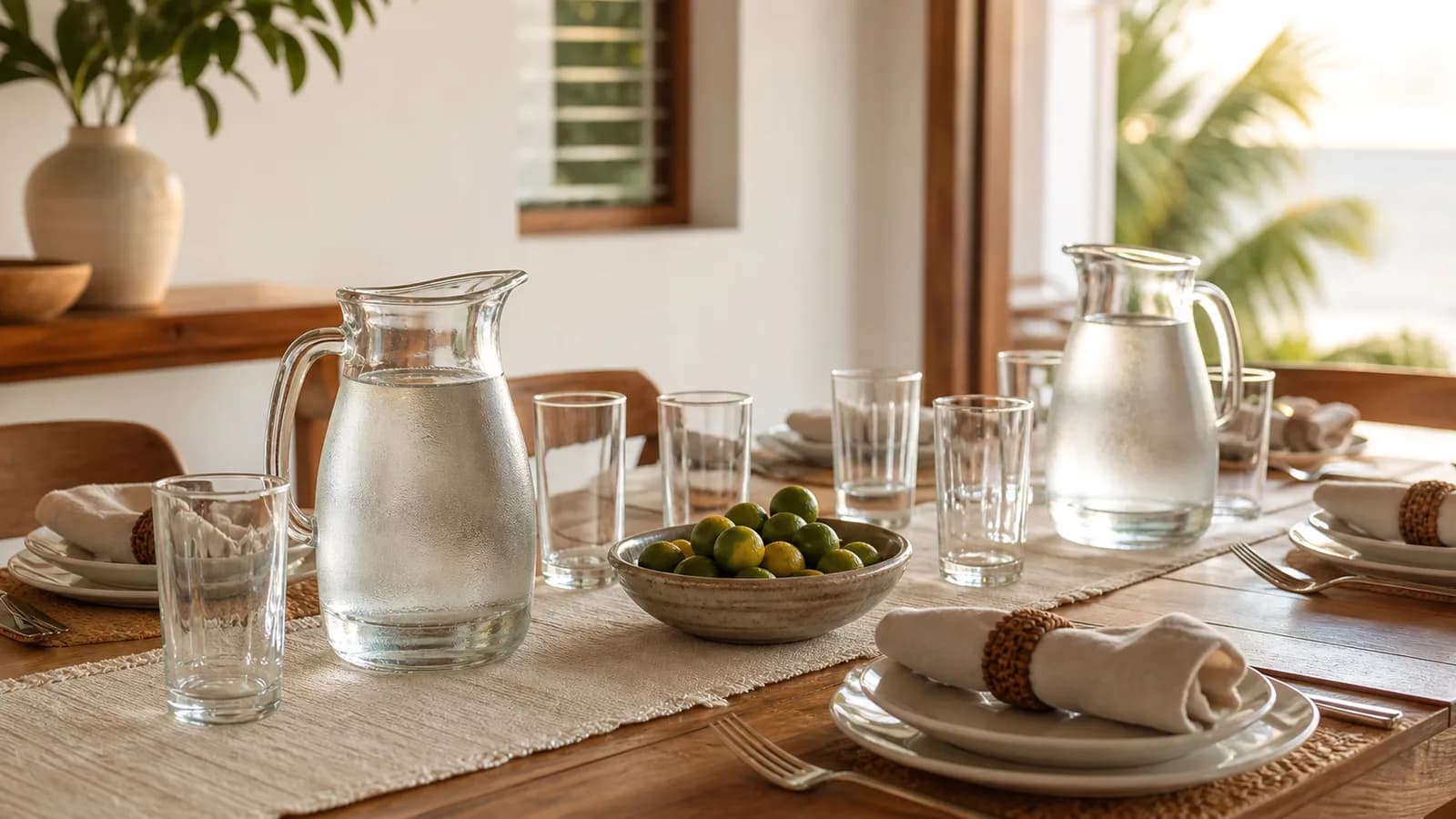

Hospitality here has a tendency toward scale — more food than anyone can eat, and a host who does not sit down. Guests notice the effort and frequently feel awkward about it, which is not quite the intended result.
What they actually notice, in the sense of it affecting their night, is a much shorter list. Almost all of it is about not having to ask.
The asking problem
A guest at midnight will not wake you to ask where the glasses are, whether they can open a window, or how the shower works. They will lie there, or wander the kitchen in the dark.
So the useful preparation is anticipating the four or five things somebody might need after you have gone to bed, and putting them within reach.
The list, which is shorter than you think
That is the whole thing. Five items, none costing anything, and collectively worth more than an additional dish.
The bathroom, and the honest check
Worth looking at as a guest would, which is a different look from your own. Does it dry out between uses, is there any smell, is the exhaust fan actually moving air? In this climate a guest bathroom that is used once a month is exactly the sort of room that develops a problem quietly — damp, mould and the bathroom that never dries.
The same applies to a spare room that stays closed. Open it and air it the day before rather than an hour before — ventilation habits for a tropical house.
The packaging question
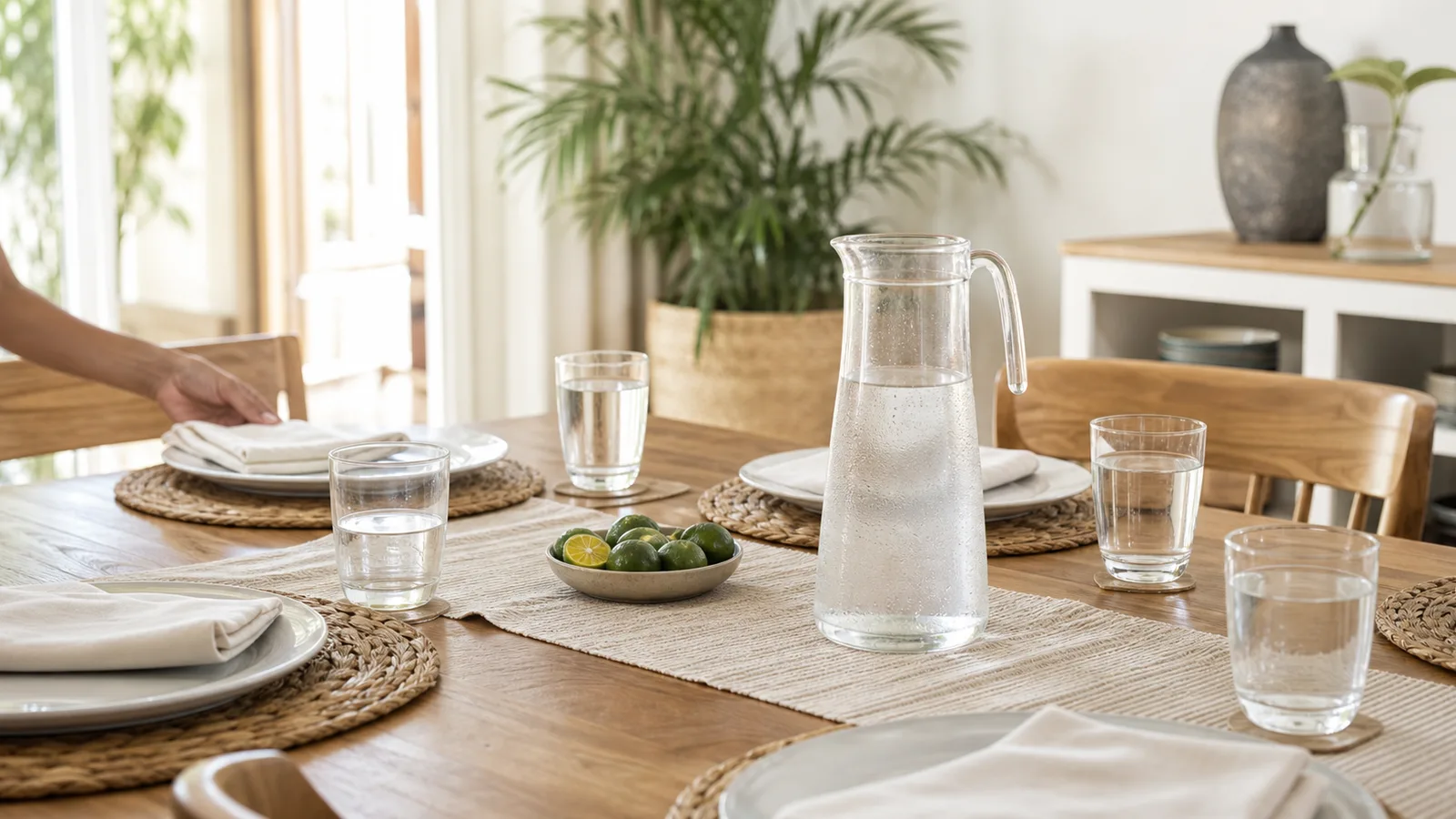
Guests are the standard reason a household buys a case of bottled water it would not otherwise buy. A jug on the table and a filled bottle in the room does the same job, looks better, and does not leave a bin bag of PET at the end of the weekend.
The larger version of that argument, for parties rather than overnight guests, is in hosting without single-use plastic.
The morning
Two things, and then leave them alone. Say where the kettle and the coffee are, and say what time you will be up. A guest who knows both can look after themselves, which is usually what they would prefer.
If you drink good coffee, the water you brew with makes more difference than the beans in most kitchens — coffee, tea and the water you brew with.
The point of doing less
A host who spends the visit cooking and cleaning is not spending it with the people who came. That is the actual cost of the elaborate version, and it is paid by both sides.
Do the hour of preparation the day before — the same shape as a weekend reset routine — and then sit down.
General information about home hosting, not medical advice.
Sources
Filed under
- Lifestyle
- hosting
- guests
- home
- hospitality
- preparation