A brewed coffee is somewhere around ninety-eight per cent water and a cup of tea is more. It is easily the largest ingredient, and it is the one almost nobody changes — people will buy better beans for years before considering what is coming out of the tap.
Which is worth correcting, because the effect is real and the change is cheap. It is also worth being precise about what does the work, because this is an area where a water-systems publication could easily overclaim.
This is about flavour, not health. Nothing sold on this site treats, prevents or cures any condition.
Chlorine, first and easiest
Residual chlorine is the most commonly noticed thing in tap water and it survives brewing. In coffee it flattens the aromatics; in tea, particularly a delicate green tea, it is unmistakable.
Ordinary carbon filtration removes it, which is the single highest-return change available here and requires nothing exotic — filtration and ionization are not the same step.
Minerals, which are the actual variable
This is where the interesting part is, and it runs against the intuition that purer water makes better coffee.
Where an ionizer fits, honestly
Two parts, and they should not be run together.
The filtration stage helps, for the chlorine reason above. That is a genuine improvement and it is the same improvement any carbon filter would give you.
The electrolysis stage is a different matter. Brewing water at the alkaline end of the range shifts the perceived acidity of the cup, and for most coffees that reads as flat — the brightness that a good bean is prized for gets buffered away. Some people prefer it; more people, in our experience of being asked, do not.
And the dissolved hydrogen is simply gone. Heating drives dissolved gas out of solution immediately, so brewing with it preserves nothing — the same point made about rice and soup in hydrogen water and cooking and about storage in storing hydrogen water.
Tea is more sensitive than coffee
Green and white teas in particular. Hard water dulls them and can leave a film on the surface; chlorine is obvious; and the temperature matters more than for coffee, because these leaves are brewed below boiling.
If your household drinks tea seriously, filtered water at a moderate hardness is the whole recommendation, and it is the same one as for coffee.
What to actually do
- Filter for chlorine. The largest improvement, the cheapest change.
- Find out whether your supply is hard or soft, which a cheap test strip answers — home water testing.
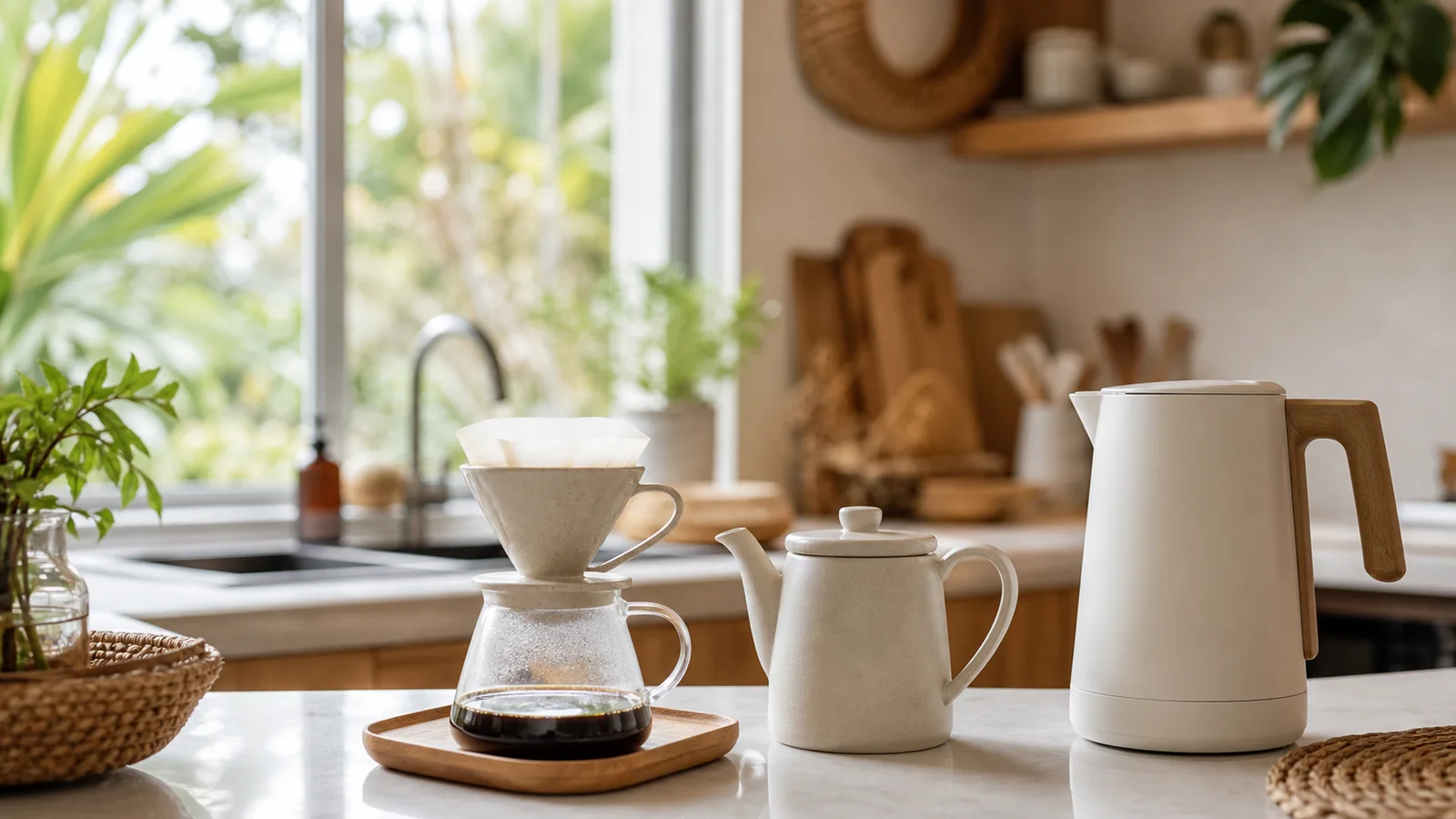
- If it is very hard, expect scale and dull cups, and descale the kettle on a schedule.
- If it is very soft or you are using RO, expect thin extraction. Some home brewers add a small amount of mineral back for exactly this reason.
- Brew with fresh water, not water reboiled twice — it has lost dissolved gases and tastes flatter.
- Change one thing at a time, or you will not know which change did it.
And the boring reassurance that people ask for anyway: coffee and tea both count toward your daily fluid, whatever you brewed them with — does coffee count toward your daily water?.
Sources
- World Health Organization — Guidelines for drinking-water quality, fourth edition (hardness and taste).
- US Environmental Protection Agency — Secondary Drinking Water Standards: Guidance for Nuisance Chemicals.
- National Institute of Standards and Technology — Solubility of gases in water (NIST Chemistry WebBook).
Filed under
- Hydrogen Water
- coffee
- tea
- brewing
- minerals
- taste